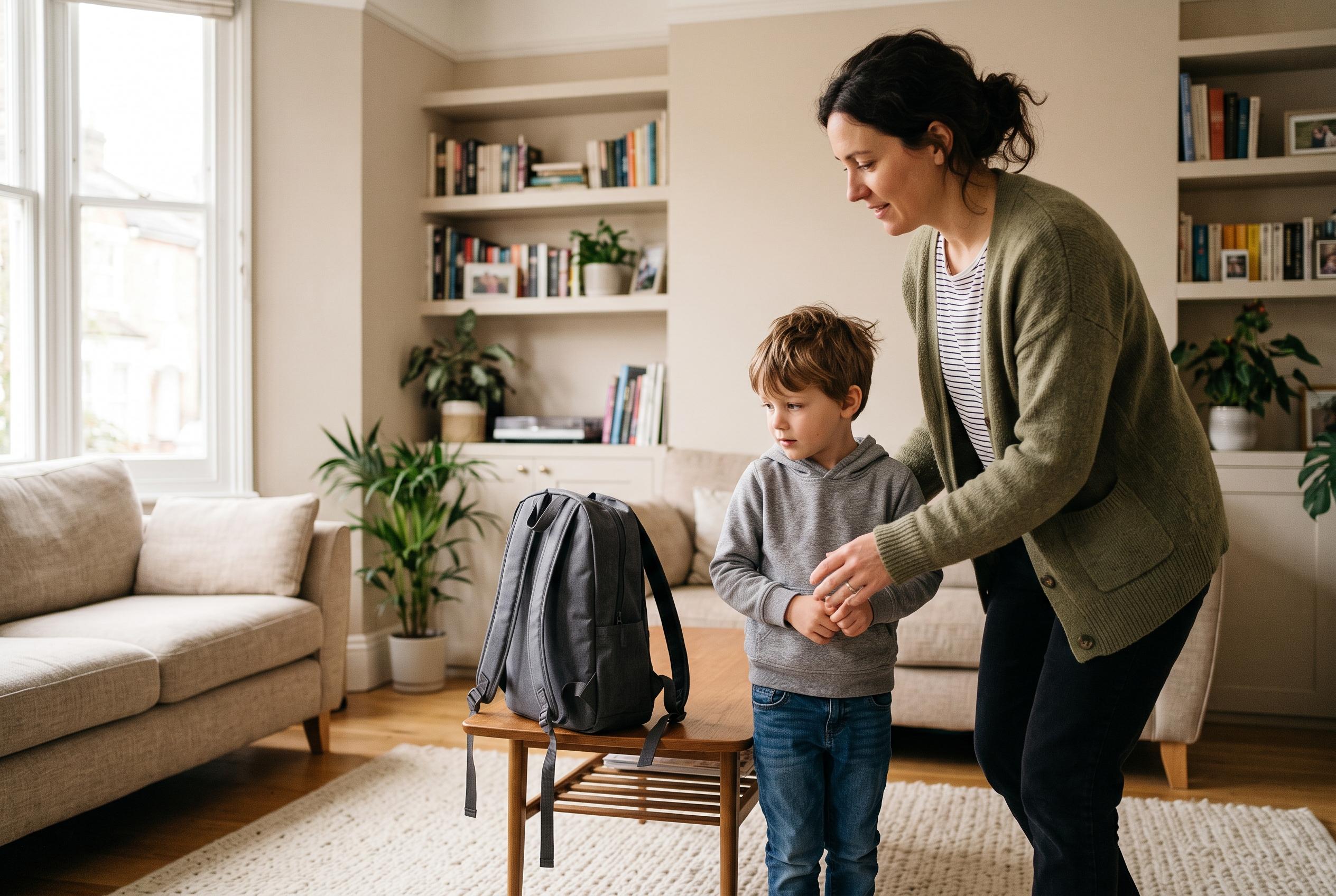

Expert guidance suggests gradual exposure and behavioural strategies can aid shy children in overcoming fears, avoiding increasing their anxiety through overprotection or avoidance, especially during key life transitions.
The point at which a quiet or hesitant child needs more than reassurance is not when they prefer to hang back in new situations, but when fear starts shrinking their world. Guidance from the American Academy of Child and Adolescent Psychiatry says ordinary shyness and age-appropriate worries become a clinical concern when they do not ease with time or become serious enough to disrupt day-to-day life. The American Academy of Pediatrics gives parents a similar test: if anxiety is getting in the way of going to school, sleeping alone, playing outside or other normal activities, it is time to look more closely. (aacap.org)
That matters because many childhood fears are routine and short-lived. Children may worry about the dark, animals or being away from a parent, and separation anxiety is common. The more troubling picture is one in which fear becomes entrenched. HealthyChildren warns that severe shyness can stop a child making friends at school or speaking comfortably to unfamiliar adults, while AACAP notes that anxiety in children can show up in several forms, including generalised anxiety, separation anxiety, specific phobias, social phobia, panic disorder, obsessive-compulsive disorder and post-traumatic stress disorder. (healthychildren.org)
There is no single reason one child tips from caution into something more disabling. AACAP says anxiety disorders usually emerge from a mix of biological and environmental factors, with genetics, temperament and parenting style all playing a part. It also notes that children who are innately cautious, quiet and shy are more likely to develop an anxiety disorder. Reporting by NetDoktor, drawing on comments from Julia Asbrand of Humboldt University in Berlin, adds that shy behaviour often appears around life transitions, from the stranger wariness many babies show at about six months to starting nursery, beginning school or moving to secondary school. The same piece says shyness often runs in families, not simply through inheritance but also through what children see modelled at home. (aacap.org)
That is why several of the supporting sources focus less on forcing confidence and more on avoiding habits that quietly feed fear. The Child Mind Institute says parents often worsen chronic anxiety unintentionally by trying to remove every source of distress. Its central advice is that the aim should be to help a child cope, not to create a life with no anxiety in it. Avoidance may bring relief in the moment, but it teaches a child that escape is the answer. The institute also advises parents to keep the build-up to feared events short, resist signalling alarm through tone or body language, and ask open questions instead of prompting children to rehearse their worries. (childmind.org)
A more effective approach, the clinical guidance suggests, is steady exposure in manageable steps. HealthyChildren describes how therapists often tackle phobias in small, non-threatening stages: a child frightened of dogs might begin with pictures or videos, then watch a dog from a distance, then spend a few minutes near a gentle puppy before eventually working up to direct contact. Berlin-Familie makes the same point in more everyday terms, advising adults to ask a child which situation they feel ready to test next and to value the attempt rather than the outcome. It also warns against dropping a child into a hard situation without discussing it first, because that can heighten fear rather than reduce it. (healthychildren.org)
The small-step method can be applied well beyond the therapy room. Berlin-Familie suggests that sports and music groups may be easier if a trusted adult comes along at first, and that one-to-one contact can be less daunting than joining a large peer group. NetDoktor adds a practical detail many parents will recognise: some children find it easier to form a friendship at home, in the safety of their own room, than in the noise and unpredictability of a crowded playground. That same report cites Sabine Ahrens-Eipper’s warning that adults can hold shy children back without meaning to by over-emphasising risks or trusting them less than they trust bolder siblings or classmates. (netdoktor.ch)
Parents are also advised not to wait too long if the pattern is worsening. HealthyChildren says families should go back to the doctor if anxiety does not improve or starts getting worse, especially if a child develops other behaviour problems such as shyness, goes through a frightening event such as an injury or a death in the family, or if anxiety seems to aggravate another medical condition such as asthma. AACAP notes that anxiety may present not only as a voiced fear but also as physical complaints, including stomach aches or headaches. NetDoktor reports Asbrand describing persistent withdrawal, morning stomach pain before school and avoiding a club or team despite wanting to join as warning signs that merit attention. (healthychildren.org)
If professional help is needed, the message from these sources is broadly reassuring. AACAP says psychotherapy, particularly cognitive behavioural therapy, is the first-line treatment for mild anxiety disorders, while HealthyChildren describes behavioural therapy as the main treatment for phobias and says breathing and relaxation exercises can help children in stressful moments. AACAP adds that selective serotonin reuptake inhibitors, or SSRIs, may be used when symptoms are severe or only partly responsive. The parent-facing advice is equally consistent: adults should advocate for a child at school and in healthcare settings, while also looking after themselves. HealthyChildren notes that children absorb adult stress, and the Child Mind Institute similarly argues that one of the most useful things a parent can do is model calm, tolerable ways of handling worry. (aacap.org)
Disclaimer: This content is for informational purposes only and is not intended to be a substitute for professional medical judgment, advice, diagnosis, or treatment.