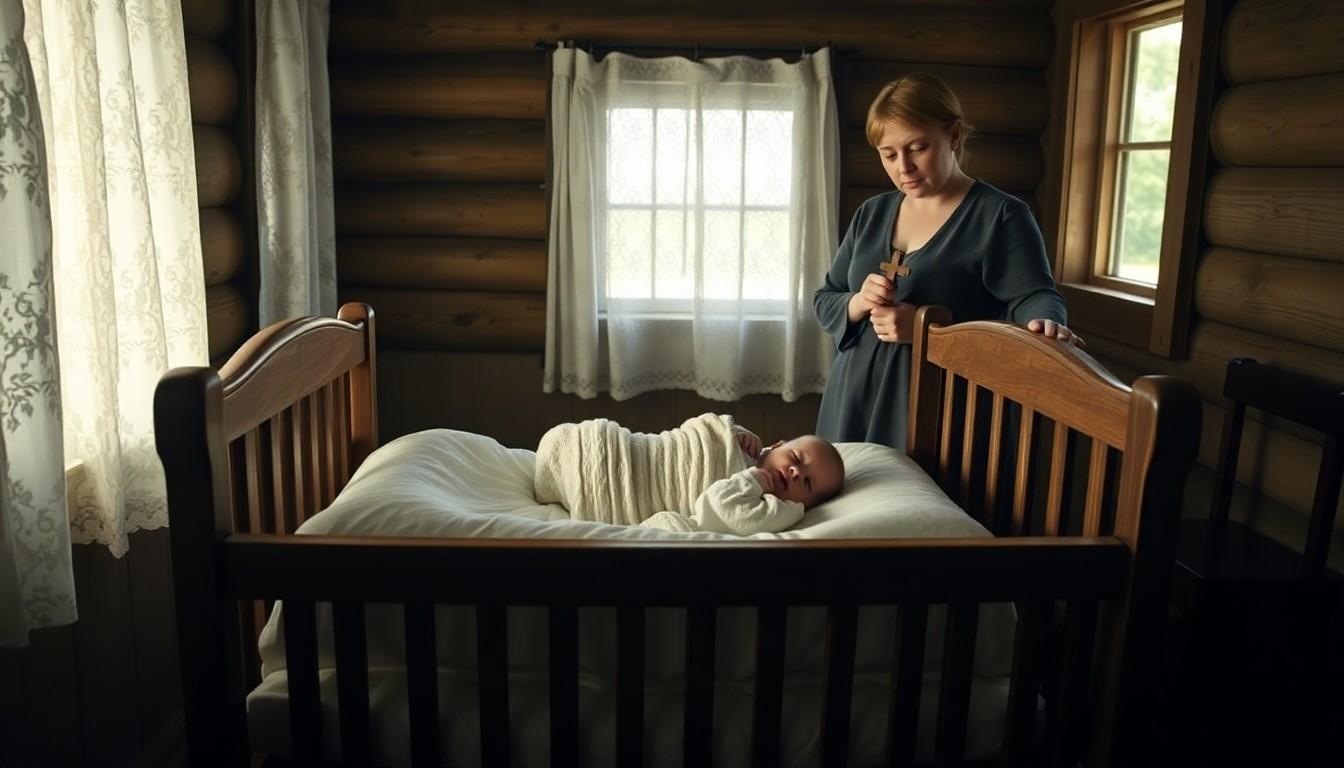

A six-week-old Amish infant in Lancaster County becomes Pennsylvania’s first confirmed measles death amid a heated debate over the outbreak’s official toll, highlighting tensions between local findings and federal reporting standards.
Lancaster County’s coroner has said a six-week-old Amish infant who died at home in August was killed by measles, giving Pennsylvania its clearest local ruling yet in a dispute that has engulfed the state’s outbreak and the way deaths linked to it are being counted. Stephen Diamantoni confirmed that the child died on 18 August and told The Washington Post: “The child contracted measles, and measles caused the death of the child.” The determination separates this case from another infant death in the county that has become the subject of competing claims by state and federal officials.
Diamantoni said the baby had Amish lethal microcephaly, a rare inherited disorder largely found in Amish communities, and had been receiving palliative care from soon after birth. According to The Washington Post, he said most children with the condition live for about four to six months. The coroner said the infant was especially vulnerable because measles led to serious breathing problems and low oxygen levels. Ars Technica reported that the child was a girl and that she died at home in Lancaster.
Local reporting added that the infant had been under the care of the Clinic for Special Children, a Lancaster County centre that treats and studies illnesses seen in Old Order Amish and Mennonite families. The Philadelphia Inquirer said Diamantoni believed the clinic had not realised the death needed to be reported to his office because the child’s underlying condition meant her death was not regarded as unexpected. Only after records were reviewed later did the coroner conclude that measles, rather than the genetic disorder alone, was the direct cause. The Inquirer reported that Diamantoni notified the US Centers for Disease Control and Prevention on Friday, but had not yet reported the case to Pennsylvania’s health department.
That finding matters because it cuts across the confusion surrounding an earlier infant death in Lancaster County. The Washington Post and FactCheck.org both reported that a newborn who tested positive for measles died on 14 August, but Diamantoni said the pathologist concluded the primary cause was a spleen laceration shortly after birth. FactCheck.org said the baby died at a birthing centre in Strasburg Township and that measles was detected in lung tissue after death. The Atlantic, which spoke to the family, reported that the child’s mother had been seriously ill with measles while pregnant and that the parents believed the infection contributed to their son’s death, even if it was not listed by the coroner as the immediate cause.
The argument widened after Pennsylvania announced on 25 August that two unvaccinated Lancaster County residents had died in “measles-associated” cases, the first such deaths in the state in 35 years. FactCheck.org reported that the state health department defines that term broadly: measles may be confirmed through laboratory or epidemiological evidence even if a coroner or medical certifier does not judge it to be the immediate cause of death. Lancaster County commissioner Josh Parsons then wrote on X that the coroner’s office knew of no measles deaths, while Robert F. Kennedy Jr., speaking in Florida and later online, repeated that claim. The Atlantic said Kennedy called Governor Josh Shapiro’s announcement “unseemly” and accused him of “the weaponization of infectious disease fears for political gain”.
Since then, the statistical fight has shifted to whether Pennsylvania’s deaths should appear in federal measles totals. Ars Technica reported that the CDC’s online tracker initially carried a note saying the available information did not establish whether measles caused or contributed to the deaths. That wording was later replaced with a statement saying the National Center for Health Statistics had no 2026 death records listing measles as the underlying cause. The Washington Post reported that Diamantoni did not know whether the six-week-old infant was one of the two deaths already counted by Pennsylvania health officials, adding another layer of uncertainty to an outbreak that has already become politically charged.
The outbreak itself is much broader than the two infant cases. The Guardian reported that most of the cases being logged by Pennsylvania health authorities are among adults aged 18 to 49, not babies, underlining that the spread is no longer confined to one age group. The Atlantic noted that both deaths under scrutiny were in Lancaster County, home to the largest Amish community in the United States and the part of Pennsylvania hit hardest by the measles surge. In the family’s case, the magazine said, the parents had no idea their loss had become a national political story because they do not use television, the internet or newspapers.
What now seems beyond dispute is narrower but still significant: one frail infant in Lancaster County died because of measles, according to the official charged with ruling on deaths there. Whether that conclusion settles the state-federal argument is less clear. The Inquirer described an escalating clash between Shapiro and Donald Trump’s administration over how outbreak deaths should be classified, while Ars Technica and The Guardian both showed that the federal record has lagged behind local findings. For Pennsylvania, the case is a stark reminder that measles can be fatal not only in theory or in historical memory, but in the middle of a modern American outbreak.
Disclaimer: This content is for informational purposes only and is not intended to be a substitute for professional medical judgment, advice, diagnosis, or treatment.