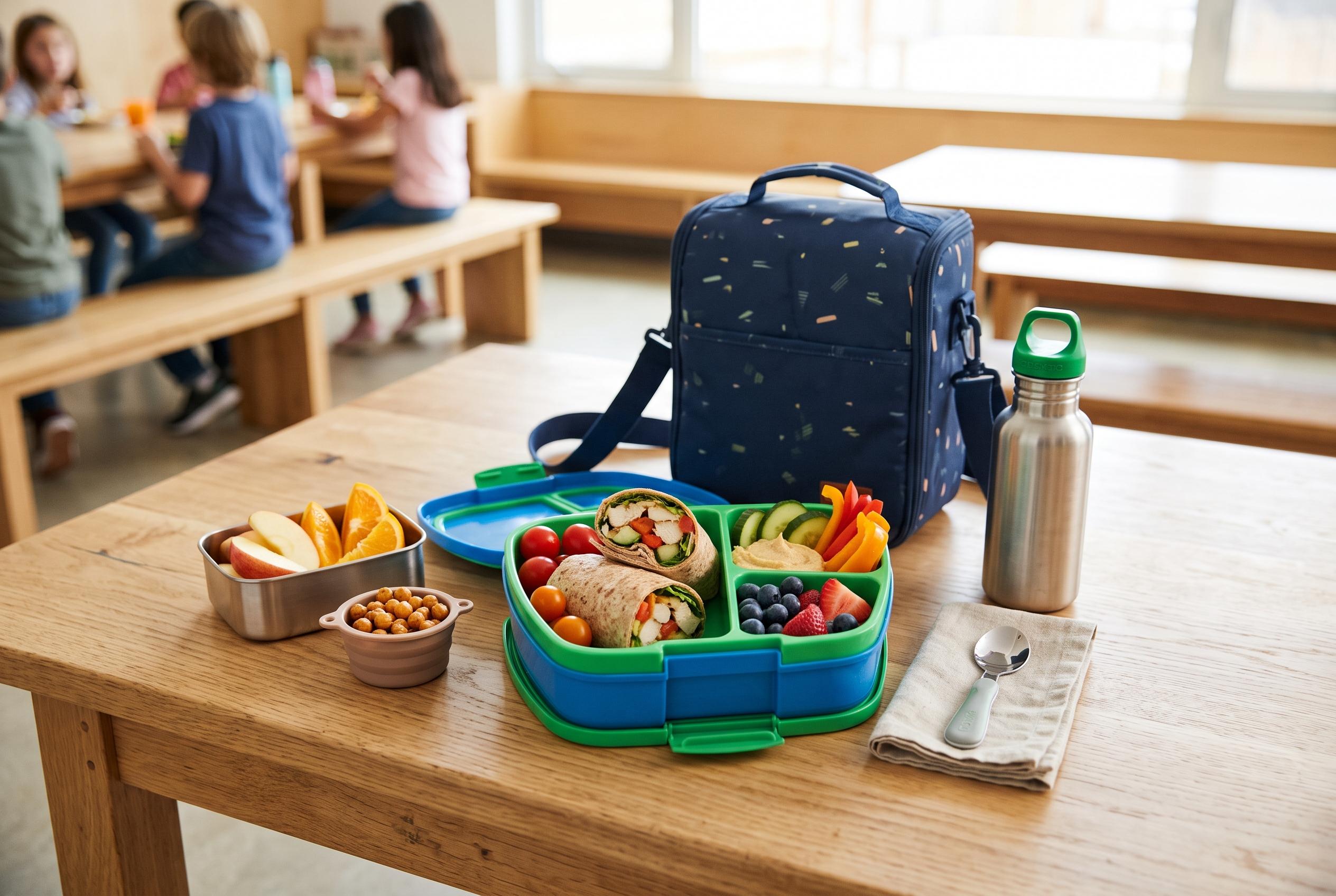

From cold snacks to customised formats, recent guides reveal a shift in school lunch strategies, prioritising make-ahead, portable, and visually engaging meals that cater to children’s preferences and logistical realities.
If the lunchbox used to be shorthand for a peanut butter sandwich and a packet of crisps, the latest school-lunch playbook looks more like light meal prep. Food Network refreshed its packable-lunch collection on 28 July 2026 with 38 ideas stretching from colourful wraps to soups and macaroni and cheese in a food jar, while Delish had already pushed the category further in August 2025 with a 60-recipe line-up aimed squarely at picky eaters. Taken together, those newer guides suggest that the modern weekday lunch is no longer one thing at all: it is cold, hot, make-ahead, freezer-friendly and, increasingly, designed to mimic the foods children already ask for.
That expansion has not made the case for cold lunches disappear. It has made it clearer. Writing for the Kitchn in August 2022, Justine Lee argued that recipes which taste best cold or at room temperature take pressure off rushed mornings because they do not depend on special containers or on food staying piping hot until midday. A 2021 parenting piece by Casey Barber for CNN, republished by WTOP, made the same point from a family-management angle, calling for “make-ahead, no-cook, room-temperature” lunches that are simple enough for children “to build school lunches on their own”. The emphasis there is not culinary ambition but survival: fewer last-minute decisions, fewer arguments and more chance that lunch will actually be eaten.
Once that logic takes hold, the sandwich ceases to be the default. Barber’s advice was to swap plain sliced bread for wraps, tortillas, bagels, pretzel rolls, naan, English muffins, croissants and even frozen waffles. Lee’s gallery gave that broader structure real shape: ranch pasta salad for a container lunch, BLT lettuce wraps with avocado, buffalo chicken wraps and a no-chop cold veggie noodle bowl with soy-lime vinaigrette. It also leaned into Japanese-inspired lunchbox habits with salmon and black sesame onigiri, noting that the rice balls can be wrapped so the seaweed stays dry until lunch. Other entries, including ham and cheddar lunch box muffins, pizza bagels and Greek salad in a jar, treated school lunch less as a single recipe than as a format.
Delish’s contribution is to stop pretending that every packed lunch has to look earnest. Its 2025 round-up is built around the reality that many children want comfort food, fast food or something close to it. For children locked into familiar flavours, the site proposes calzones, mac and cheese pizza bites and stromboli. For those more tempted by takeaway, it points parents towards copycat Big Macs, Chick-fil-A nuggets, a Chipotle-style chicken burrito bowl, General Tso’s chicken and sesame chicken. It also argues that sushi-adjacent foods often work because they are handheld and easy to dip, which is how spam musubi and a sushi sandwich find their way into a school-lunch collection without seeming out of place.
Food Network, in contrast, takes a broader age and temperature range. Its updated guide says the meals are intended for elementary pupils, tweens and teenagers alike, and it is deliberately not limited to food that can be eaten straight from the fridge. Alongside cold ideas, it recommends keeping homemade sandwich pockets in the freezer for a low-effort fallback. The recipes shown in the current version include lasagna rolls-ups, chicken kebabs with a Greek yoghurt pesto dip, shark-shaped quesadillas that are meant to cool fully before packing, and turkey wraps boosted with sweet potato hummus. The message is that a good school lunch system includes backups, reheatable options and a few meals that can be assembled in minutes.
Martha Stewart’s approach introduces another variable: presentation. Its long-running children’s lunch page tells parents to let children “play with their food” and nudges them away from the old pattern of a plain sandwich plus raw veg. The recipes listed there are a reminder that novelty can be visual as much as culinary: open-faced sandwiches, English Muffin Pizza Snacks, Baked Salmon Sushi, Avocado Sushi, Cheddar-and-Scallion Savory Pancakes and Pumpkin Grilled Cheese all appear alongside soups and tuna melts. The same page also links readers to advice on packing a “Planet-Friendly School Lunch”, suggesting that the lunchbox has become a place where appearance, waste and nutrition are all being negotiated at once.
For a more concrete example of where this thinking ends up, Good Housekeeping offers a single recipe rather than a gallery. Its Chinese Chicken Salad Wraps, published by the Good Housekeeping Test Kitchen, make four servings in 10 minutes and are built for portability: toasted sesame oil, rice vinegar, lime juice, brown sugar and chilli flakes form the dressing, while Napa cabbage, red cabbage, rotisserie chicken, scallions, Cara Cara oranges and carrots make the filling. Chow mein noodles and roasted almonds provide crunch before the mixture is rolled into 10-inch wraps. It is a practical reminder that lunchbox food does not need a gimmick if it has speed, texture and enough flavour to survive a morning in a bag.
The clearest shift across these sources is that school lunch advice has moved away from the hunt for a single clever idea and towards a repeatable system. One publication wants more cold meals that remain safe and appealing at room temperature; another wants children assembling their own grain bowls or snack plates; another says to keep freezer pockets ready; another leans unapologetically into pizza day nostalgia and takeaway flavours; another banks on shape, colour and customisation. What links them is a shared acceptance that the old lunchbox bargain has broken down. Parents are no longer just packing food. They are designing around time, fussiness, temperature, transport and the very real possibility that anything dull will come home untouched.
Disclaimer: This content is for informational purposes only and is not intended to be a substitute for professional medical judgment, advice, diagnosis, or treatment.