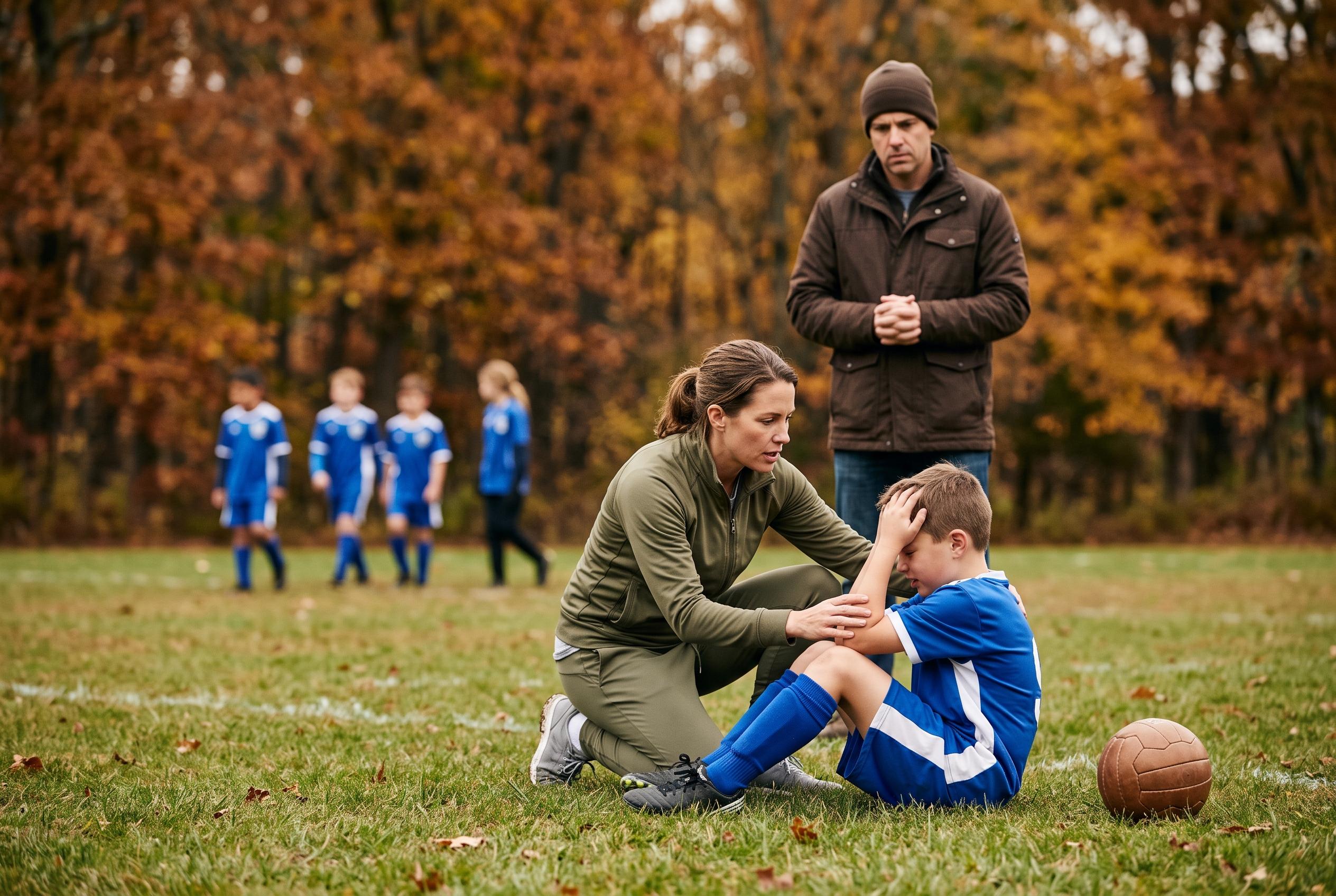

As autumn sports seasons commence, specialists urge parents, coaches, and teams to recognise early concussion symptoms and emphasise safer playing techniques, highlighting a shift towards proactive injury management beyond just football.
As school and club teams begin their autumn seasons, concussion specialists are warning families not to wait for a dramatic collapse or an obvious blow to the head before acting. Federal guidance says any athlete with a suspected concussion should be taken out of sport immediately and kept out that day until cleared by a healthcare professional, while clinicians at Cleveland Clinic say symptoms can take up to 72 hours to show themselves. Even a heavy body blow that snaps the neck can be enough to cause injury, without a direct strike to the head.
That lag is one reason doctors say parents, coaches and teammates need to watch for changes in behaviour as much as for classic complaints such as headache or dizziness. A Mayo Clinic Q&A published in August said warning signs can include ringing in the ears, amnesia, irritability, unusual slowness getting up after a play and unsteadiness when walking. Cleveland Clinic said some young patients describe feeling euphoric or as though they are “in some kind of fog”. Athletes may also play down symptoms because they do not want to leave a match or miss future opportunities, making outside observation crucial.
Some signs call for faster medical attention than a routine check on the sidelines. UVA Health neurologist Jose Posas said loss of consciousness is one obvious concern, but he also highlighted stiffening in one or both arms, slurred speech, facial drooping, weakness in an arm or leg and an athlete appearing to be “bobbing and weaving” while walking back to the bench. Research-based youth guidance reported by MedicalXpress adds repeated vomiting, a severe or worsening headache, seizures, increasing lethargy or confusion, weakness or numbness in the limbs and severe neck pain to the list of danger signs. The CDC’s advice is blunt: do not try to judge the severity yourself.
Doctors are also pushing back against the idea that concussion is mainly a football problem. Mayo framed one recent public advisory around a school field hockey player, and UVA clinicians say they see injuries across boys’ and girls’ sport, including ice hockey, wrestling, football, lacrosse and cheerleading, particularly during stunts and tumbling. In central Virginia, they say horseback riding is another important source of sports-related concussion, with patients ranging from children to adults, and the clinic uses return-to-riding protocols for those cases.
What happens after diagnosis has changed too. Same-day return is off the table, and Mayo says school should come before sport: if a pupil cannot manage a full school day, they should not be taking part fully in athletics. Recovery often begins to improve within a few days and is commonly measured in roughly seven to 14 days, but symptoms lasting beyond about two weeks may need more detailed assessment, including therapy for balance or dizziness problems. Cleveland Clinic noted that while rest remains standard, newer research supports light exercise during recovery. That fits with broader youth-concussion guidance recommending 24 to 48 hours of relative rest before a supervised, gradual increase in activity. Stephen Line, a Texas A&M sports medicine physician interviewed by WSVN, said young athletes typically move through a five- or six-step progression, starting with cardiovascular work and advancing towards sport-specific drills only if symptoms are not triggered.
Prevention, specialists say, is not just about what happens after a hit. UVA athletic trainer Keith Thomson said properly fitted helmets and pads matter, particularly in contact sports such as football and lacrosse, and Line likewise urged parents to buy protective gear that fits correctly. Posas said coaching technique matters as well, including teaching players not to lower the head into contact, and he argued that teams should reduce avoidable collisions in training. He pointed to a wider move in college sport to limit contact days and said younger teams could learn from that approach. He also criticised old-style “toughness” drills built around hard impacts with no clear technical purpose.
The message is reaching administrators as well as clinicians. An August guidance note carried by Targeted News Service, citing the law firm Fisher Phillips, said every school, athletic programme and youth sports organisation should review its concussion protocol before autumn try-outs and make sure written procedures are clear. The CDC says clinicians will want details such as how the injury happened, whether there was any loss of consciousness, memory loss or seizure, and how many previous concussions the athlete has had. It also notes that most athletes with concussion do not need a CT or MRI scan.
UVA says its own clinic sometimes recommends pre-season baseline testing for athletes with a concussion history or other conditions that could complicate assessment later. Thomson said that can involve computer-based neurocognitive testing, balance measures and checks of the eyes and vestibular system, which helps control balance and spatial orientation. The clinic sees far more than varsity players, treating everyone from primary-school-aged children to older adults in their 70s and 80s who are hurt in recreational sport, and it is looking to widen access beyond Charlottesville and Albemarle County.
For families, the advice coming from clinics, national guidance and school-sport experts is remarkably consistent. “If in doubt, sit them out,” as the youth-concussion guidance puts it. Or, in the words of UVA neuropsychologist Racheal Smetana, if something looks wrong, “Get it checked out.” In a culture where young athletes often feel pressure to stay on the pitch, the responsibility for spotting trouble does not rest with the player alone.
Disclaimer: This content is for informational purposes only and is not intended to be a substitute for professional medical judgment, advice, diagnosis, or treatment.