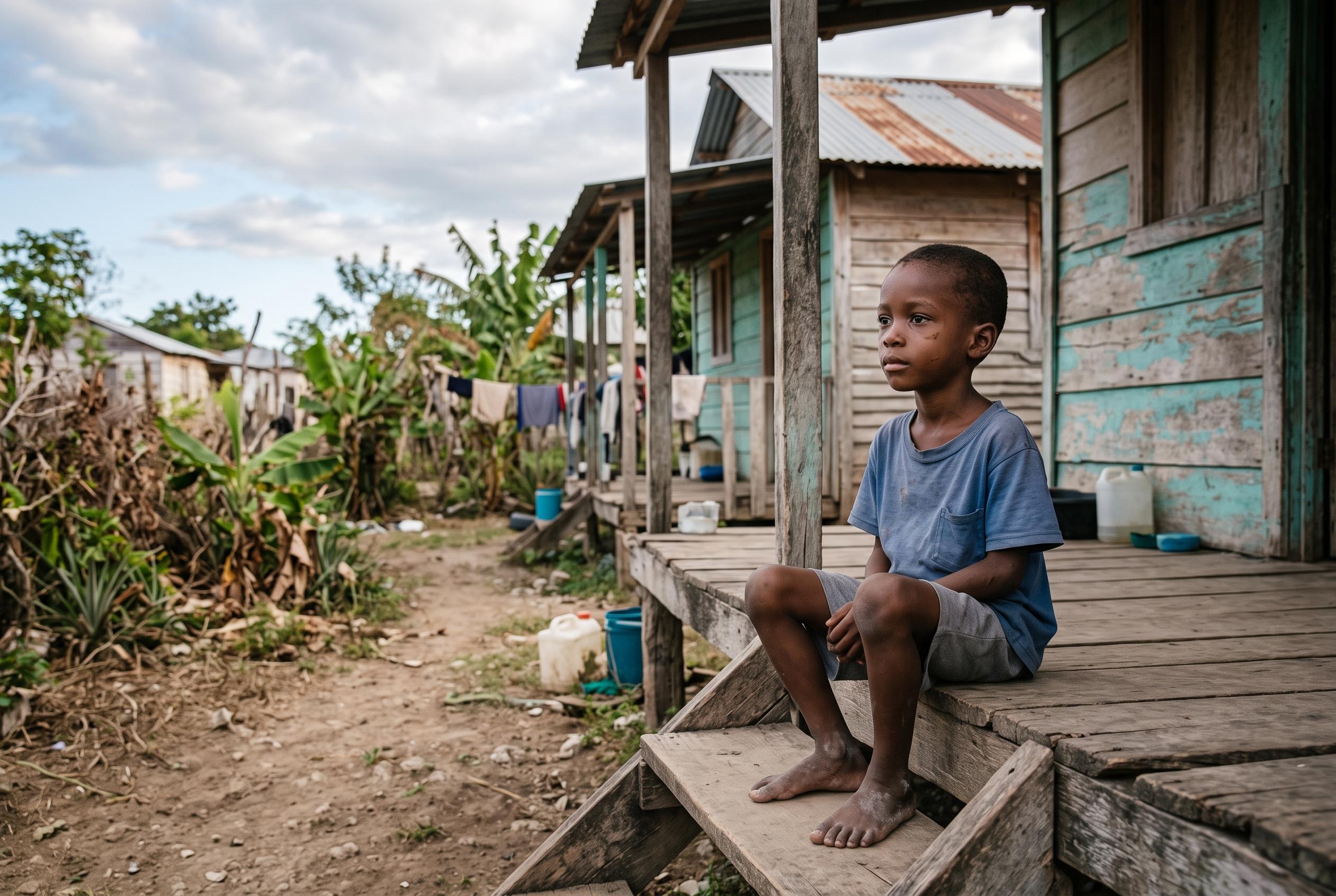

New survey reveals an alarming increase in acute malnutrition among Haitian children, exposing the deepening impacts of insecurity and economic hardship on child health and survival.
Haiti’s latest national SMART survey has pushed child malnutrition back to the top of the country’s humanitarian agenda, with nearly one in thirteen children aged 6 to 59 months found to be acutely malnourished. Preliminary results published on 28 August by the Ministry of Public Health and Population, and reported by Le Nouvelliste as well as other outlets, put national prevalence at 7.4 per cent, up from 5.1 per cent in 2023, against a backdrop of insecurity, economic strain and deepening difficulty in getting food and healthcare to families.
That 7.4 per cent figure is the one UNICEF used publicly and the one repeated most widely in Haitian and international coverage. But the ministry’s preliminary presentation also includes a separate, higher national estimate of 9.0 per cent when a broader combined measurement is used, which helps explain why some accounts have described a steeper jump. The distinction is technical, but the message is not: by either measure, Haiti has moved in the wrong direction since 2023, and the rise has been serious enough for local reporting to frame the findings as a national warning rather than a routine public-health update.
UNICEF’s deputy representative in Haiti, Yannig Dussart, said in the agency’s statement that the findings came amid “prolonged insecurity, economic hardship and humanitarian needs”. As Azzurro Caribe noted, the headline number means roughly one child in thirteen under five is in a critical nutritional condition. The survey lands at a moment when the broader food picture is already dire. ExtraNews Mundo cited the April 2026 Integrated Food Security Phase Classification analysis, which found 5.83 million people, or 52 per cent of the assessed population, facing acute food insecurity, with nearly 1.9 million in Phase 4 Emergency, the level associated with severe food gaps and a high risk of acute malnutrition.
The worsening nutrition data is also bound up with a wider protection crisis for children. UNICEF has said grave violations against children tripled between 2023 and 2025. Vatican News, citing United Nations figures released through UNICEF, reported that 2,088 grave violations were verified in Haiti last year, affecting 1,661 children. Those cases included recruitment and use by armed groups, killings and maimings, sexual violence, abductions, attacks on schools and hospitals, and denial of humanitarian access. In practical terms, that means the same violence driving hunger is also disrupting clinics, schools and aid routes that would normally help prevent or treat it.
Not every indicator worsened. ExtraNews Mundo reported that chronic malnutrition, or stunting, among children under five fell from 22.8 per cent in 2023 to 17.3 per cent in 2026. The survey also recorded sharp improvements in breastfeeding practices, with early initiation rising from 48 per cent to 68 per cent and exclusive breastfeeding under six months climbing from 17.5 per cent to 33 per cent. Vatican News highlighted those gains as evidence that some nutrition and health interventions are still working despite the broader collapse in security. The contrast is striking: Haiti appears to be making progress on some longer-term feeding behaviours even as more children slip into the more immediate danger of acute wasting.
The problem is that treatment capacity is struggling to keep up. Vatican News reported that UNICEF and its partners are working with the health ministry to widen screening and care through community health workers and mobile teams in hard-to-reach and violence-hit areas. HaitiLibre said a fuller analysis of the survey, to be combined with an IPC classification focused specifically on acute malnutrition, is expected next month and is meant to guide both humanitarian and development planning. At the same time, HaitiLibre, Pressenza and Vatican News all reported that more than 64 per cent of UNICEF’s 2026 funding requirement for nutrition work in Haiti remains unmet. Pressenza stressed that steady backing is needed not only to identify and treat acute malnutrition, but also to maintain supplies of ready-to-use therapeutic food and keep essential nutrition services available for vulnerable children and women.
What emerges, then, is not a single bad statistic but a more complicated and more troubling picture. Haiti is showing pockets of progress in breastfeeding and longer-term child growth, yet the immediate risk of wasting has still worsened as armed violence, displacement and food insecurity close in on households. The next round of analysis due in September 2026 may clarify some of the technical debate over which malnutrition indicator should be foregrounded. It will not change the central fact already visible in the preliminary results: more Haitian children are becoming acutely malnourished in a response system that remains dangerously short of money, access and time.
Disclaimer: This content is for informational purposes only and is not intended to be a substitute for professional medical judgment, advice, diagnosis, or treatment.