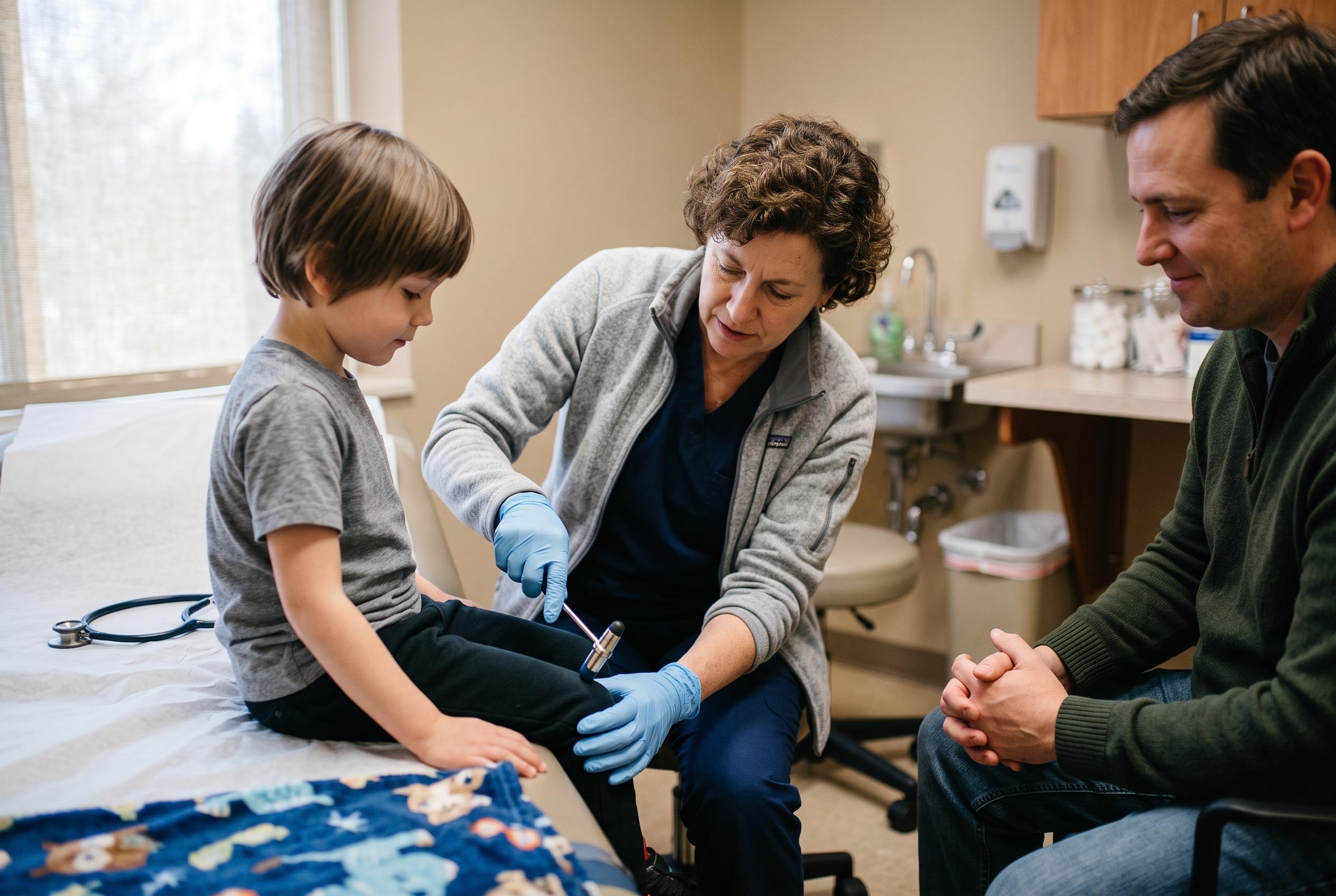

Recent research from Stanford reveals that most children with suspected PANS exhibit subtle neurological soft signs, emphasising the importance of bedside examinations in diagnosis amid ongoing debates over biomarkers and misdiagnosis risks.
A neurological examination may offer useful clues in children with sudden obsessive-compulsive symptoms, anxiety, restrictive eating, irritability, sleep disruption, odd movements or a sharp drop in school performance, but it cannot confirm Paediatric Acute-Onset Neuropsychiatric Syndrome on its own. In a 2025 study published in JAMA Network Open, researchers assessed 119 children and young adults seen at Stanford Children’s Immune Behavioural Health Clinic and found that 79.8% had at least one subtle neurological finding, often called a neurological soft sign, that may point to dysfunction in brain circuits involving the basal ganglia. The study adds weight to the idea that careful bedside examination still matters in a condition often discussed mainly in terms of behaviour, infection history and lab tests.
The researchers looked for six specific signs: overflow movements, choreiform movements, abnormal tongue movements, milkmaid’s grip, glabellar tap reflex and spooning of the hands. Overflow movements occurred when one intentional movement triggered an unintended movement elsewhere, while choreiform movements were small, irregular involuntary movements. Among all patients, overflow movements were the most common finding, followed by choreiform movements and abnormal tongue movements. When the analysis was limited to the 71 children examined for all six signs, 91.5% had at least one neurological soft sign.
The findings also appeared to track with illness burden. Children with four or more soft signs had more reported PANS symptoms than those with none, and each additional soft sign was associated with a modest rise in symptom count. A sensitivity analysis in the subgroup examined for all six signs found similar links with symptom burden and global impairment. Stanford researchers have previously reported brain imaging abnormalities in regions including the basal ganglia, thalamus and amygdala in children with PANS, adding broader context to the theory that these circuits may be involved.
Still, the new study does not show that these examination findings diagnose PANS, and it did not include healthy children or comparison groups with conditions such as OCD, ADHD, autism or Sydenham chorea. That matters because neurological soft signs can occur in other disorders as well. The American Academy of Pediatrics has noted that PANS remains a clinical diagnosis without a single biomarker, which is why physicians must weigh the history, timing, symptoms, examination and alternative explanations together. The study also cannot determine whether a trigger such as streptococcal infection, Lyme disease or another infection was responsible for a child’s symptoms; it only suggests that the neurological examination may help build the overall clinical picture.
Disclaimer: This content is for informational purposes only and is not intended to be a substitute for professional medical judgment, advice, diagnosis, or treatment.