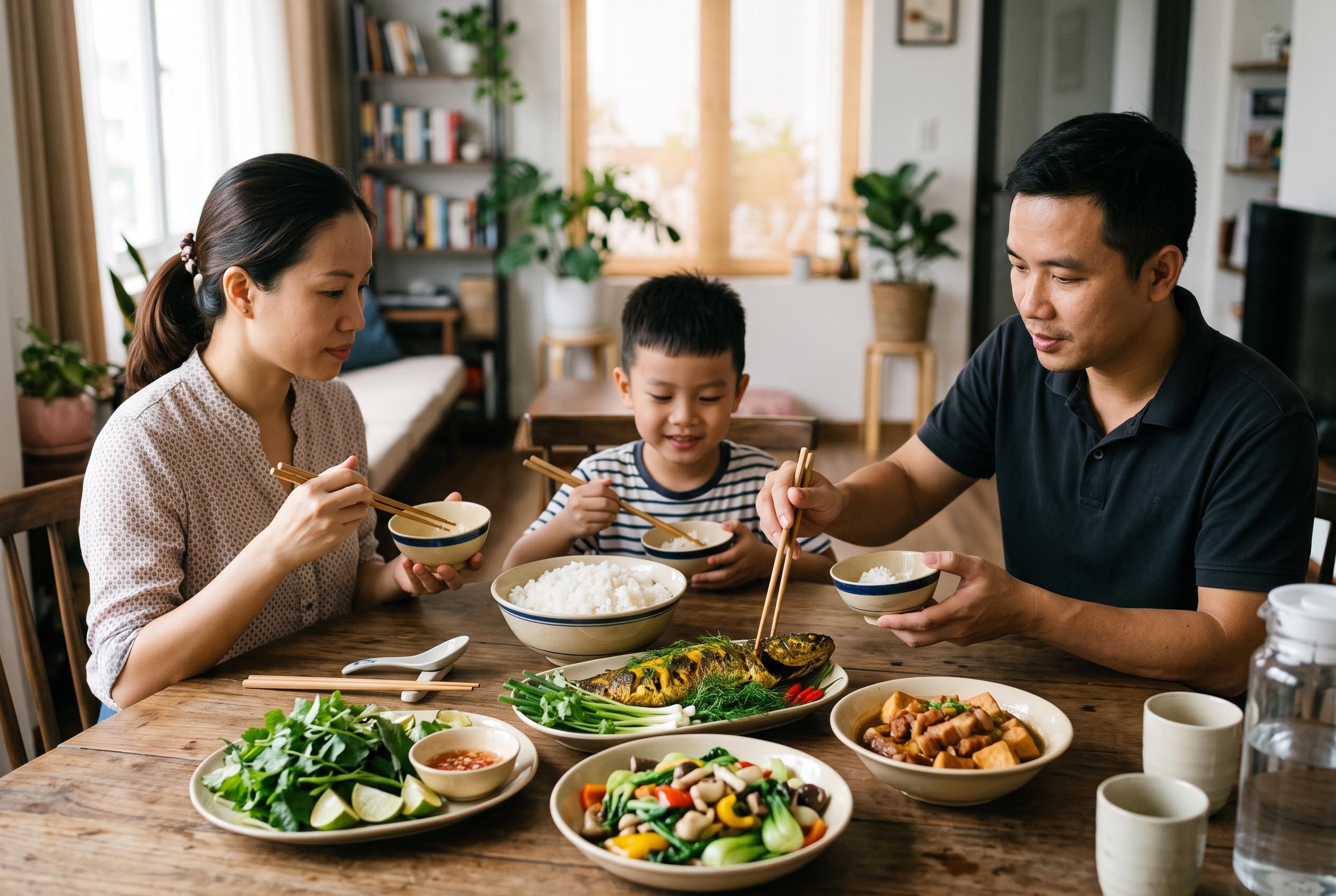

Nutrition experts emphasise the importance of a balanced diet rather than eliminating rice from Vietnamese tables, promoting a variety of foods for optimal health.
Rice remains a familiar fixture on many Vietnamese tables, but nutrition experts say there is no need to cut it out altogether simply because it appears often. The more important question is whether the overall meal is balanced, with enough vegetables, protein and other foods to match the body’s needs.
Rice provides carbohydrate, an important source of energy. But a plate that is dominated by rice and short on vegetables or protein can easily become lopsided. The World Health Organization says a healthy diet should be varied and balanced, with carbohydrates coming mainly from whole grains, vegetables, fruit and pulses.
For people who are used to eating large portions of rice, the best approach is usually gradual rather than drastic. Instead of trying to ban rice or slash starch intake overnight, smaller adjustments at mealtimes can make a diet more diverse and easier to sustain.
One simple step is to look beyond the number of bowls of rice on the table. If a meal includes a large serving of rice but only a small amount of meat and very little vegetables, the balance can be improved by trimming the rice portion slightly and adding more plant foods. That change should not be replaced with fried foods, heavy oils or processed items, which can undermine the goal of eating better.
Another useful habit is to serve rice alongside vegetables and protein-rich foods such as fish, eggs, meat, poultry, beans or soya-based dishes. Vegetables contribute fibre, vitamins and minerals, while protein supports many of the body’s functions. WHO advises adults to eat at least 400 grams of fruit and vegetables a day, which makes a strong case for letting vegetables take a larger role at each meal.
It can also help to swap part of the white rice for higher-fibre options from time to time, such as brown rice, oats, maize or beans. Whole grains and pulses offer more fibre than refined grains and can add variety to the diet. Even so, these foods are not a licence to overeat; total portions still need to match a person’s energy needs.
For families who eat rice regularly, the message is not to fear it but to rethink the balance around it. A healthier plate is usually one with less emphasis on a single staple and more attention to variety, portion size and cooking method. In practice, that means keeping rice on the menu while making room for more vegetables and better sources of protein.
Disclaimer: This content is for informational purposes only and is not intended to be a substitute for professional medical judgment, advice, diagnosis, or treatment.