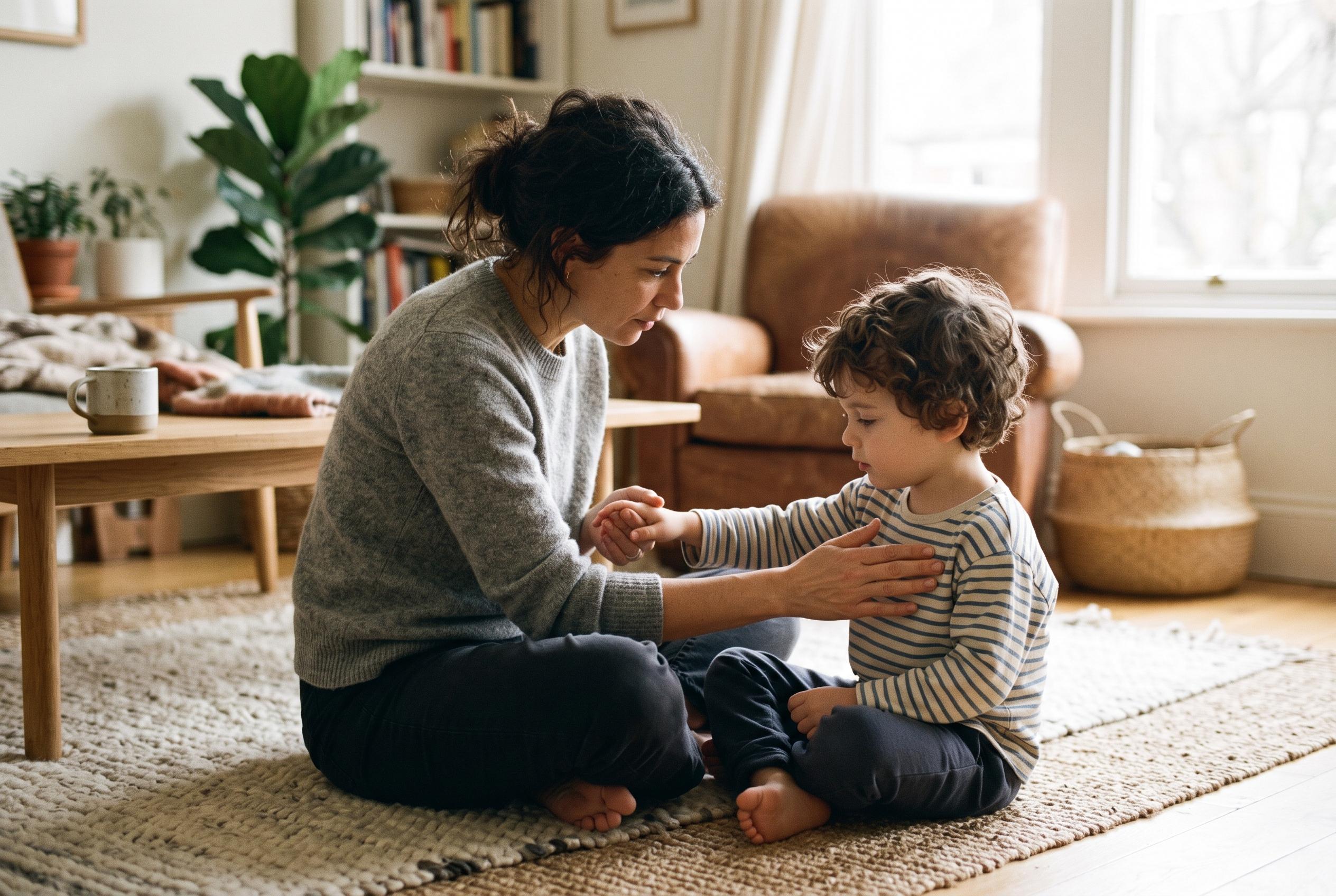

A Chinese study highlights how mindful parenting enhances preschool children’s social competence by improving emotion regulation and fostering close parent-child relationships, with implications for family programmes worldwide.
Mindful parenting may help preschool children develop stronger peer social skills, according to research on 531 Chinese families that examined how parenting style, emotion regulation and the parent-child relationship interact. The study found that parents who were more aware, accepting and responsive in daily interactions tended to have children with better emotion regulation and stronger competence with peers.
The findings are relevant because the preschool years are a key stage for learning how to interact with other children. Researchers behind the study said peer social competence is linked to later emotional well-being, relationships and learning, while weaker skills can leave children more vulnerable to social difficulties. The analysis was based on questionnaire data collected from families in multiple regions of China and covered children in urban and rural settings, though the sample was not random and cannot be taken as fully representative.
The study also suggests that emotion regulation is an important pathway. Children whose parents reported higher levels of mindful parenting were more likely to show better control of emotions, and those children in turn tended to do better in peer settings. The researchers found that emotion regulation partly explained the link between mindful parenting and peer competence, accounting for a meaningful share of the association, although other influences clearly remain.
Relationship quality mattered too. Parent-child closeness strengthened the connection between mindful parenting and children’s emotion regulation, while conflict did not show a significant moderating effect. In practical terms, the research points to a pattern in which mindful parenting appears most effective when it takes place within a warm and supportive relationship. Mothers in the sample reported higher mindful parenting than fathers and grandparents, and children cared for by mothers scored better on emotion regulation and peer social competence than those mainly raised by grandparents.
The study’s authors argue that the results support family programmes that go beyond general advice and instead help parents build attentive, non-judgmental habits in daily life. They also suggest that interventions may need to be tailored differently for families with strong closeness and those marked by more tension. Because the study was cross-sectional, it cannot prove cause and effect, but it adds to evidence that parenting style can shape not only children’s behaviour at home but also how they relate to other children.
Disclaimer: This content is for informational purposes only and is not intended to be a substitute for professional medical judgment, advice, diagnosis, or treatment.