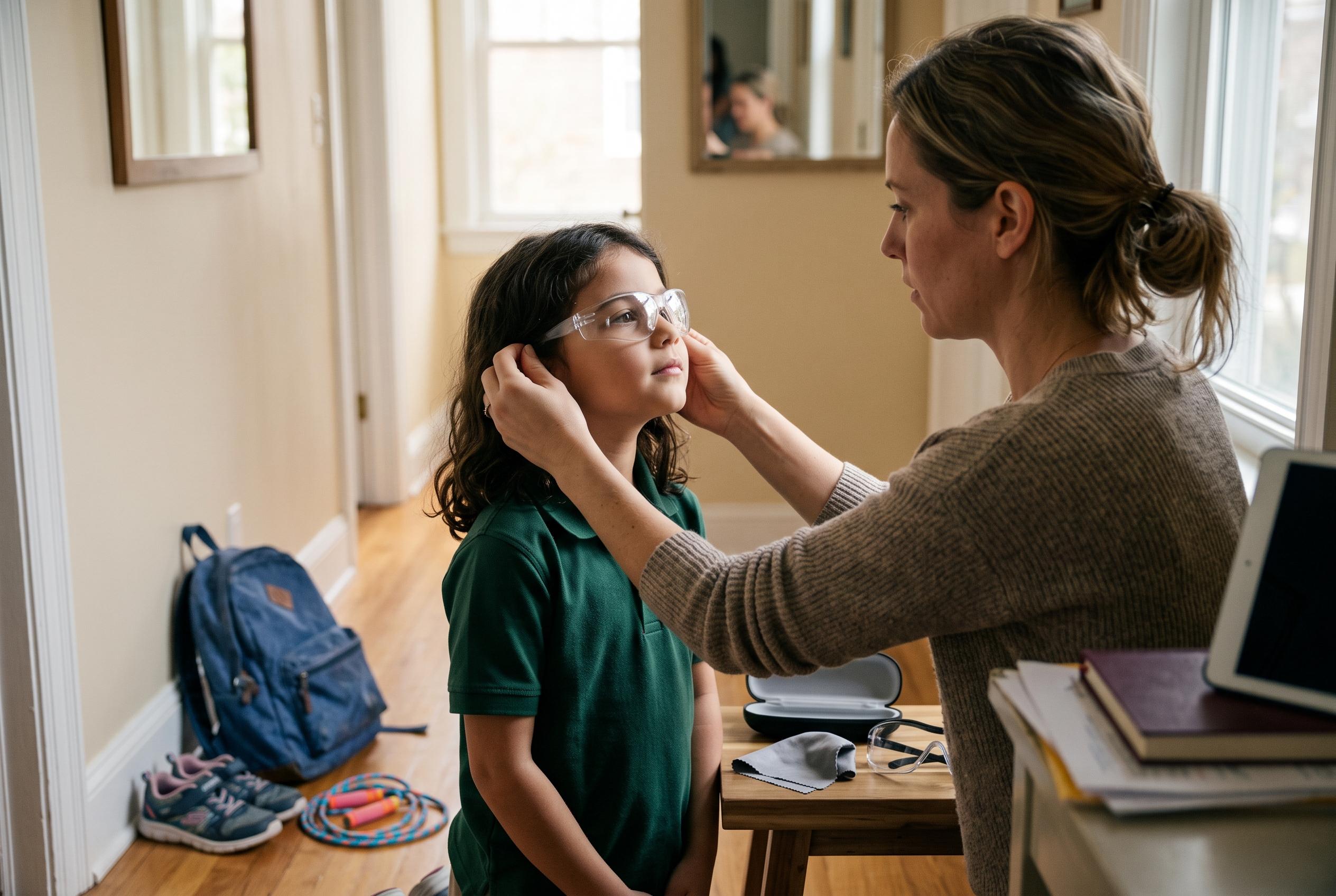

As children head back to school and packed schedules, experts emphasise the critical role of protective eyewear and vigilant eye safety practices to prevent injuries and support vision health amidst sports, screen use, and other activities.
The start of term often means a return to packed afternoons as much as packed classrooms. Clubs, training sessions, lessons in the pool and longer stretches on devices can all put pressure on young eyes, even when children do not realise it. The National Eye Institute says sports-related eye injuries are common in children and that the right protective eyewear can prevent most of them, while HealthyChildren.org advises parents to treat school and community sport as a key moment for eye safety.
For fast-moving sports, ordinary glasses are not enough. The National Eye Institute and New York State Department of Health both say regular spectacles, sunglasses and contact lenses do not give proper protection, and that children taking part in higher-risk activities should wear sports eyewear made from polycarbonate, a tough plastic designed to resist impact. That matters in games such as basketball, baseball, hockey, racquet sports and similar activities where a ball, elbow or stick can cause serious injury.
Away from the pitch, the same practical approach helps with swimming, crafts and screen time. After pool sessions, irritated eyes are best rinsed gently with clean water rather than rubbed, and in clubs that involve glue, sprays or paint, it helps to keep hands clean and avoid touching the face. For homework and gaming, the warning signs are often subtle: tired eyes, headaches, blurred vision, frequent blinking or a child sitting too close to the screen. Small changes, such as taking breaks and improving lighting, can make a noticeable difference.
Parents are often the first to spot that something is off. Squinting, rubbing the eyes, losing interest in reading or complaining that schoolwork is harder than usual can all point to a vision problem. If those signs keep coming back in the first few weeks of term, an eye test is worth booking. The sooner a problem is found, the easier it is to support learning, comfort and confidence.
Disclaimer: This content is for informational purposes only and is not intended to be a substitute for professional medical judgment, advice, diagnosis, or treatment.