
Indonesia’s education ministry launches a nationwide STEM learning programme for preschool pupils, emphasising playful, integrated approaches to foster curiosity and critical thinking from the earliest years.
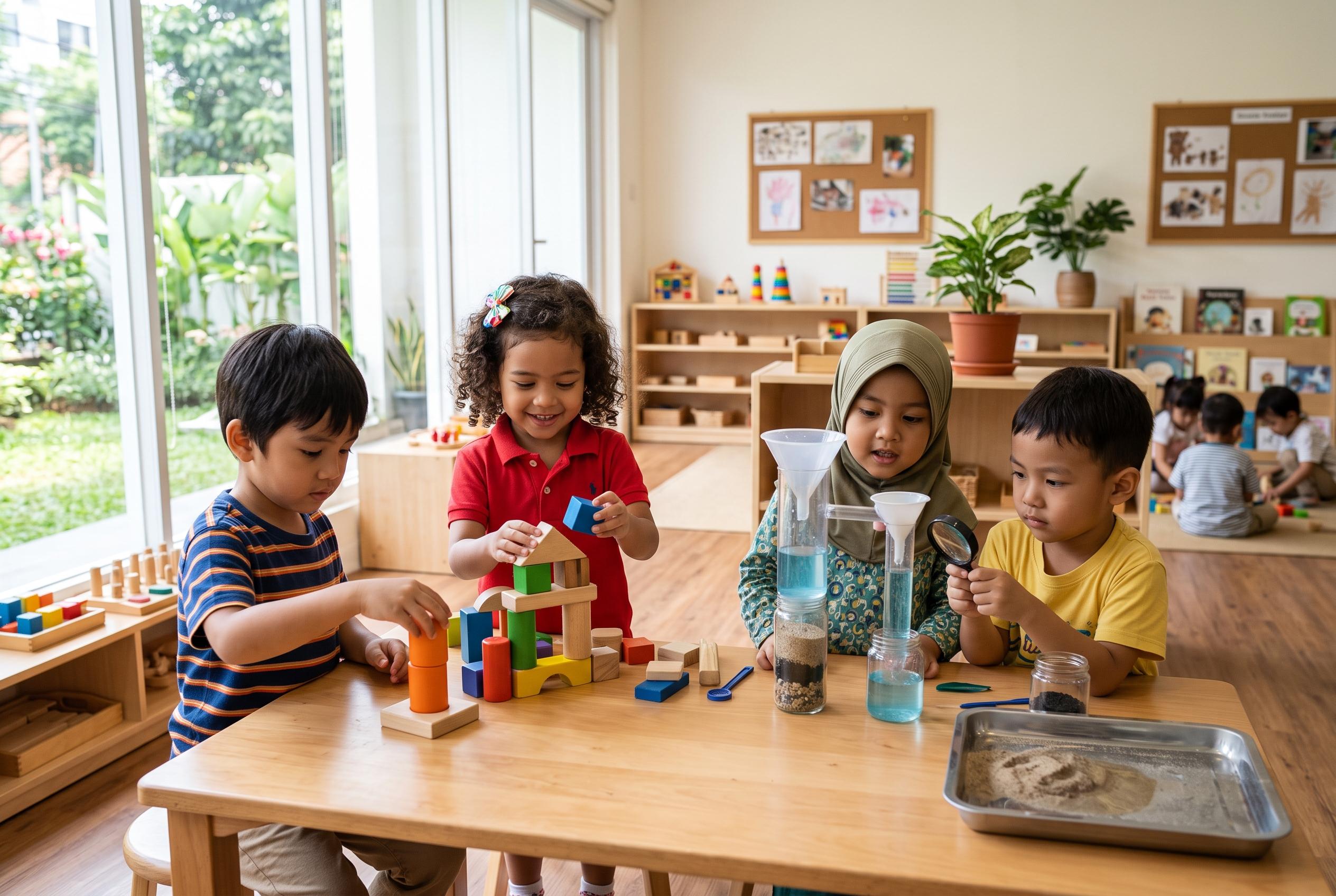
Indonesia’s education ministry has launched a STEM learning programme for early childhood pupils, positioning science, technology, engineering and mathematics as part of classroom exposure from the earliest years. The initiative was unveiled at PAUD Terpadu Kalirejo in Kudus, Central Java, a setting the ministry chose to underline its argument that curiosity, critical thinking and problem-solving should begin in a simple, playful environment.
Nunuk Suryani, the director-general for teachers and education staff, said at the launch in Kudus on Thursday that the programme is meant to help address advanced-skills gaps, narrow quality differences between schools and strengthen the country’s graduate profile goals. She also argued that STEM has often been seen as expensive and difficult to bring into ordinary teaching, which is why the ministry is promoting a wider framework for delivery rather than a narrow subject-only approach.
That framework includes teacher training built around what the ministry calls the 5M principles: easy, affordable, enjoyable, mindful and meaningful. The ministry says the point is not to turn preschool lessons into formal laboratory work, but to help teachers weave scientific habits into everyday activities in ways that feel natural to young children.
To scale up the programme, the Directorate General of Teachers and Education Staff is targeting 3,272 teachers for follow-up support through regional facilitators. The ministry has also set up a network of national, regional and local facilitators, which it says is intended to build a cross-disciplinary learning ecosystem and make STEM part of routine classroom practice rather than a one-off initiative.
Disclaimer: This content is for informational purposes only and is not intended to be a substitute for professional medical judgment, advice, diagnosis, or treatment.