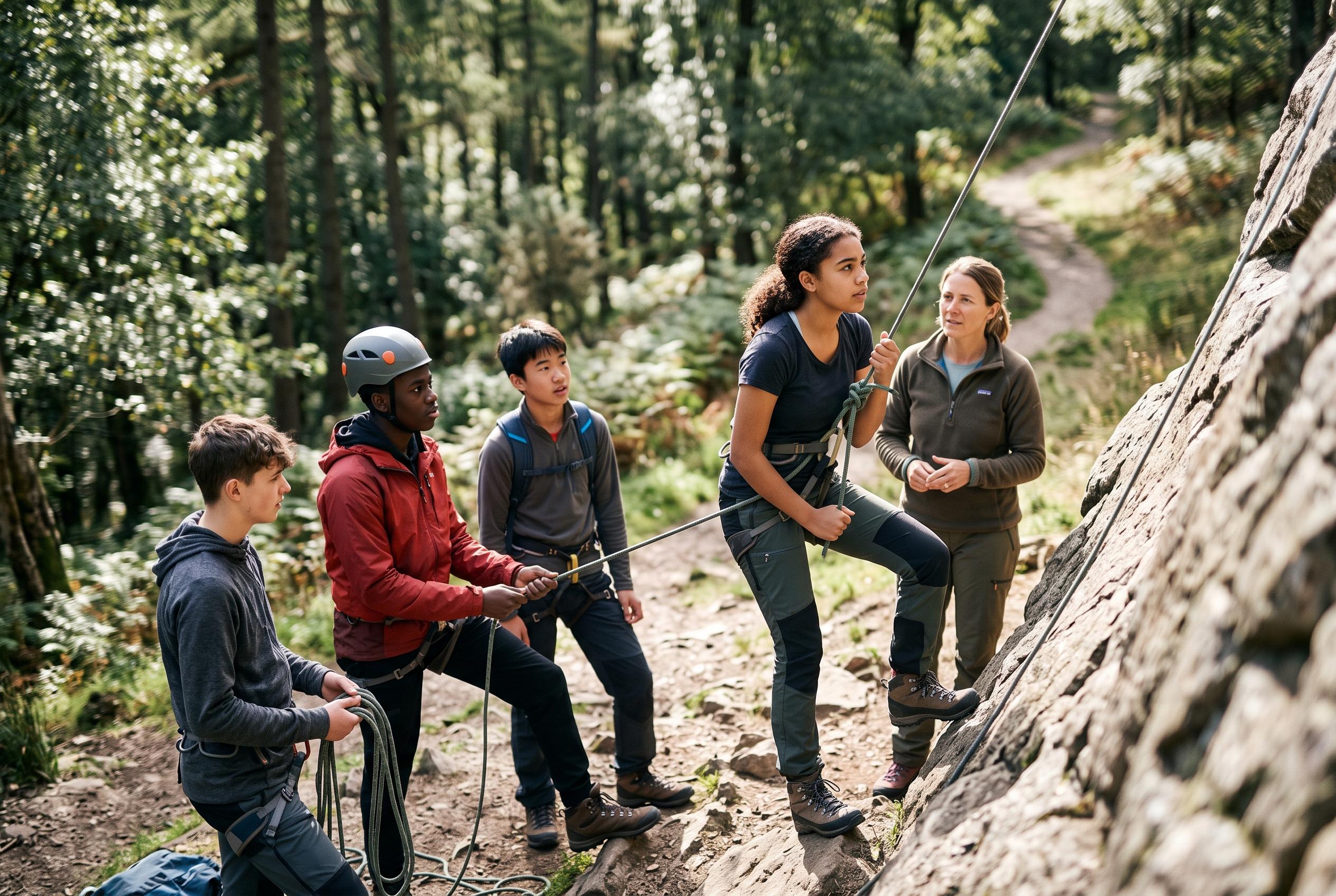

A pioneering position statement from Play Australia advocates for controlled, age-appropriate risky play to foster confidence, resilience, and sound judgment among children and teenagers, challenging safety-centric approaches.
Giving children and early teenagers room to take age-appropriate risks can support confidence, resilience and better judgement, according to a new Play Australia position statement co-authored by University of Notre Dame Australia lecturer Michael Down. The paper, Growing Through Risk: Supporting Play and Wellbeing from 9-15 Years, is described by Play Australia as the first dedicated statement on risky play for this age group. It defines the idea as voluntary, self-directed activity that involves uncertainty and manageable challenge, while removing serious hazards. Play Australia says the goal is not to ignore safety, but to give young people regular opportunities to test themselves in ways that aid development.
The statement points to activities such as climbing trees, cycling, skateboarding, negotiating playground equipment and rough-and-tumble play, with the right level of challenge depending on a child’s age, ability and experience. Down told The Catholic Weekly that risky play is about controlled challenge rather than putting children in danger, and said it can help young people build independence, self-esteem and the ability to judge risk for themselves. He also argued that having constructive outlets for risk-taking may steer some teenagers away from harmful behaviour, including reckless driving and excessive drinking.
Others in Catholic education say schools already provide structured chances for challenge. Cath Garrett-Jones, executive director of the Council of Catholic School Parents NSW/ACT, told The Catholic Weekly that programmes such as the Duke of Edinburgh’s Award, sport, creative arts and recreation already expose students to managed risk in supervised settings. A Sydney Catholic Schools spokesperson said its schools aim to help students develop confidence, resilience, independence and sound judgement while keeping physical, emotional and spiritual safety central to education.
The case for risky play also fits a wider push in Australia. Play Australia’s earlier national risk statement for younger children argued for a benefit-risk approach in early childhood, and the organisation has since welcomed a separate position statement from the Australasian Society for Developmental Paediatrics supporting adventurous play for children in Australia and Aotearoa New Zealand. Supporters say the broader message is that young people learn by handling manageable uncertainty, not by being shielded from every possible bump or bruise.
Disclaimer: This content is for informational purposes only and is not intended to be a substitute for professional medical judgment, advice, diagnosis, or treatment.