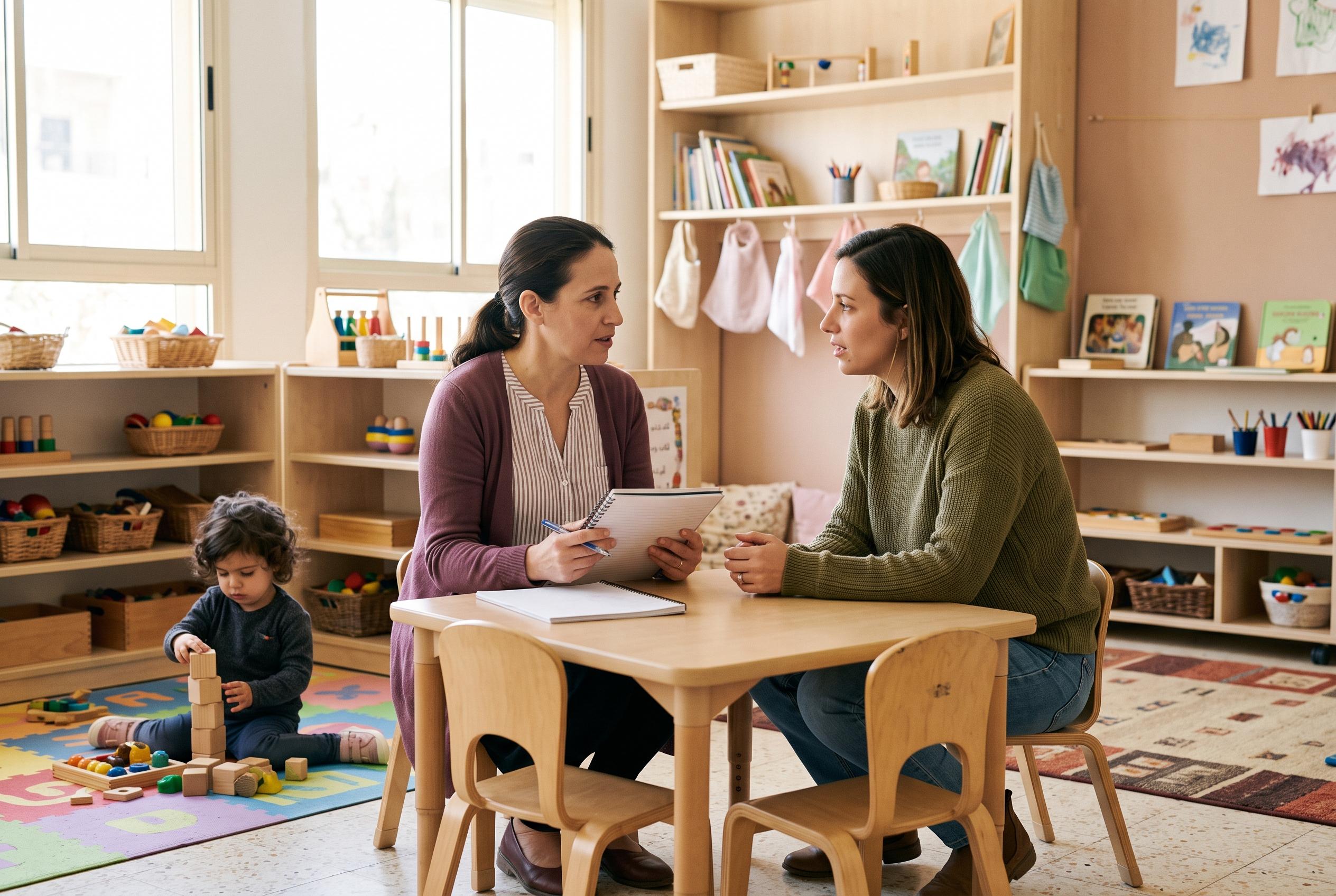

With the first of September marking a significant moment for Israeli families and educators, experts warn that underfunding, insufficient training, and sector shortages threaten the vital parental-educator partnership essential for young children’s development.
For many parents in Israel, the first of September brings more than the usual mix of nerves and hope. After months shaped by war, reserve duty and repeated family disruption, the handover at the nursery gate can feel especially loaded. Yet that moment also marks the start of one of the most important relationships in a child’s early life: the partnership between families and early-years educators. According to the Taub Centre, that partnership works best when the adults around the child share information and respond consistently to what the child is experiencing.
Small details from home can matter. A difficult night, a parent away on reserve duty, or a major change in the household can all affect how a young child behaves during the day. In the first years of life, children are highly sensitive to their immediate environment, and early-years staff often need that context to understand unusual crying, clinginess or shifts in behaviour. The Taub Centre has argued that stronger communication between homes and childcare settings can improve how caregivers respond to those signals.
But a working partnership is not only about what parents share. It also depends on whether the state gives educators the training and support their role requires. The educator in a nursery may spend more waking hours with a toddler than almost anyone else, observing development, comforting distress and noticing early signs of difficulty. The Taub Centre has said Israel should strengthen professional preparation for early-childhood workers, improve pay and conditions, and shift greater responsibility for the sector to the Education Ministry.
That need is sharpened by the scale of the challenge. The article says Israeli childcare staff are required to complete only 220 hours of training, and that roughly half of workers in the field still have no professional preparation. It also says Israel invests less than a tenth of the OECD average in the quality of early-childhood education. Taken together, those gaps help explain the shortages, fatigue and high turnover that continue to affect the sector.
The first three years of a child’s life are crucial, and the responsibility for education does not begin at age three. If parents are to feel confident leaving their children in capable hands, those hands need support: proper training, regular supervision, fair pay and working conditions that allow skilled people to stay. The partnership between parents and educators is a child’s safety net, but the state, the article argues, must do more to strengthen the people who hold it together each day.
Disclaimer: This content is for informational purposes only and is not intended to be a substitute for professional medical judgment, advice, diagnosis, or treatment.