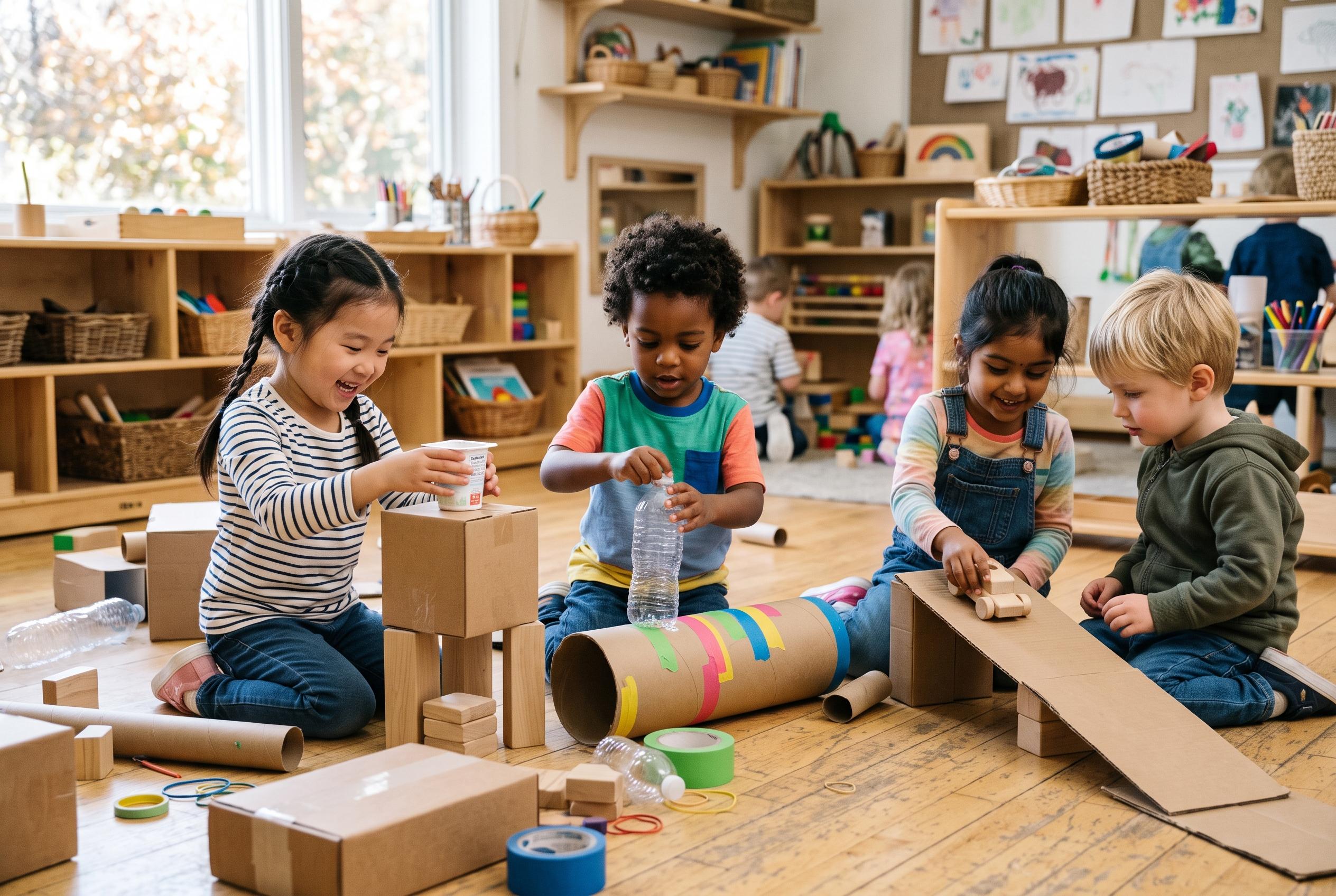

Simple, everyday household objects can serve as powerful tools in nurturing science and maths skills among preschool children, according to Dibber International Preschools South Africa, highlighting the importance of playful, hands-on exploration.
Small, low-cost changes to a play space can help preschool children build early science and maths skills, according to Dibber International Preschools South Africa. The company says ordinary household items such as blocks, containers, water, stones and bottle caps can be enough to spark curiosity, encourage testing and support the kind of problem-solving that underpins STEM, short for science, technology, engineering and mathematics. The idea is simple: children learn by predicting, trying, adjusting and trying again.
Ursula Assis, managing director of Dibber International Preschools South Africa, says the early years are already full of STEM moments. A child watching a tower fall, sorting objects by colour or size, or asking why one item sinks and another floats is already beginning to think scientifically. Dibber says adults should resist the urge to supply quick answers and instead give children space to explore, observe and make changes themselves.
That approach fits with Dibber’s wider early-childhood philosophy, which is shaped by Nordic teaching principles and places equal weight on academic, physical, emotional and social development. The company says its preschools are designed to be welcoming and secure, with structured learning delivered through play and hands-on activity. It also stresses that children develop at different rates and benefit from individual attention and opportunities that arise naturally during the day.
The same principle applies at home, where a sink-and-float experiment in the kitchen or a box of mixed objects can become a short, repeatable investigation. Education specialists quoted by Dibber argue that preschool STEM should be practical, brief and open-ended rather than worksheet-based, with adults asking simple questions such as what might happen next or how a tower could be made stronger. For parents and carers, the takeaway is reassuring: early STEM learning does not require special equipment, only a bit of time, a few everyday materials and a child’s willingness to wonder.
Disclaimer: This content is for informational purposes only and is not intended to be a substitute for professional medical judgment, advice, diagnosis, or treatment.