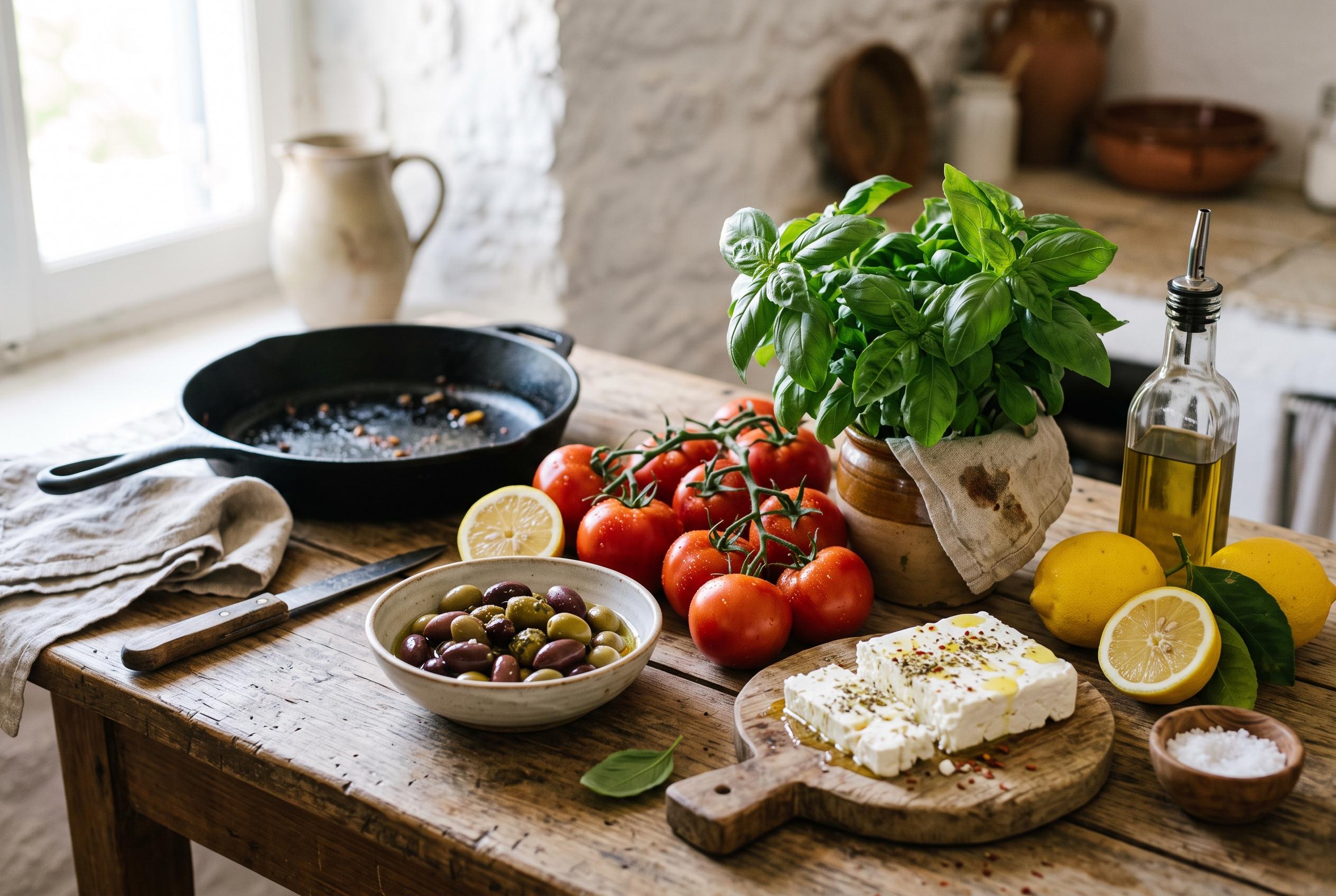

A new weekly home-cooking plan centred on seasonal produce offers a practical way to diversify, balance, and reduce waste, blending Greek household traditions with modern nutritional insights and structured meal rhythms.
A weekly home-cooking plan built around seasonal produce is being presented as a practical way to keep meals varied, balanced and waste-conscious. According to Kathimerini’s Gastronomos, the idea is to buy ahead, cook at home and work through the week with a menu that reflects both modern nutrition advice and familiar Greek household habits, with fish, legumes, poultry, red meat and a sweet course all making regular appearances.
The menu opens with an easy pasta dish shaped by the flavours of Greek salad, then moves through chicken fillets in white wine sauce, stuffed courgettes and beef fillet with ras el hanout and almond butter sauce. Related recipe collections from Greek-cooking sites such as Mt. Vikos and Kalliopi’s Kitchen show how widely such straightforward, home-style dishes remain central to contemporary Greek cooking, often favouring simple methods and clear instructions over complexity.
By midweek, the emphasis shifts to vegetables and legumes. The plan includes imam-style courgettes, a dish rooted in Aegean and island cooking, followed by fava with caper stew, a vegan plate that the publication describes as strongly aligned with Mediterranean eating because it combines plant protein, fibre and modest amounts of fat. Mediterranean Prep and the Official Mediterranean Diet site both underline the same broad pattern in weekly meal planning: legumes, vegetables and olive oil are recurring anchors, with red meat kept limited.
Seafood appears at the weekend with a Parian-style kakavia, made with whichever fresh boiling fish is available, served with the vegetables from the broth and a separate platter of fish at the centre of the table. The week finishes with roast chicken and potatoes, enriched with herbs, white wine and the browned juices from the tray, a familiar family dish that reflects the publication’s broader aim of making ordinary Sunday cooking feel generous without becoming elaborate.
For dessert, the plan turns to a summer tart with mascarpone, apricot jam and ripe figs, aimed at closing the week on a lighter note. BAYA Olive Oil’s recipe planning also reflects the wider Mediterranean trend towards structured weekly menus that mix convenience, seasonal ingredients and a little indulgence, showing how meal planning has become as much about rhythm and restraint as it is about recipes.
Disclaimer: This content is for informational purposes only and is not intended to be a substitute for professional medical judgment, advice, diagnosis, or treatment.