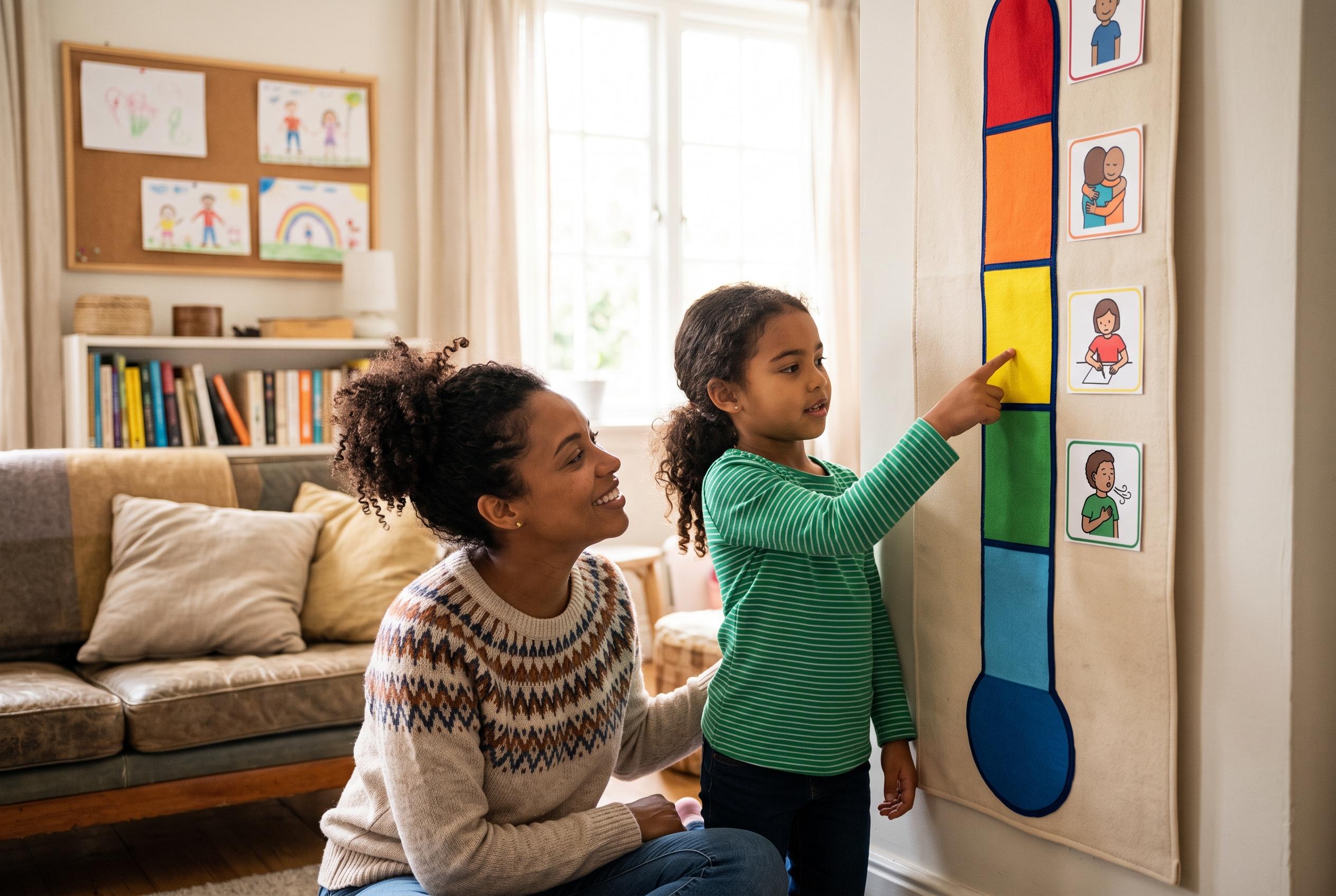

Simple visual scales, or feelings thermometers, are increasingly used to help children recognise, name, and manage anxiety, linking emotions to practical coping strategies across home, school, and therapy settings.
A simple feelings chart can help children name worry before it swells into panic. The idea behind an anxiety thermometer is straightforward: give a child a visual scale they can point to when words feel out of reach, whether they are calm, uneasy or overwhelmed. The Mental Health Center Kids version uses faces and actions to help children and teenagers identify what they are feeling and what might help in the moment, while Wisconsin’s Department of Children and Families offers a similar feelings thermometer that moves from a calm blue zone to a furious red zone with suggested coping steps along the way.
That kind of tool can be especially useful for younger children and those who struggle to speak about emotions directly. TES, which shares a resource aimed at children aged five to seven, says the thermometer format helps pupils recognise and describe anxiety in a more concrete way. CoralEHR, a therapy-focused provider, describes the same approach as a way of answering a child’s practical question: how big is this feeling? Rather than asking for a long explanation, adults can use the scale to explore intensity, body clues and early warning signs.
The value of the thermometer is not only in naming feelings but also in linking them to action. Mental Health Center Kids includes ideas for what children can do when anxiety rises, and Teach Simple’s version leaves space for a child to add their own calming strategies. That fits with a broader therapeutic approach used in child mental-health work, where the goal is to match the response to the level of distress rather than treating every wobble the same way.
Specialist resources are increasingly using the same visual language for different kinds of fear. Gentle Observations, for example, adapts the thermometer idea for children with ARFID, or avoidant restrictive food intake disorder, using a body-based scale and tracking pages to help pace food exposure safely. While that tool is more clinical, it underlines the same principle: children often need a concrete way to show where they are on the spectrum from manageable discomfort to full alarm.
For parents and carers, the main lesson is that the thermometer works best when it is introduced calmly, practised regularly and treated as a conversation starter rather than a test. The strongest versions, across home, school and therapy settings, are the ones that help children notice their own warning signs, choose a next step and understand that every point on the scale is valid.
Disclaimer: This content is for informational purposes only and is not intended to be a substitute for professional medical judgment, advice, diagnosis, or treatment.