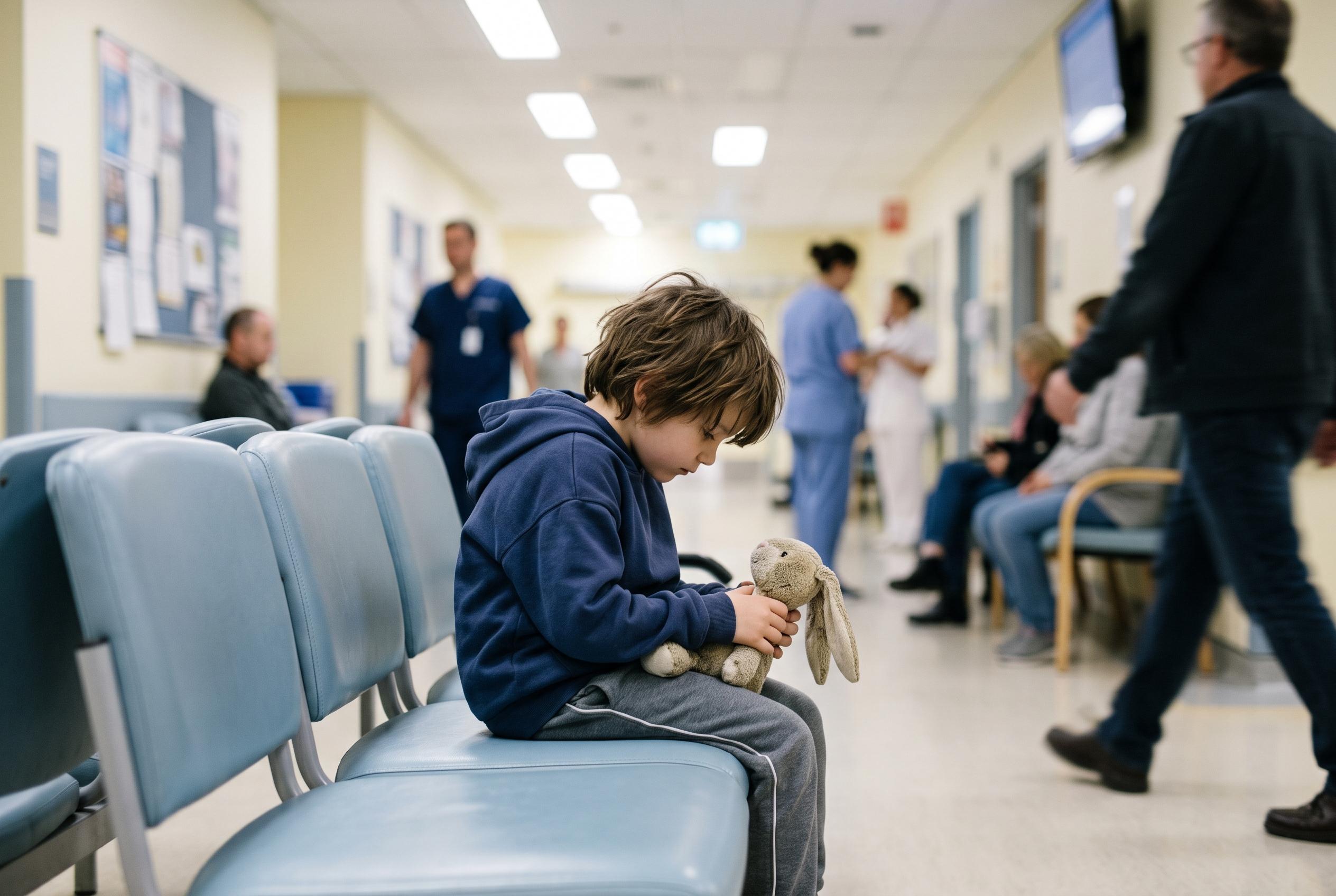

A sharp rise in young children in distress attending emergency departments in England highlights a growing mental health crisis, with experts urging the government to prioritise early support and trauma-informed care.
The Royal College of Paediatrics and Child Health has warned that children’s mental health is reaching crisis point after new analysis showed a sharp rise in emergency department attendances involving young people in distress. The college, drawing on NHS England data obtained through a Freedom of Information request, said the figures should force ministers to spell out how they will prioritise support for children in the government’s forthcoming mental health strategy.
In 2025, 75,491 children and young people aged six to 17 attended emergency departments in England with a recorded mental health concern, up from 55,525 in 2019. That is a rise of 36%, according to the RCPCH. The steepest increase was among six to nine-year-olds, where attendances climbed 62% over the same period, from 3,870 to 6,269. Health professionals say that trend is particularly troubling because of the long-term harm that can follow when very young children do not get help early.
The data also suggest that hospitals are being forced to act as a last resort while children wait for the right care elsewhere. The number spending more than 12 hours in A&E rose from 1,964 in 2019 to 6,235 in 2025, a jump of 217%. Those waiting more than 72 hours increased from 55 to 338 over the same period. The college said emergency departments are not designed for children in acute mental health crisis and argued that safer, trauma-informed settings are needed instead.
Dr Sam Jones, the RCPCH’s mental health lead, said every figure represented a child in distress and a family with nowhere else to turn. Dr Ronny Cheung, the college’s health services lead, said the trend should be a wake-up call for ministers and warned that failure to intervene earlier could deepen problems in education, work and training. The Royal College of Nursing said the situation showed a failing system that left desperate families with few alternatives, while Mind called for same-day open access mental health support and a wider roll-out of Young Futures Hubs.
Disclaimer: This content is for informational purposes only and is not intended to be a substitute for professional medical judgment, advice, diagnosis, or treatment.