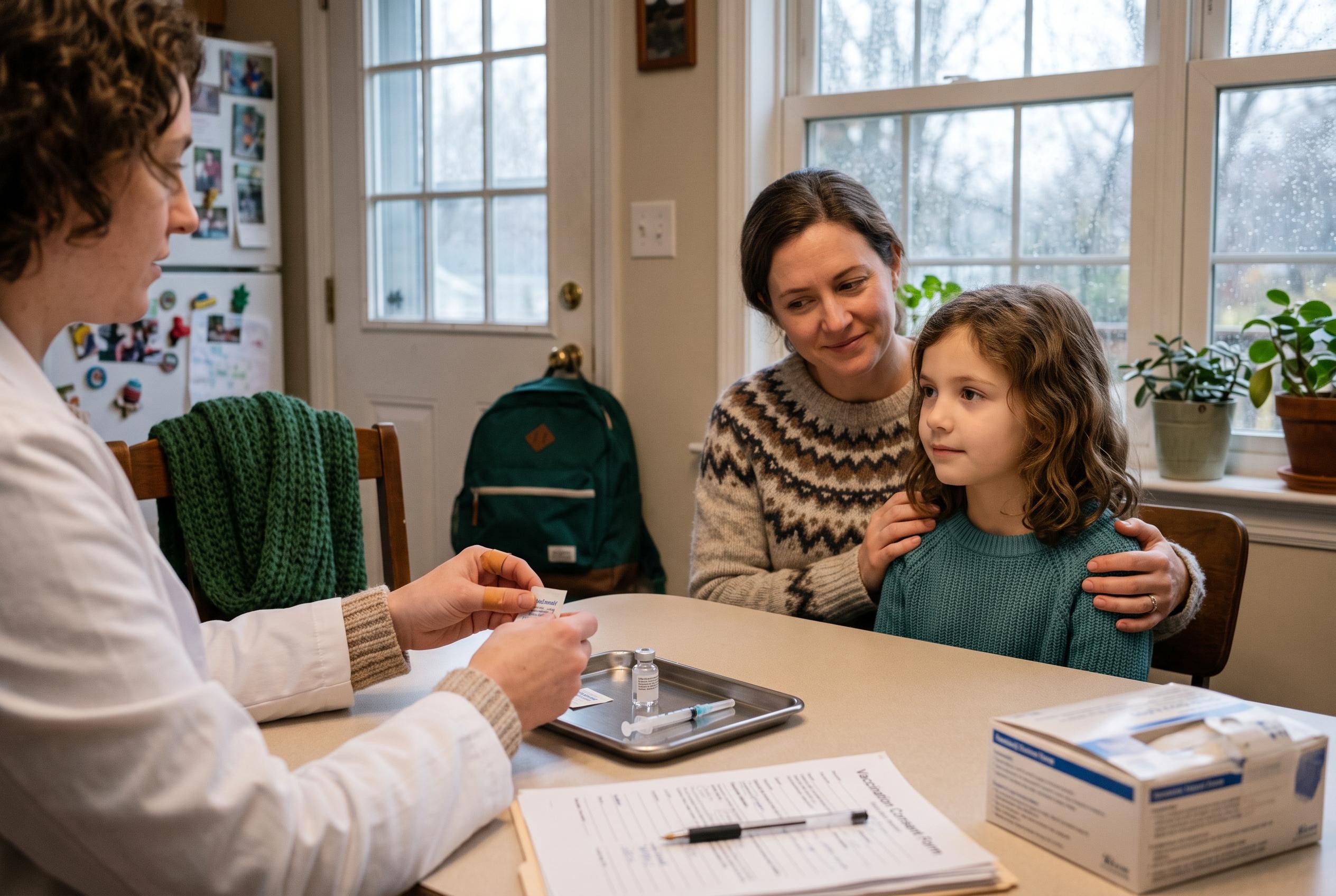

Leading medical associations in the US have released joint recommendations for influenza, Covid-19, and RSV vaccinations, providing clarity as the federal immunisation policy landscape faces disruption.
Professional medical groups have issued joint autumn and winter vaccine guidance for influenza, Covid-19 and RSV, stepping in with their own recommendations after the collapse of the usual federal process in the United States. The American Academy of Pediatrics, the American Academy of Family Physicians, the American College of Obstetricians and Gynecologists and others worked with the University of Minnesota’s Vaccine Integrity Project to produce advice for clinicians and families as respiratory virus season approaches.
The effort is meant to give doctors clearer direction and help patients decide when to get protected against illnesses that can cause severe disease, particularly in young children, older adults and pregnant people. According to the groups, the scientific basis for the recommendations is broadly consistent with earlier advice, even as federal vaccine policy has been thrown into disarray by the restructuring of the CDC’s immunisation advisory panel and the legal uncertainty that followed.
One of the few notable changes concerns RSV vaccination in pregnancy. The American College of Obstetricians and Gynecologists has extended the window for giving the vaccine to pregnant patients until March 1, reflecting evidence that recent RSV seasons have started later and lasted longer than before. The shot is still a one-time vaccine for adults, so a pregnant person can receive it in only one pregnancy; in later pregnancies, infants may instead be protected with RSV monoclonal antibodies if they are young enough and entering their first season.
The American Academy of Pediatrics said babies eight months old or younger who are entering their first RSV season should receive monoclonal antibodies if their mother was not vaccinated during pregnancy, or if her vaccination status is unclear. It also said some children going into a second RSV season and at high risk of serious illness should receive them too. For flu, the family physicians’ group said October is often the best time for vaccination because protection can fade over the course of the season. Bruce Gellin of the Vaccine Integrity Project said patients still need “clear and simple guidance” and added, “Whatever happens to the federal vaccine policy process, we cannot lower that scientific standard.”
Papers explaining the reasoning behind the recommendations were published in JAMA on Wednesday, and the Vaccine Integrity Project said it will also post an interactive tool on its website so doctors and the public can review the evidence behind the guidance.
Disclaimer: This content is for informational purposes only and is not intended to be a substitute for professional medical judgment, advice, diagnosis, or treatment.