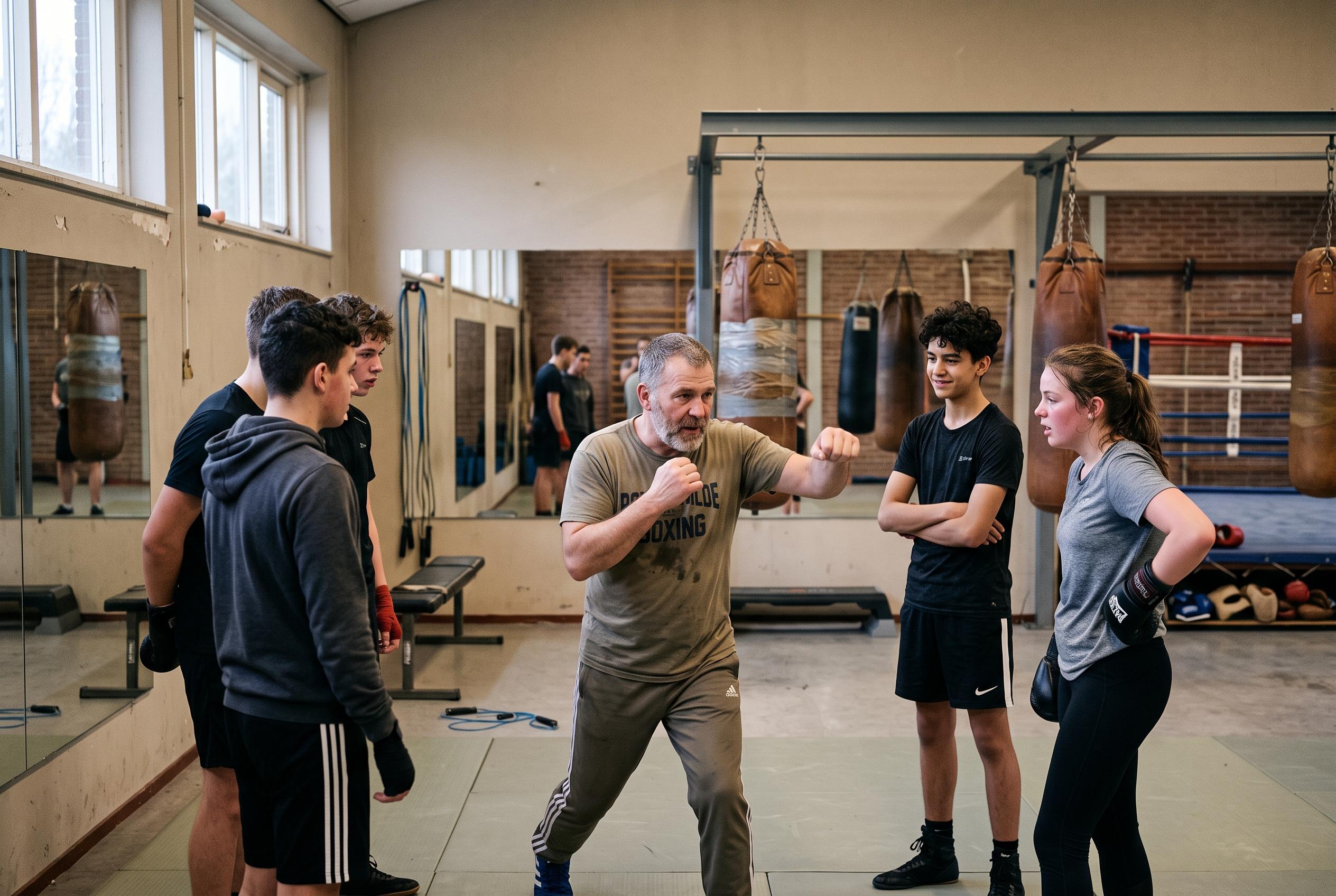

Ben Tingen transforms his small gym into a sanctuary for adolescents battling modern lifestyle challenges, promoting physical activity as a tool for mental and physical resilience.
Ben Tingen has turned his small gym in Bovensmilde into something more than a place to train. For the former professional boxer, it is a refuge for young people he says are increasingly weighed down by poor sleep, screen time, vaping, bad diets and a lack of exercise. He says the problem is not any single habit but the combination, which he fears is helping some teenagers drift from school, discipline and stable routines.
Tingen’s concern begins with a simple sight: pupils arriving at his boxing school on fatbikes. He sees the irony in youngsters using electric assistance to reach a place where effort is the point. But his argument is broader than a dig at the modern bike. He says young people do not build fitness on a battery, and that physical movement remains one of the most useful tools for reducing stress and restoring focus.
That view is broadly backed by public-health guidance. The US Centers for Disease Control and Prevention says physical activity can improve attention, memory, academic performance, muscular fitness, heart and lung health, bone strength and long-term wellbeing in children and teenagers. The CDC also advises parents and carers to support healthy routines through sleep, nutritious food, exercise and reduced screen time. On vaping, it warns that no tobacco product is safe for young people and describes e-cigarettes as battery-powered devices that heat liquid into an aerosol, often containing nicotine.
Tingen says he is trying to provide the kind of space where teenagers can talk honestly and be met without judgement. He is not presenting himself as a therapist or teacher, only as a coach who listens carefully and watches for what a young person’s breathing, movement, eating habits and surroundings may reveal. In his view, boxing gives some teenagers a chance to build trust, control and self-respect before harder problems take hold.
He points to two 15-year-olds at his gym, Moreno and Danée, as examples of what that can look like. Both say training helps clear their heads, gives them energy and makes school and daily life easier to handle. Their experiences fit a wider body of evidence suggesting that youth sport can support mental health, social connection, sleep and academic performance. Tingen says that is why he is inviting local young people, whether they arrive on a bike, a scooter or on foot, to try three free boxing lessons.
Disclaimer: This content is for informational purposes only and is not intended to be a substitute for professional medical judgment, advice, diagnosis, or treatment.