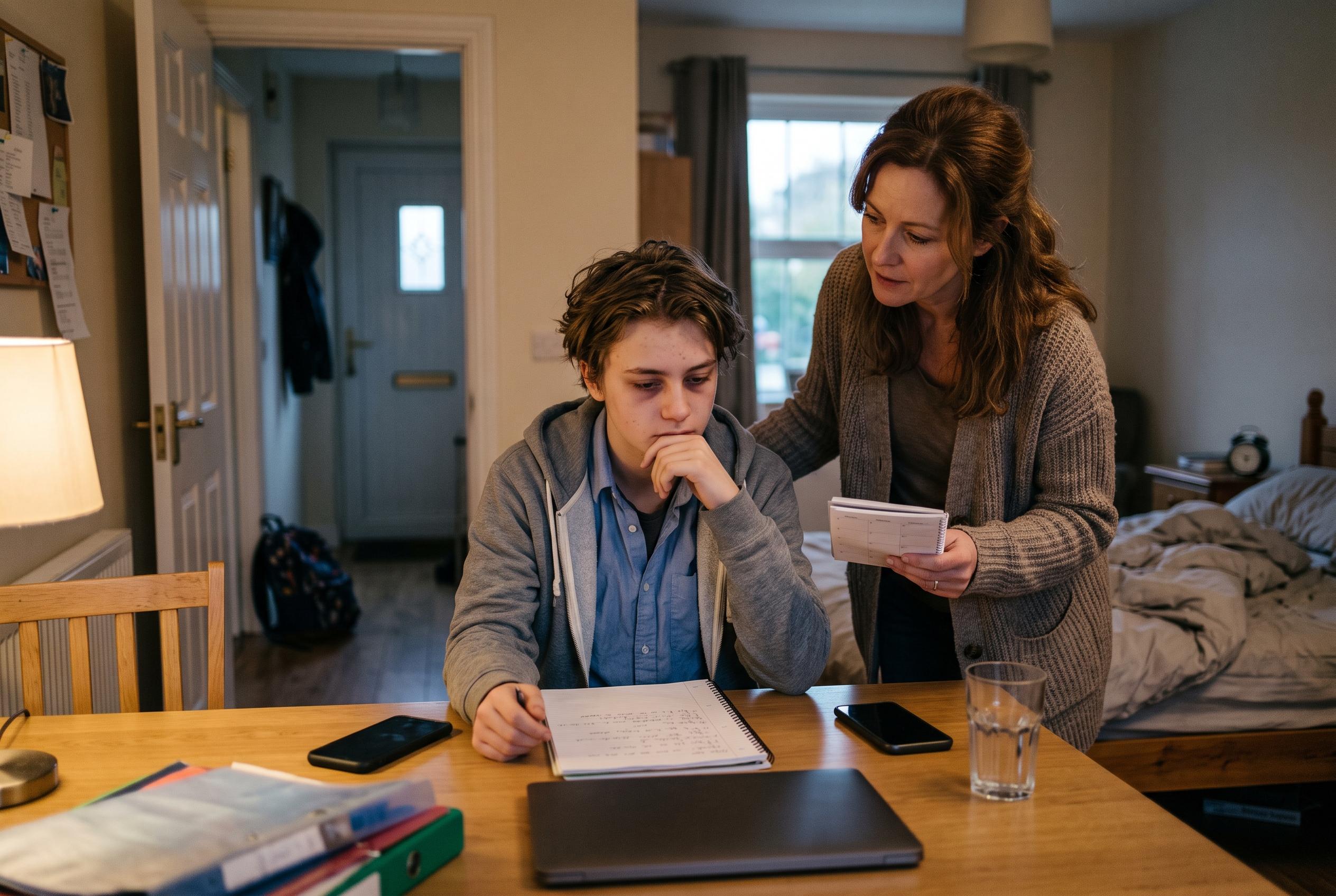

A new survey reveals that nearly nine in ten Irish parents report their teenagers feeling stressed weekly during the school return, with homework, social media, and future worries intensifying pressures and affecting sleep and school attendance.
As the school year begins, many Irish parents are settling back into routines that are familiar to them but far from easy for their teenagers. A survey commissioned for Zenflore Teen found that 89% of parents in Ireland believe their child feels stressed every week, suggesting that the return to class can heighten pressure at home just as families are trying to get organised.
The same research points to schoolwork and homework as the biggest strain, named by half of parents overall and by 55% of those whose teenagers are described as very stressed. Social media ranked second, followed by friendships and concern about future plans or college. In the more severe cases, parents said stress showed up as irritability, mood swings and anxiety, while 43% said their teenager had missed school because of it.
Other reporting on the survey adds that Irish teenagers are missing an average of ten school days a year because of stress, with exams emerging as a major pressure point. It also found that stress affects sleep for about 90% of teenagers in the study, underlining how closely worry and restlessness are linked during the academic year.
Educator Tadgh O’Donovan, known online as Teach With Tadgh, said the return to school can be especially difficult after the looser rhythm of summer. He recommended a steady routine built around exercise, healthy food, time with others and regular sleep. The survey also suggests that parents still matter most when stress builds: talking to parents was the leading coping strategy, ahead of music, sport and friends. The findings are a reminder that the challenge is not only getting children back into classrooms, but helping them manage the pressure once they are there.
Disclaimer: This content is for informational purposes only and is not intended to be a substitute for professional medical judgment, advice, diagnosis, or treatment.