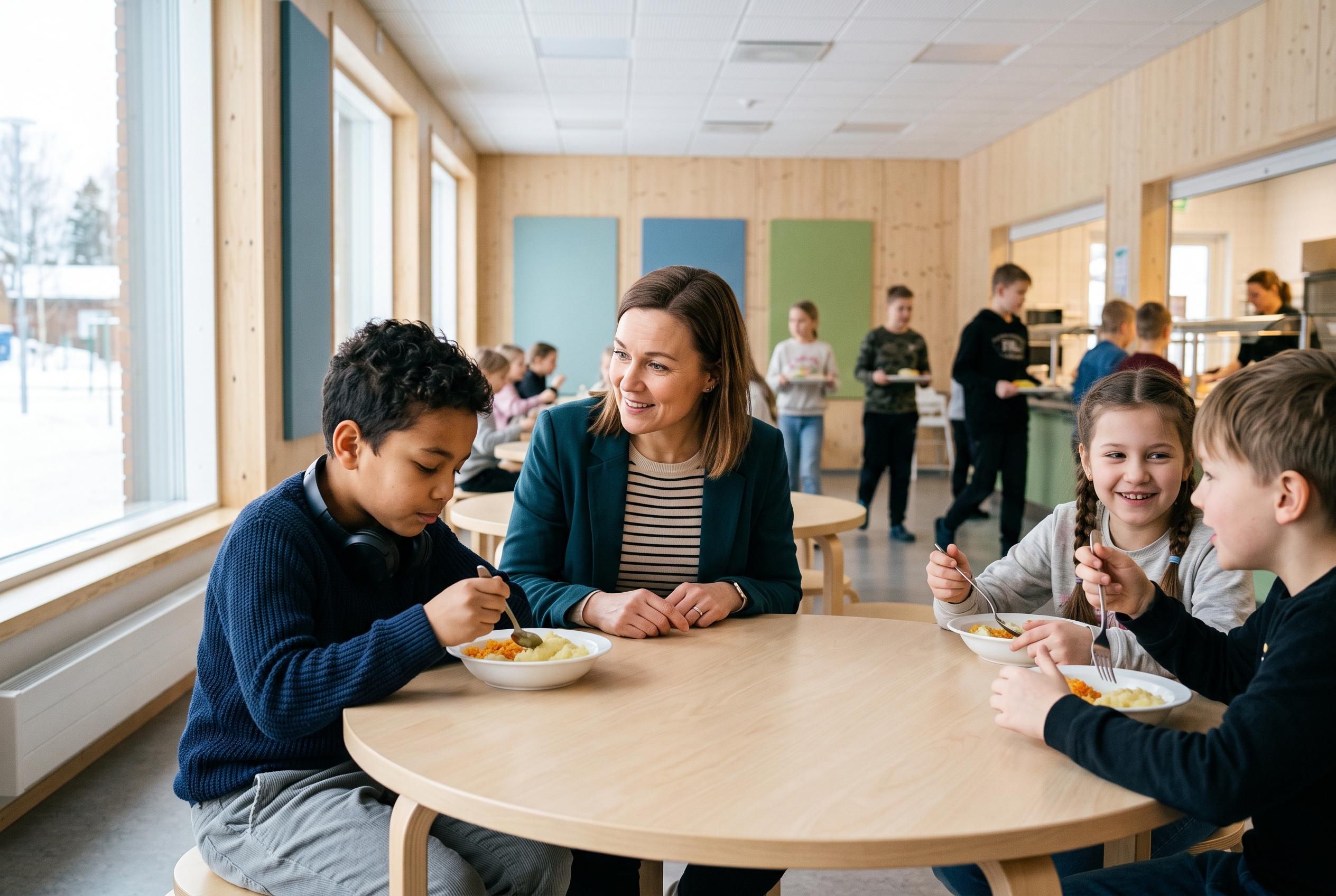

Finnish nurseries and schools are offering temporary safety food to children with complex eating challenges, reflecting a tailored approach to support their well-being and learning amid rising awareness of sensory sensitivities and neurodivergence.
More children are receiving so-called safety food in Finnish nurseries and schools as educators and health professionals respond to eating difficulties that can go well beyond fussiness. According to the Finnish National Agency for Education, the issue may involve sensory sensitivities, neurodivergent traits or strong anxiety around food, and the arrangement is meant to help a child manage the school day rather than to offer a permanent alternative menu.
Marjaana Manninen, a senior education adviser at the agency, told Ilta-Sanomat’s sister publication Iltalehti that safety food is granted only when a child has significant eating challenges and a health professional has judged the difficulties to be real, burdensome and linked to eating and energy levels. She stressed that the support is temporary, usually lasting only a few months, and is reviewed over time with the aim of moving the child gradually back towards ordinary meal routines. The agency has also said in a blog post that safety food should not be confused with poor discipline or simple pickiness.
In practice, the food can be very modest: plain pasta, vegetables, fish fingers, spinach pancakes or yoghurt, sometimes served alongside a familiar condiment such as ketchup. Katja Peränen, a food services specialist with the City of Helsinki’s education and training division, told Iltalehti that a child can still choose the regular school meal, but in many cases the standard serving line is too difficult to manage. She said some pupils may eat the same safe food for days at a time, and that the number of children receiving such help has risen slightly over the past couple of years, although Helsinki does not keep a precise tally.
The discussion comes against the backdrop of the wider role school meals play in Finland. The Finnish National Agency for Education says school lunches support well-being, learning and food literacy, and are part of the educational experience. Manninen likened the school dining room to a restaurant with fixed options and argued that the aim is not to stop learning but to make it possible. Helsinki says the meals themselves do not usually create extra ingredient costs because the foods are already on the menu, though the arrangements require planning between schools and families.
Disclaimer: This content is for informational purposes only and is not intended to be a substitute for professional medical judgment, advice, diagnosis, or treatment.