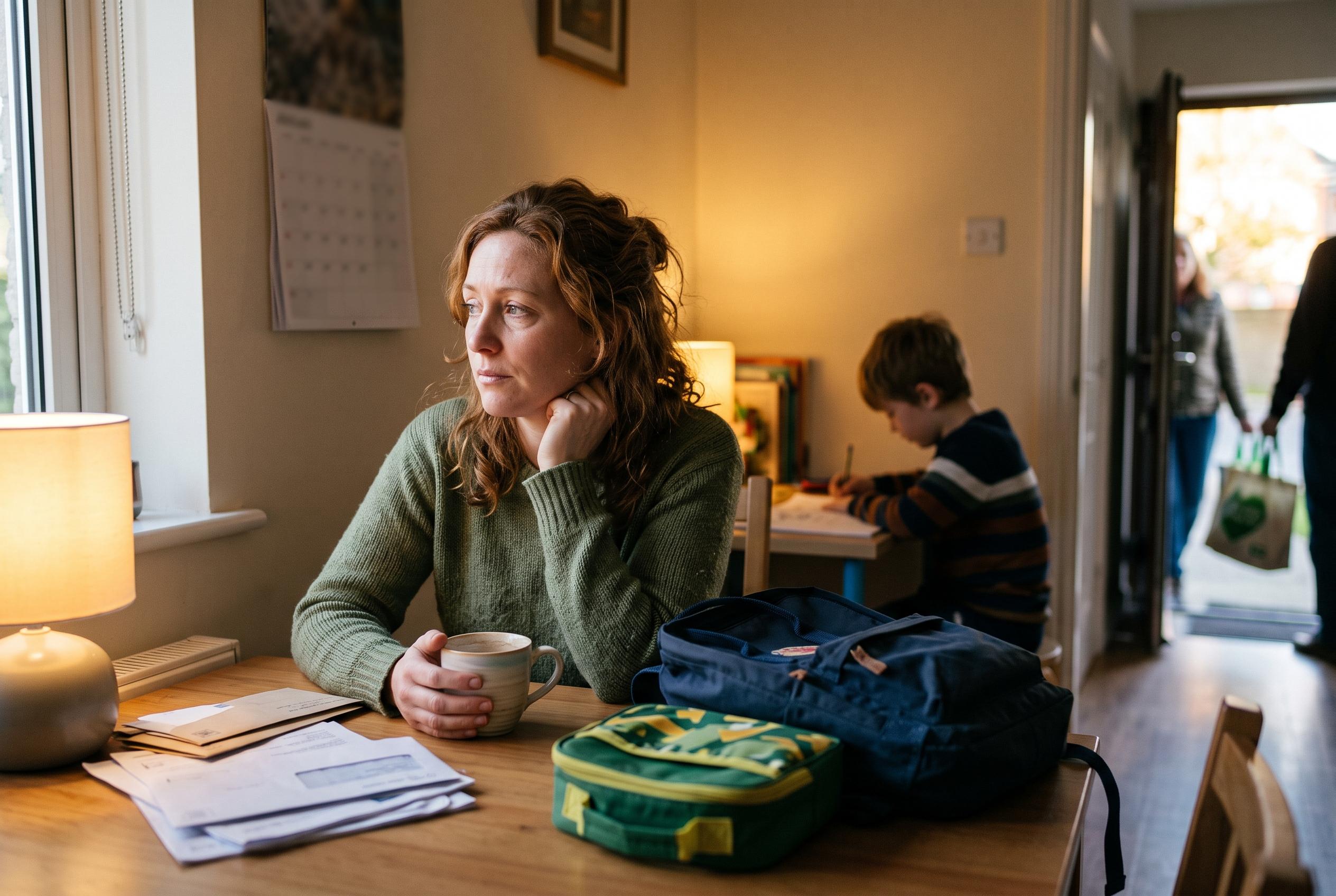

A Harvard-led discussion echoes the U.S. Surgeon General’s warning on parental mental health, emphasising that structural issues like economic pressures and community support are key to reducing parental stress and fostering healthier families.
Parents are being asked to do more with less support, and that pressure is showing up in their mental health. A 2024 advisory from the U.S. Surgeon General called parental stress an urgent public health issue, citing evidence that nearly half of parents and caregivers say their daily pressures feel overwhelming. Harvard experts who recently gathered to discuss the topic argued that the problem is not simply personal resilience, but a wider set of forces, from post-pandemic strain and rising childcare costs to weaker community support and the constant churn of social media and world events.
Karestan Koenen, a professor of psychiatric epidemiology at Harvard’s T.H. Chan School of Public Health, said parents too often blame themselves when they are under strain. She said the better explanation is structural: families are dealing with economic pressure, eroding support networks and the lingering effects of the pandemic. Archana Basu, a Harvard Medical School assistant professor of psychology at Massachusetts General Hospital, said the first sign that a parent needs help is often a change in day-to-day functioning, whether at home or at work.
The Harvard panel said honesty with children matters, but it should be age-appropriate. Basu said younger children need concrete explanations, while older children may already have seen distressing information online and should be invited to talk about what they have heard. Richard Weissbourd, a senior lecturer at the Harvard Graduate School of Education, said children are usually relieved when a parent makes clear that a difficult mood or episode is not their fault. He added that these conversations can also model coping and help children learn how adults handle suffering.
Jayne Singer, a psychologist at Boston Children’s Hospital and assistant professor of paediatrics at Harvard Medical School, said repairing after a parental outburst is as important as avoiding the outburst in the first place. She said parents can name what happened, explain the emotion behind it and reassure the child that love has not changed. Koenen echoed that view, saying parenting is not a performance of perfection and that the chance to repair relationships never really ends. The panel also urged broader action, including stronger food and housing security, more parks and recreation spaces, and community settings where parents can gather informally.
For parents trying to get through an overwhelming day, the advice was practical rather than idealistic. Singer recommended small pauses, such as a brief body scan or a few minutes of breathing, to break the cycle of stress. The wider message was that personal habits matter, but they are not enough on their own. The Harvard discussion, like the Surgeon General’s advisory, framed parental wellbeing as both a family issue and a public one.
Disclaimer: This content is for informational purposes only and is not intended to be a substitute for professional medical judgment, advice, diagnosis, or treatment.