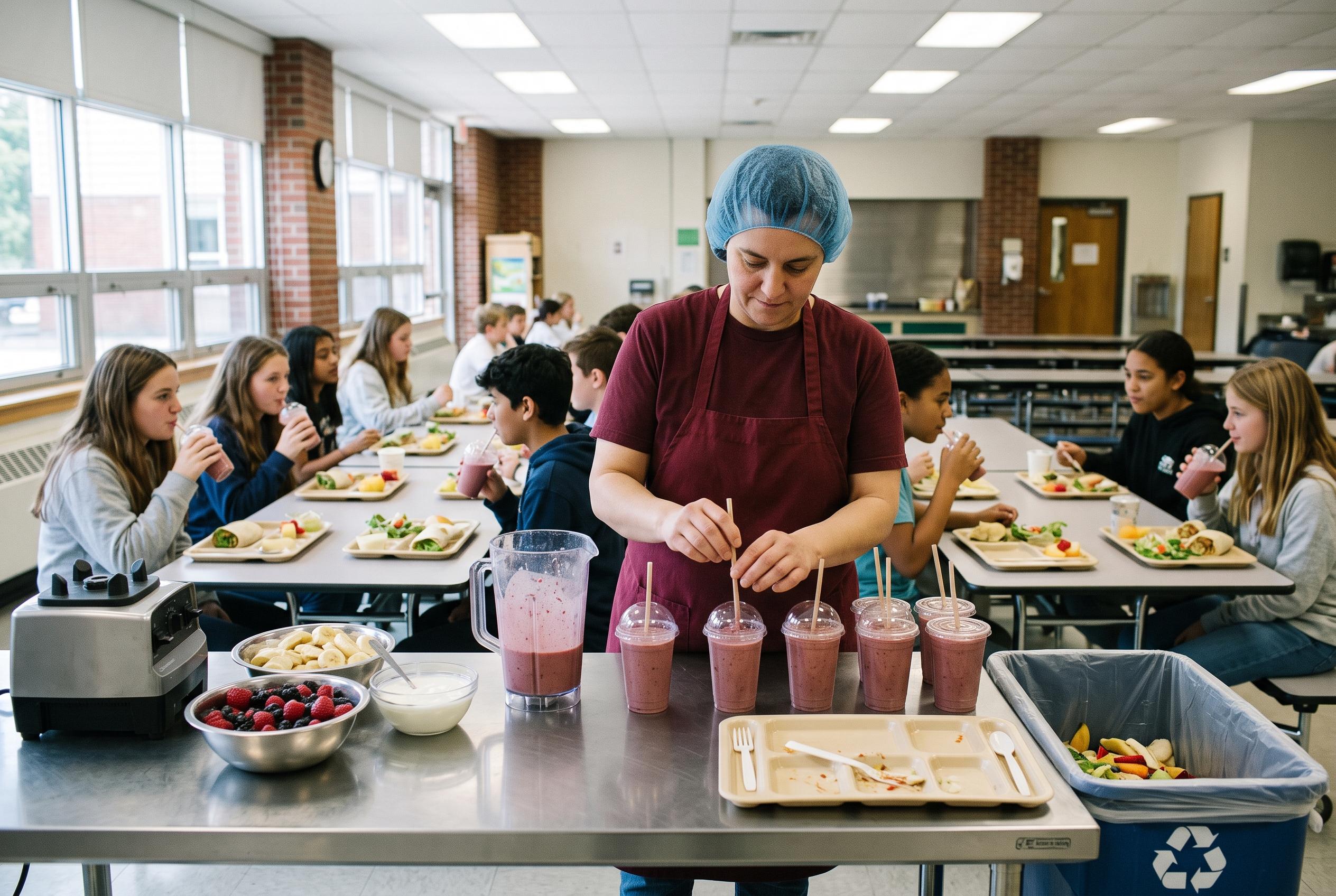

Research from the University of Maine shows that introducing smoothies in middle school cafeterias significantly increases fruit consumption and reduces food waste, highlighting the importance of appealing delivery methods in promoting adolescent health.
University of Maine researchers have found that middle school lunch trays can reveal more than what students are eating; they can show what schools are throwing away. In rural Maine cafeterias, the team photographed meals before and after lunch to track what pupils actually consumed, and fruit was repeatedly one of the least touched items. The study’s conclusion was simple but important: if schools want adolescents to eat more fruit, the better answer may be to serve it in a form they actually want.
That thinking led to HEALTHY, short for Helping Early Adolescents Live Their Healthiest Youth, a four-part smoothie-and-nutrition programme created by the university. Jade McNamara, an associate professor of human nutrition and registered dietitian, said the project began with a deliberate effort to listen first. Amelia Sullivan, then a doctoral student at UMaine, helped lead that work, which included focus groups, cafeteria observations and tray photography. More than 400 students were asked to choose between ideas such as murals, taste tests and a smoothie bar; about 85% picked smoothies.
The results were striking. According to University of Maine reporting on the study, fruit selection in the trial schools rose from 78% to 98% when smoothies were offered. Students consumed about 0.4 cups of fruit from smoothies, compared with 0.1 cup from standard fruit servings, while waste fell to about 14% from 64%. The programme also appeared to help the students who started with the lowest fruit and vegetable intake, as measured by a Veggie Meter, a device used to estimate carotenoid levels in the skin as a rough marker of produce consumption.
The smoothie lessons were designed around themes students said mattered to them, including athletic performance, hydration, skin health and locally grown food. Each serving combined frozen fruit, milk and Greek yoghurt with a short nutrition lesson and a goal-setting exercise. The university later turned the research into a free online toolkit for schools, with scaled recipes, equipment guidance and classroom-ready materials that can be used as a full series or one lesson at a time.
But moving from a successful pilot to everyday school use is not straightforward. Nutrition staff say many cafeterias were built for reheating food rather than making drinks from scratch, and some do not have enough blenders, outlets or time to prepare smoothies for large numbers of pupils. There is also a federal snag: under current school lunch rules, pureed fruit in a smoothie can be counted as juice rather than whole fruit, which can limit how often schools serve it. The research team, along with Wyman’s and the American Frozen Food Institute, has taken that issue to Washington, arguing that policy should better reflect the use of whole frozen fruit. Sullivan said the broader lesson is not that every school should copy the Maine model exactly, but that schools need to ask students what they will actually eat.
Disclaimer: This content is for informational purposes only and is not intended to be a substitute for professional medical judgment, advice, diagnosis, or treatment.