

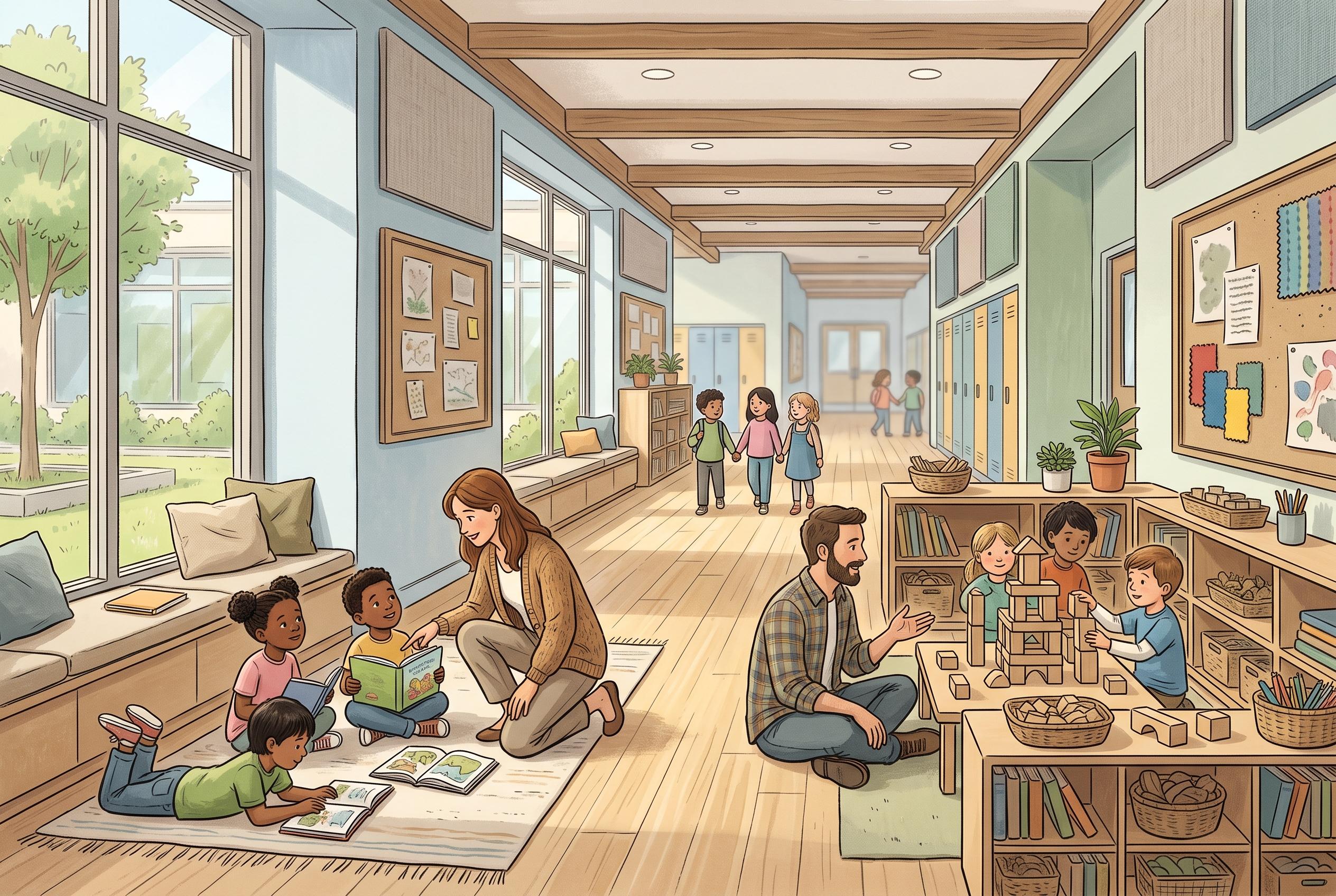

Emerging research advocates for shorter, better-structured school days that balance academic achievement with children’s health and development, challenging the notion that longer hours automatically lead to better outcomes.
Shorter school days can give children something education policy often overlooks: time to be children. The argument is not that learning matters less, but that more hours in class do not automatically produce better outcomes. A fuller view of a child’s day includes family life, play, rest and the chance to explore interests that schools cannot always cover.
Research suggests the picture is more complicated than simply adding or cutting hours. The Education Endowment Foundation says extending school time can deliver around three months of extra progress on average, but the benefit depends on how the time is used, with targeted before- and after-school programmes tending to work better than broad extensions. The Queen Rania Foundation has reached a similar cautionary conclusion, finding that extra time may help, but that costs are high and results depend heavily on design and delivery.
At the same time, a large randomised trial published in the Proceedings of the National Academy of Sciences found that more instruction time can improve learning, while an umbrella review in the Revista Complutense de Educación concluded that extended school time is often linked with better achievement and greater equity when it is matched to clear teaching goals. In other words, time still matters, but only when it is well spent.
There is also a broader wellbeing issue. Brookings has reported that later school start times can improve sleep for adolescents and are associated with better attendance, grades and behaviour, although changes can create trade-offs for younger pupils in schools that stagger start times. That reinforces the central point behind calls for shorter or better-structured school days: the measure of a good education is not only how long children sit in class, but whether they leave school ready to learn, play, rest and grow.
Disclaimer: This content is for informational purposes only and is not intended to be a substitute for professional medical judgment, advice, diagnosis, or treatment.



