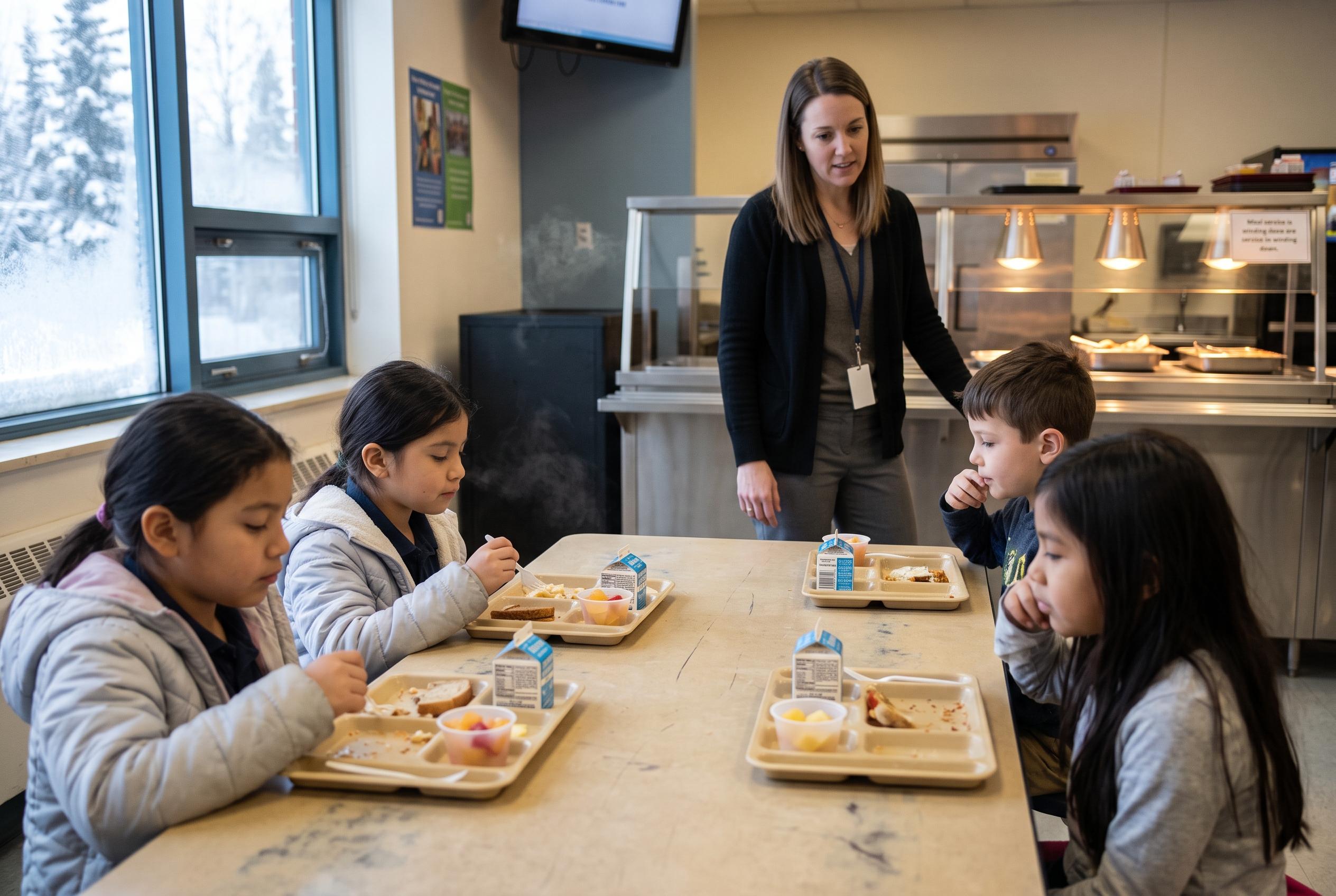

Teachers in Anchorage warn that the cessation of universal free school meals has heightened hunger among students and added pressures on families, highlighting both educational and community impacts of the policy change.
Teachers in Anchorage, Alaska, say the end of universal free school meals left more children hungry and added pressure on families, according to a study published in the Journal of Nutrition Education and Behavior. The research, based on interviews with 25 kindergarten through sixth-grade teachers across six elementary schools, compared classroom life during the 2021-22 school year, when meals were free for all pupils, with the following year after the federal policy expired.
Educators said the policy had eased worries about whether children were eating enough and had reduced the financial strain on households. Once the programme ended, they reported seeing more pupils who seemed hungry during the school day, fewer children taking school lunches and greater concern among families about the cost of meals. Some teachers said they responded by giving food to pupils who appeared to have gone without breakfast or lunch.
The findings add to a growing body of research on universal school meals. Other studies have suggested that free meal programmes can improve food security and nutrition, while also creating practical challenges for school food authorities, including staffing demands, administrative burdens and concerns about revenues. Research on parental views has also found that such policies can help families across income groups, though the effects are not identical in every household.
The Anchorage teachers also described wider classroom benefits when meals were served for free. They said shared mealtimes could strengthen relationships, improve behaviour and help build a stronger sense of community. But they also noted trade-offs: serving meals in class meant more clean-up and less time for lesson planning. Some teachers had earlier concerns about food waste, though they said those worries did not outweigh the reported drop in hunger and stress after free meals disappeared.
Deborah Olarte, the study’s lead investigator and an assistant professor of nutrition at New York University, said teachers see first-hand how hunger affects learning, concentration and classroom participation. The study’s authors argue that teacher perspectives should be part of any discussion about future school meal policy, especially as states and districts weigh whether to expand, continue or scale back universal programmes.
Disclaimer: This content is for informational purposes only and is not intended to be a substitute for professional medical judgment, advice, diagnosis, or treatment.