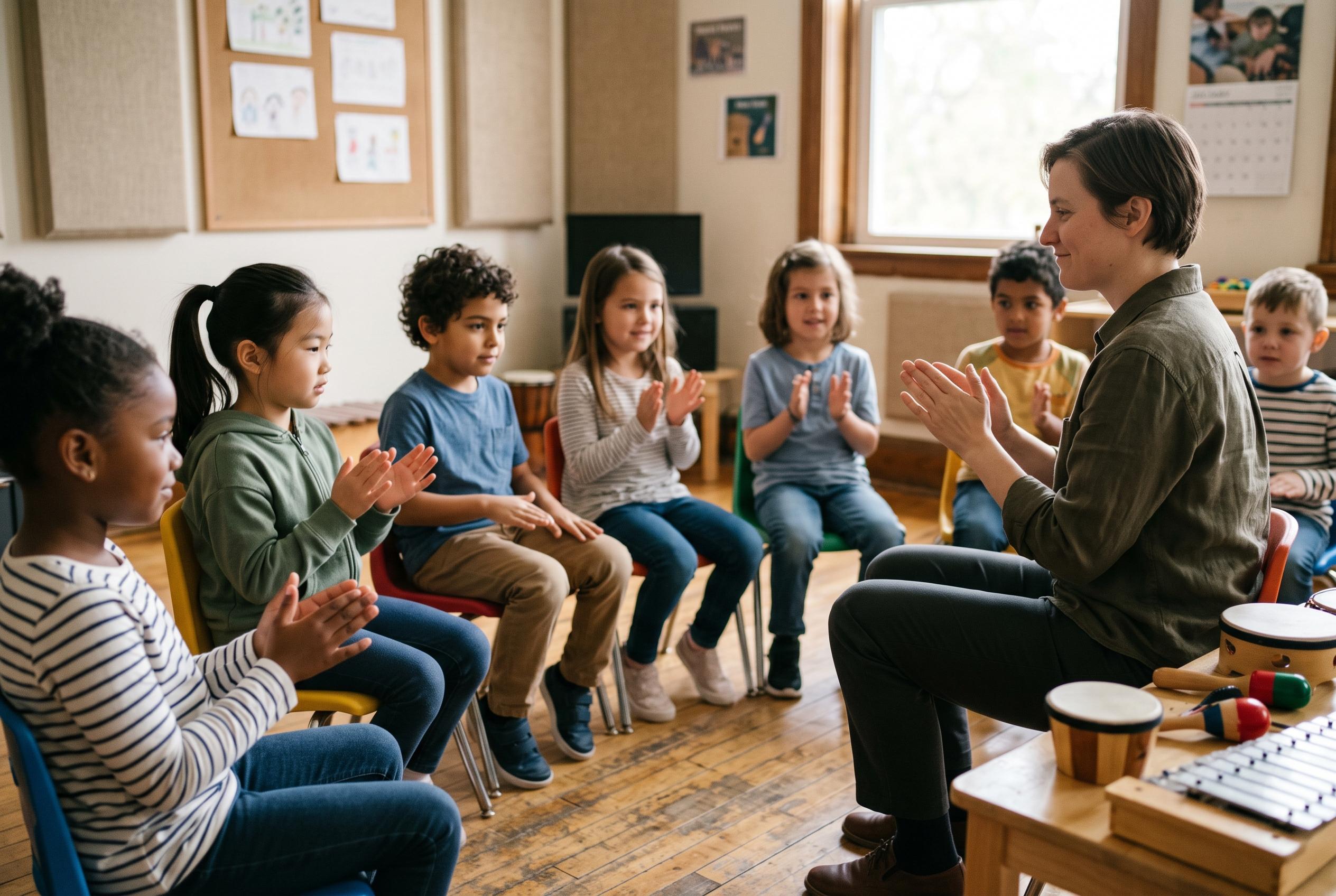

Research suggests that purposefully designed music instruction, incorporating rhythm and body-percussion activities, can significantly bolster attention, memory, language, and emotional growth in children, provided it is well-structured and integrated into the curriculum.
Learning music in childhood does more than open the door to artistic expression. Research cited by Paloma Bravo-Fuentes of the University of Málaga suggests it can also support attention, memory, planning and other skills that underpin learning and emotional development. But the benefits are not automatic: they depend on how the teaching is delivered, how long it lasts and whether the instruction is well structured.
Studies in child development have linked music learning with stronger executive functions, including self-control, working memory and cognitive flexibility. Executive functions are the mental tools children use to manage impulses, hold information in mind and switch between tasks or rules. A study published in the Journal of Research in Music Education found that children who received additional instrumental training showed higher IQ gains than those limited to statutory school music lessons, while a review in the academic literature reported improvements in verbal memory and executive skills, although the size of the effect varied by age and method.
There is also evidence that music can help with language and reading. Research summarised in PubMed has found a positive link between music training and literacy, with rhythm-based work appearing especially useful for phonological awareness, the ability to hear and break down the sounds inside words. Other studies have connected early, structured music curricula with gains in cognitive development, including memory tasks and broader intelligence measures. UNICEF has also said music can support concentration, learning and even the foundations of spatial reasoning, which is important in subjects such as mathematics and engineering.
For educators, the message is not simply to add more music to the timetable, but to use it with purpose. Bravo-Fuentes points to classroom activities such as rhythm games that require children to stop on cue, call-and-response exercises that build memory, and body-percussion tasks with changing rules to train flexibility. The strongest results, she argues, come when music is taught as part of a deliberate educational plan, not just as entertainment or a standalone artistic subject. Used well, it can become a practical tool for helping children learn better across the curriculum.
Disclaimer: This content is for informational purposes only and is not intended to be a substitute for professional medical judgment, advice, diagnosis, or treatment.