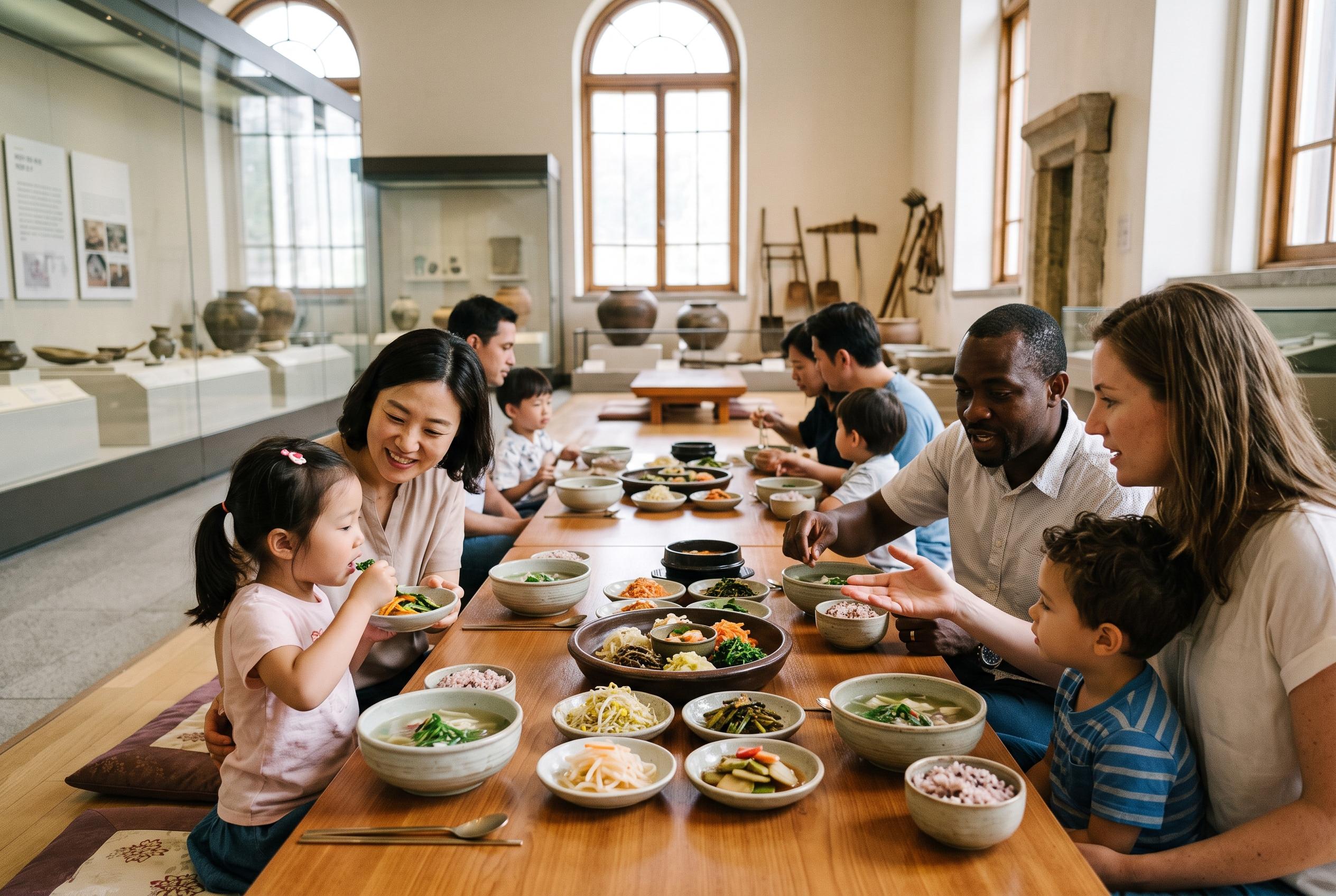

At the National Museum of Korea, officials showcase a fusion of tradition and health with lighter recipes and a new exhibition celebrating 3,000 years of Korean food history, emphasizing the integration of nutrition into cultural identity.
At the National Museum of Korea on Friday, officials pitched healthier eating not as a break with tradition but as part of it. The Ministry of Food and Drug Safety used the setting in Yongsan District to promote lower-salt and lower-sugar cooking while tying the message to Korea’s food heritage and the museum’s exhibition on the nation’s table culture.
The centrepiece was “Samsamhan Bapsang”, or “The Light & Savory Table”, an annual recipe booklet the ministry has published since 2012. Copies were handed out to visitors, and QR codes linked them to online recipes, with English editions also available for overseas cooks, expatriates and tourists. The latest volume, released in July, draws on winners from the ministry’s annual cooking contest and presents lighter versions of familiar dishes, including shrimp toast made with courgette slices, arancini with wild gondre greens and soft tofu, and a Korean-style osso buco finished with perilla leaves and rice wine.
The event was staged alongside the museum’s special exhibition, “Our Table”, which opened on 1 July and runs until 25 October. According to museum and media descriptions, the show is the first large-scale exhibition in Korea devoted entirely to food culture, bringing together 684 objects from 488 entries loaned by 51 institutions. It includes archaeological finds, historical records, paintings and folk materials that trace about 3,000 years of dining history.
Officials also discussed a joint education programme linking the museum’s history content with nutrition and food-safety guidance for children. The idea is to make healthier habits feel less like a restriction and more like a continuation of Korean culinary identity, especially in a country where fermentation, heavy seasoning and salt preservation have long been part of daily cooking. Past editions of the booklet remain available through the Food Safety Korea portal.
Disclaimer: This content is for informational purposes only and is not intended to be a substitute for professional medical judgment, advice, diagnosis, or treatment.