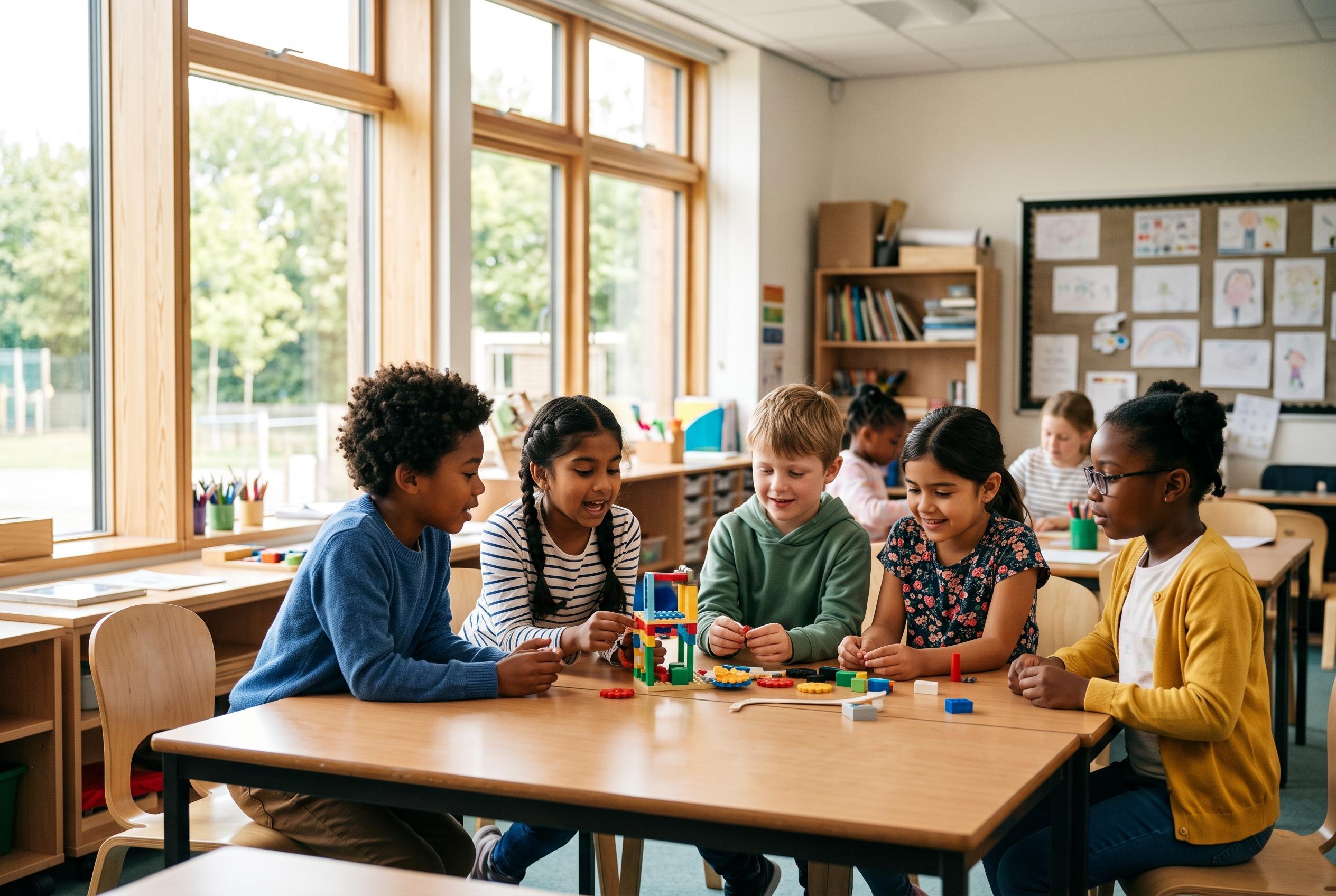

A comprehensive review of 17 international studies reveals that most children have largely recovered from the pandemic’s effects, with persistent difficulties mainly among already disadvantaged groups, challenging earlier narratives of widespread damage.
A new synthesis of long-term research suggests COVID-19 did not leave the sweeping, permanent damage to children that many early studies feared.
According to a special section in the journal Child Development, which draws together 17 longitudinal studies across six countries, most children’s health, learning, social development and overall well-being have recovered substantially in the years since the pandemic began. The research indicates that the most persistent difficulties were concentrated among children who were already facing disadvantage or other risks before COVID-19, rather than among children as a whole.
That distinction matters because many of the earliest pandemic-era studies relied on short-term data gathered while schools were closed, routines were disrupted and families were under severe strain. The longer view presented in Child Development points to a more nuanced picture: the pandemic clearly affected children, but many of the effects faded over time, and broad claims of universal “learning loss” appear overstated. Anna D. Johnson, one of the section’s co-editors at Georgetown University, said the evidence “challenges dominant narratives” and shows that COVID-19 interacted with pre-existing inequalities.
The new section, titled “Children’s Developmental Trajectories in the Long Shadow of COVID-19”, was co-edited by Johnson, Gabriela Livas of the University of Texas at Austin and Seth Pollak of the University of Wisconsin-Madison. Related studies cited alongside the section add weight to the same general conclusion: longer-running research on psychological well-being, social and emotional development, mood and early childhood development has increasingly focused on resilience, recovery and the role of parenting, socioeconomic conditions and other background factors in shaping outcomes.
For parents and caregivers, the message is less about ignoring the harm caused by the pandemic than about understanding where the harm has lingered. The evidence suggests children’s development was shaped not only by COVID-19 itself, but also by the inequalities and stressors that existed before it. In that sense, the pandemic appears to have widened some gaps rather than creating them from scratch.
Disclaimer: This content is for informational purposes only and is not intended to be a substitute for professional medical judgment, advice, diagnosis, or treatment.