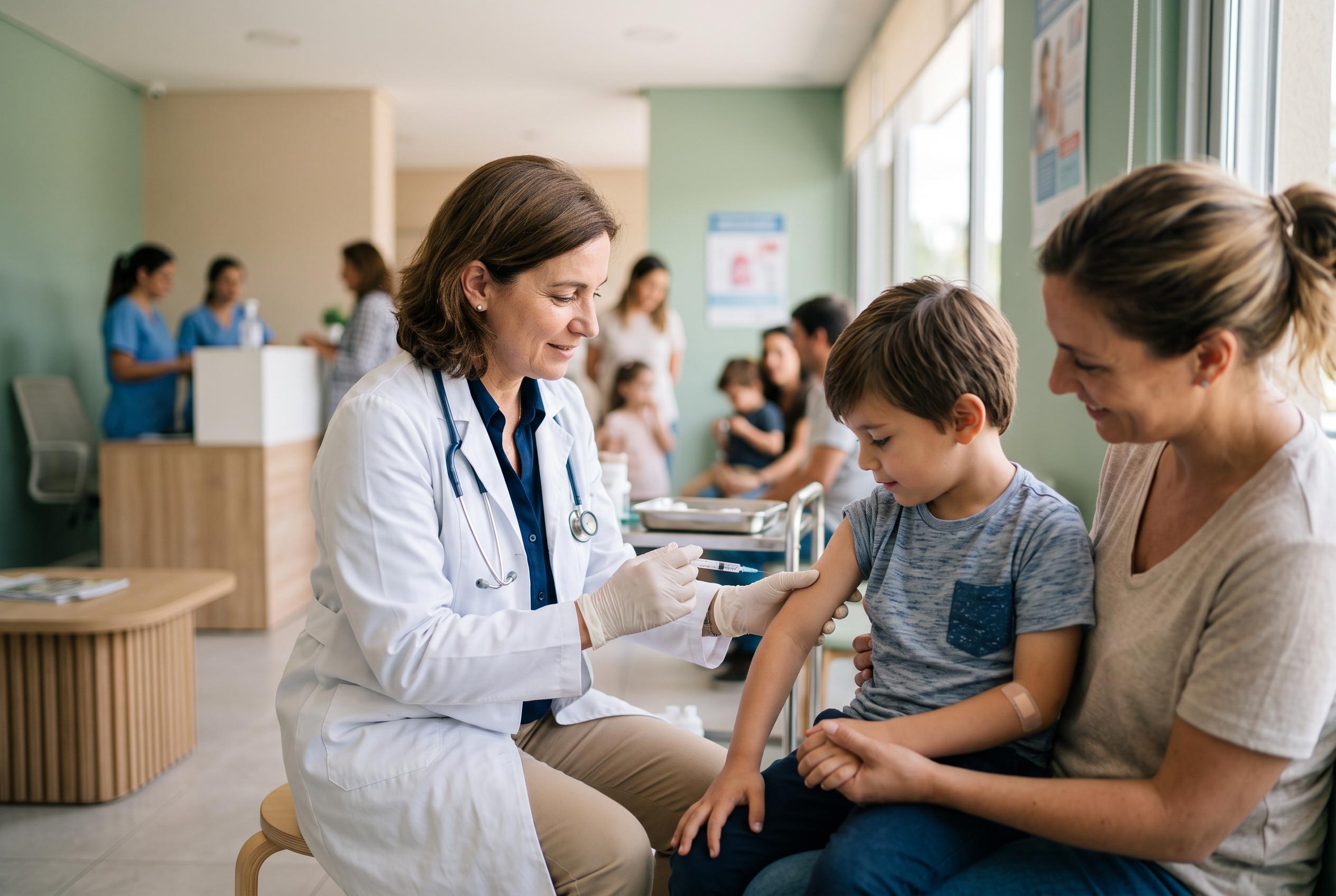

Uruguay’s Public Health Ministry broadens its meningococcal vaccination programme to children aged six to eight as part of efforts to curb an unusual rise in cases, simultaneously extending coverage up to 15 years old amid ongoing outbreak concerns.
Uruguay’s Public Health Ministry has widened its meningococcal vaccination campaign to children aged six to eight, opening fresh appointments from 5pm on Monday and bringing the programme to all children and adolescents aged six to 15. Health Minister Cristina Lustemberg said the expansion was designed to keep the rollout moving in stages while the country responds to an unusual rise in meningococcal disease cases. According to the ministry, the plan follows a recommendation from the National Advisory Commission on Vaccines.
The vaccination drive has already been running in earlier age bands, and the ministry said the next step will also bring high schools into the campaign, alongside primary schools already covered through work with the National Public Education Administration, departmental health offices and the teachers’ federation. The ministry says the approach will vary by department, with some areas using pre-booked appointments, others mixing scheduled and walk-in access, and Montevideo continuing to rely on an agenda system because of its larger population.
Lustemberg said about 120,000 children have been vaccinated since July, with more than 25,000 reached on single campaign days. She also said the authorities were analysing the age breakdown of those vaccinated. The minister said the first priority was adolescents, because they are common carriers of the bacterium, but that the aim is to keep extending protection to all people aged two to 18.
The ministry has also urged families not to overlook the routine meningococcal B schedule for infants at two, four, 12 and 15 months. Lustemberg said uptake is strong after the first dose but falls away for later appointments, leaving some children without full protection.
Uruguay is now in epidemiological week 33 of the outbreak response period, with 28 cases and seven deaths reported so far, according to the ministry. Twelve of the cases were in children and teenagers aged five to 14, and serogroup C has accounted for more than 80% of infections. The ministry also said the recent death of a girl in a Montevideo health centre is still under review, with culture results pending, although her symptoms were considered compatible with meningococcal infection.
Disclaimer: This content is for informational purposes only and is not intended to be a substitute for professional medical judgment, advice, diagnosis, or treatment.