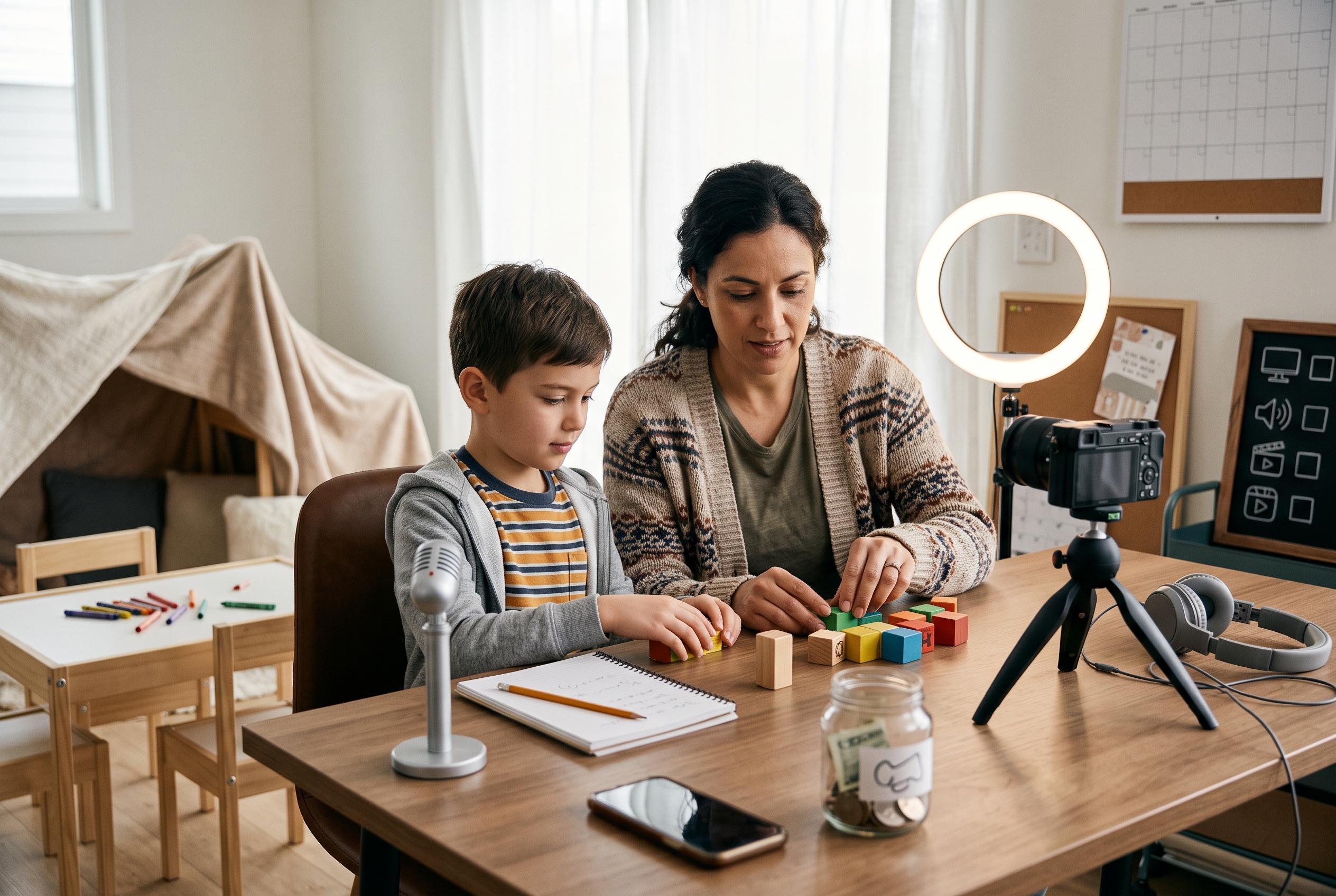

As children increasingly pursue careers as YouTubers and influencers, parents face complex questions about early talent development, financial management, and balancing play with ambition in a rapidly evolving digital landscape.
Children have always been asked what they want to be when they grow up, but the list of possible answers has changed. Alongside doctor, teacher and astronaut, many now name YouTuber, influencer or content creator. That shift reflects the rise of the creator economy, where people can earn serious money if they know how to make engaging content or have a marketable skill. Ryan Kaji, the child behind Ryan’s World, is one of the best-known examples: reporting on his wealth varies widely, with estimates ranging from the tens of millions to around $100 million, depending on the source and methodology.
For parents, the harder question is not whether a child can dream big, but whether the child is ready to turn a hobby into something more structured. Childhood is meant to leave room for play, curiosity and change. That matters because a strong interest can become a burden if it is tied too quickly to money, competition or adult expectations. A child who loves filming videos or playing football may deepen that interest through practice, but they may also drift away from it. Parents are often better served by encouraging breadth first and specialisation later, unless a child has shown unusual commitment and ability.
Money complicates things further. If a child is already earning from online content, sponsorships, contests or sport, parents need to think about ownership, control and protection of those earnings. The legal rules can vary by state, and some states have introduced protections for young creators. In practice, that can mean speaking with a lawyer and a financial adviser, and considering whether a trust or similar arrangement makes sense. Taxes also matter, because income from the internet is still income. It can be useful to teach children that earning money is not the same as spending it, and that saving for college, a car, travel or a first home gives work a longer-term purpose.
The broader lesson is that a passion does not have to become a profession to be worthwhile. A child who experiments with video-making may discover an interest in storytelling, editing, animation, marketing or design. A young athlete may gain discipline, teamwork and communication skills that remain useful long after the games end. Austin families also have practical ways to support this kind of exploration, from school-break camps to sports clinics and creative classes. These structured settings can help children test their interests while giving working parents reliable childcare. The point is not to push every child towards a career path at an early age, but to give them room to learn, practise and change their minds without pressure.
Disclaimer: This content is for informational purposes only and is not intended to be a substitute for professional medical judgment, advice, diagnosis, or treatment.