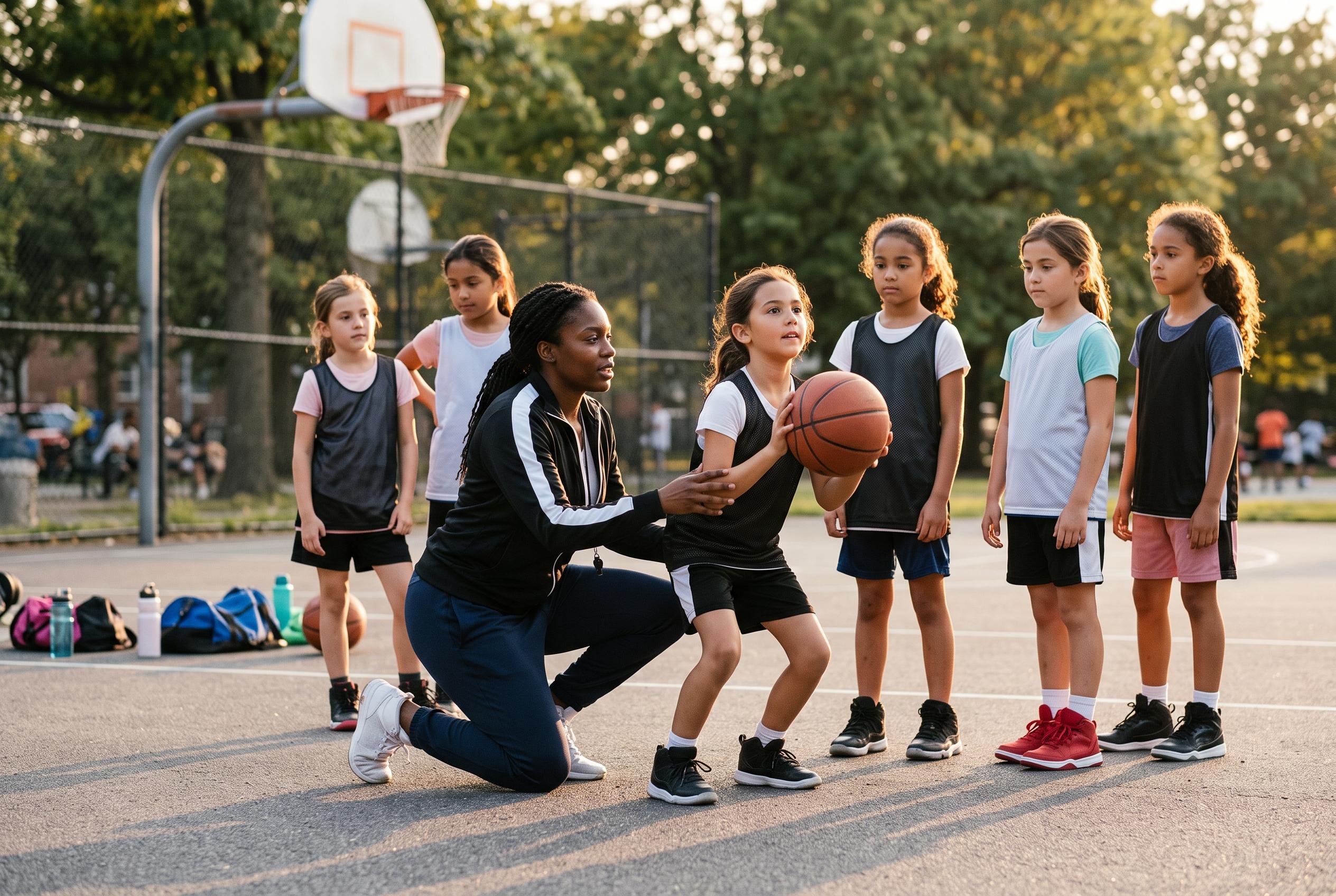

Innovative approaches to girls’ basketball coaching prioritise fundamentals, age-appropriate drills, and emotional wellbeing, fostering long-term skill growth and confidence beyond the court.
Girls’ basketball training works best when it is built around more than shooting drills and end results. Coaches and parents who focus on fundamentals, movement, decision-making and communication are more likely to help young players improve in ways that last. That approach also gives children room to gain confidence gradually, rather than being judged too quickly against older or more advanced athletes.
Age matters. A young beginner who is learning to dribble with both hands needs a different kind of coaching from a teenager who is ready to read defensive rotations and handle pressure. Programmes that adjust drills to a player’s stage of development can keep sessions engaging while still pushing athletes to learn. Simple activities such as movement games, ball-control work and balance exercises can lay the groundwork for more advanced skills later on.
A strong practice usually combines several parts: a warm-up, a focused skill block, decision-making under pressure, small-sided games and team concepts. That mix helps players practise not just how to perform a skill, but when to use it. In addition to ball handling, passing, shooting and defence, young athletes benefit from learning spacing, help defence, rebounding position and how to recognise open teammates. Programmes such as the Girls Basketball Academy at No Mercy Basketball and camps at Penn State Hazleton and other youth organisations put similar emphasis on fundamentals, competition and live play rather than isolated drills alone.
Confidence tends to grow when coaches give clear feedback and reward effort as well as production. That means praising smart passes, defensive stops, communication and recovery from mistakes, not only points scored. Several girls’ programmes, including Next Play Basketball and Energy Basketball, stress that a supportive environment can help girls feel safer taking risks, making corrections and staying engaged. Mistakes, when handled properly, become part of learning rather than a reason for embarrassment.
Teamwork is just as important as individual skill. Drills that require every player to touch the ball, or that reward assists, screens, box-outs and verbal communication, can help players understand basketball as a shared task. That lesson matters beyond the court. A good programme also pays attention to safety, rest, hydration, nutrition and emotional wellbeing, because children develop best when they are healthy and not under constant pressure to perform.
Parents looking for a programme should ask whether the coaching is age-appropriate, whether the goals are clear, and whether adults prioritise teaching and respect. The best environments are structured but encouraging, demanding but not punishing. Done well, girls’ basketball training can build stronger players, better teammates and a lasting love of the game.
Disclaimer: This content is for informational purposes only and is not intended to be a substitute for professional medical judgment, advice, diagnosis, or treatment.