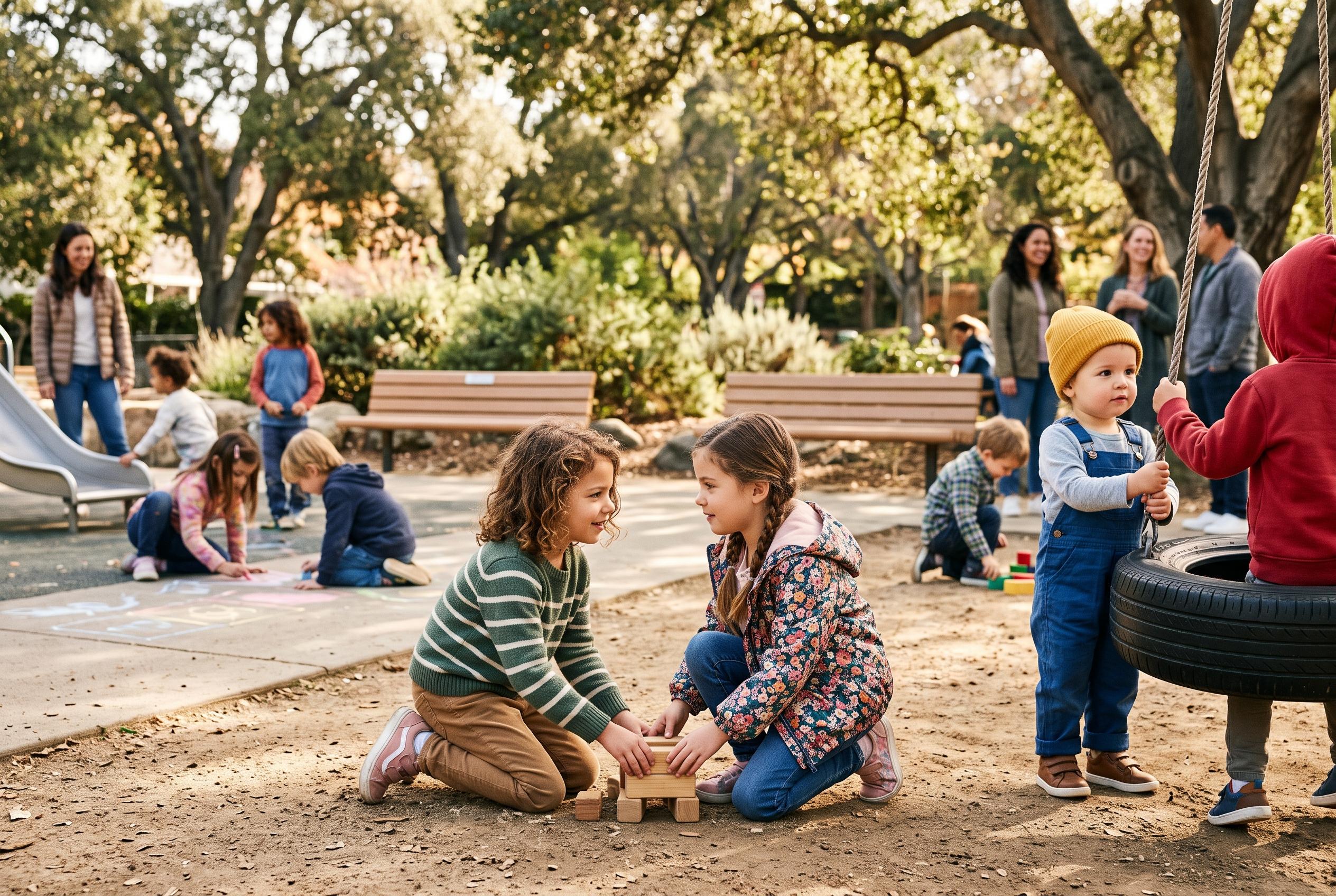

Observing children’s polite language, patience, helpfulness, and emotional regulation in public offers insights into early signs of social understanding, with subtle acts highlighting parent influence and childhood growth.
Parents rarely miss the small social signals children send in public. At a supermarket checkout, on a playground or in a waiting room, certain habits stand out because they suggest a child has learned how to move through the world with awareness, restraint and kindness. According to guidance from Dad.info and Wonderful Montessori, polite language such as “please” and “thank you” is usually built through repetition, modelling and gentle reinforcement at home.
One of the clearest signs is a child who says those words without being prompted. Another is a child who can wait their turn without constant reminders. The Watson Institute and PBS Parents both note that patience and turn-taking are not instant skills; they are taught gradually, often with short waits, clear expectations and simple games that make the idea of waiting easier to understand. When a child manages that calmly in public, other adults tend to notice straight away.
Children who help another child without being asked also draw attention. That might mean picking up a dropped toy, making space on a play structure or including someone who looks left out. Development experts often describe this as early prosocial behaviour, a sign that the child is beginning to read social cues and respond with empathy rather than being directed by an adult.
Equally noticeable is a child who handles disappointment without a scene. A brief sigh or a quiet “okay” after being told no can be more striking than a perfect mood, because it shows the beginnings of self-regulation. Parents understand how hard that can be. They have seen enough public meltdowns to know that even a small display of composure is worth noting.
Other moments that stand out are more about confidence and responsibility. A child who speaks directly to an adult, rather than hiding behind a parent, often seems more at ease in conversation. A child who tidies up after a playdate or puts rubbish in the bin without being told shows that expectations at home are probably being reinforced in everyday life. These are small acts, but they carry social weight.
Screen time has added a newer test. When a child can give up a tablet or phone in a public place without arguing, it suggests clear limits are already in place. Finally, a sincere apology after a mistake tends to leave an impression because it requires awareness of other people’s feelings as well as an understanding of right and wrong. None of these behaviours makes a child perfect, but when they do appear, nearby parents usually notice.
Disclaimer: This content is for informational purposes only and is not intended to be a substitute for professional medical judgment, advice, diagnosis, or treatment.