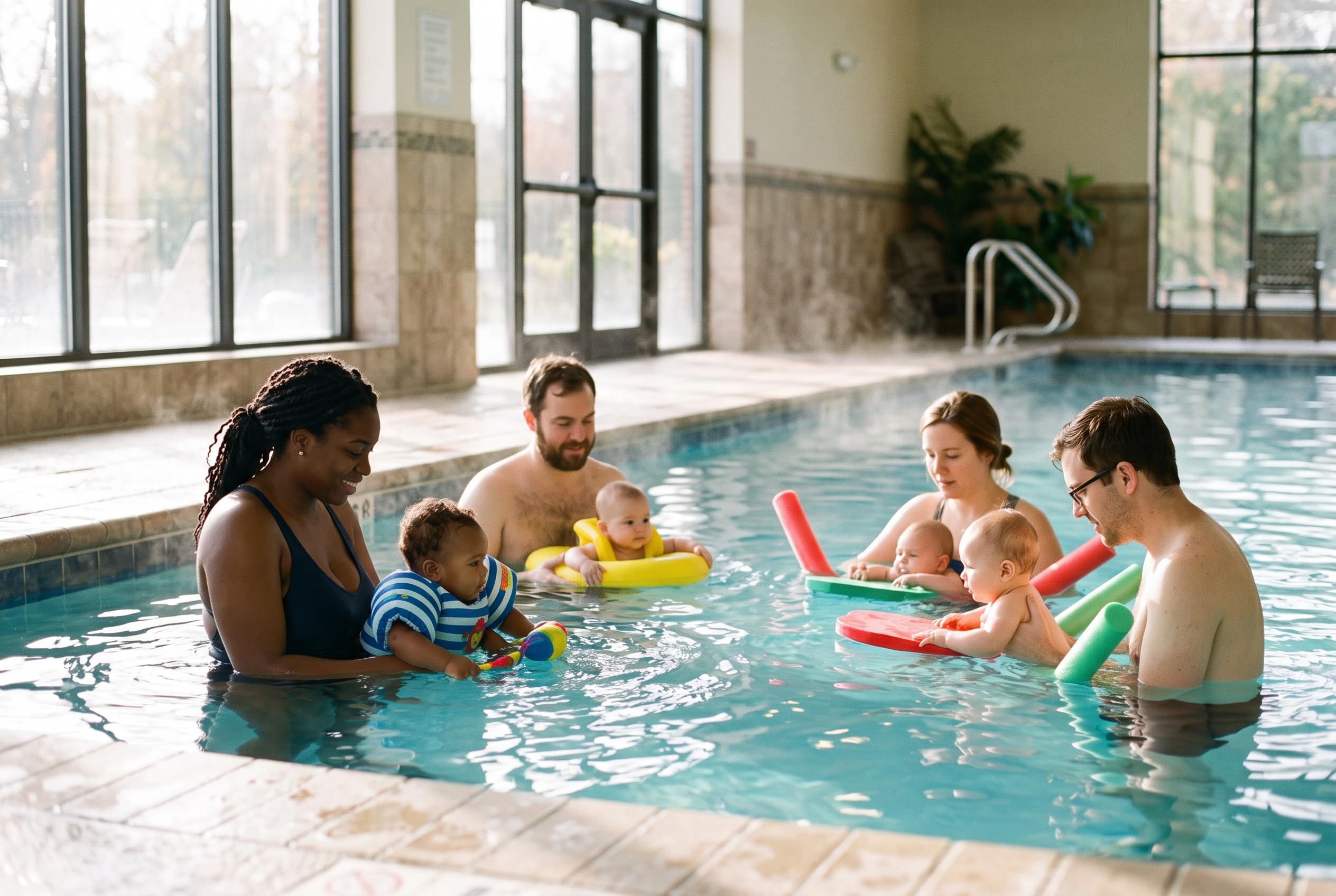

A recent study suggests that infants who participate in swimming before six months may have improved cognitive abilities at preschool age, though safety remains paramount amid ongoing research into developmental benefits.
A new study published in Scientific Reports suggests that babies who took part in swimming during their first six months of life were later more likely to score better on cognitive tests at pre-school age, especially in areas linked to language, spatial reasoning and working memory. Researchers at Huazhong University of Science and Technology in China analysed data from 1,935 children and their mothers, then compared those who had early swimming experience with those who had not before assessing their abilities between the ages of four and six.
The findings, based on the Wuhan Healthy Baby Cohort, showed that early swimmers tended to record higher overall IQ scores than their peers. The advantage was most noticeable among children who swam regularly in infancy, the study said, although the researchers stressed that the results show an association rather than proof that swimming itself caused the improvement.
That caution matters. The researchers said other influences, including family lifestyle, home environment and broader childcare patterns, could also help explain the link. Still, the result adds to a small but growing body of work suggesting that early aquatic activity may support child development. A pilot trial published in 2022 in Perceptual and Motor Skills found gains in gross and fine motor skills, as well as some executive functions, among infants who completed a swimming intervention. Another 2022 pilot study in the International Journal of Environmental Research and Public Health reported better motor outcomes among infants who swam, including in reflexes, grasping and overall motor scores.
Previous reviews and health guidance have also pointed to possible benefits, from coordination and confidence to safer water familiarity, while repeatedly stressing the need for close adult supervision. The latest study likewise underlines that swimming should be treated as a supervised activity, not a developmental shortcut, and that any potential upside must be balanced against basic safety in the water.
Disclaimer: This content is for informational purposes only and is not intended to be a substitute for professional medical judgment, advice, diagnosis, or treatment.