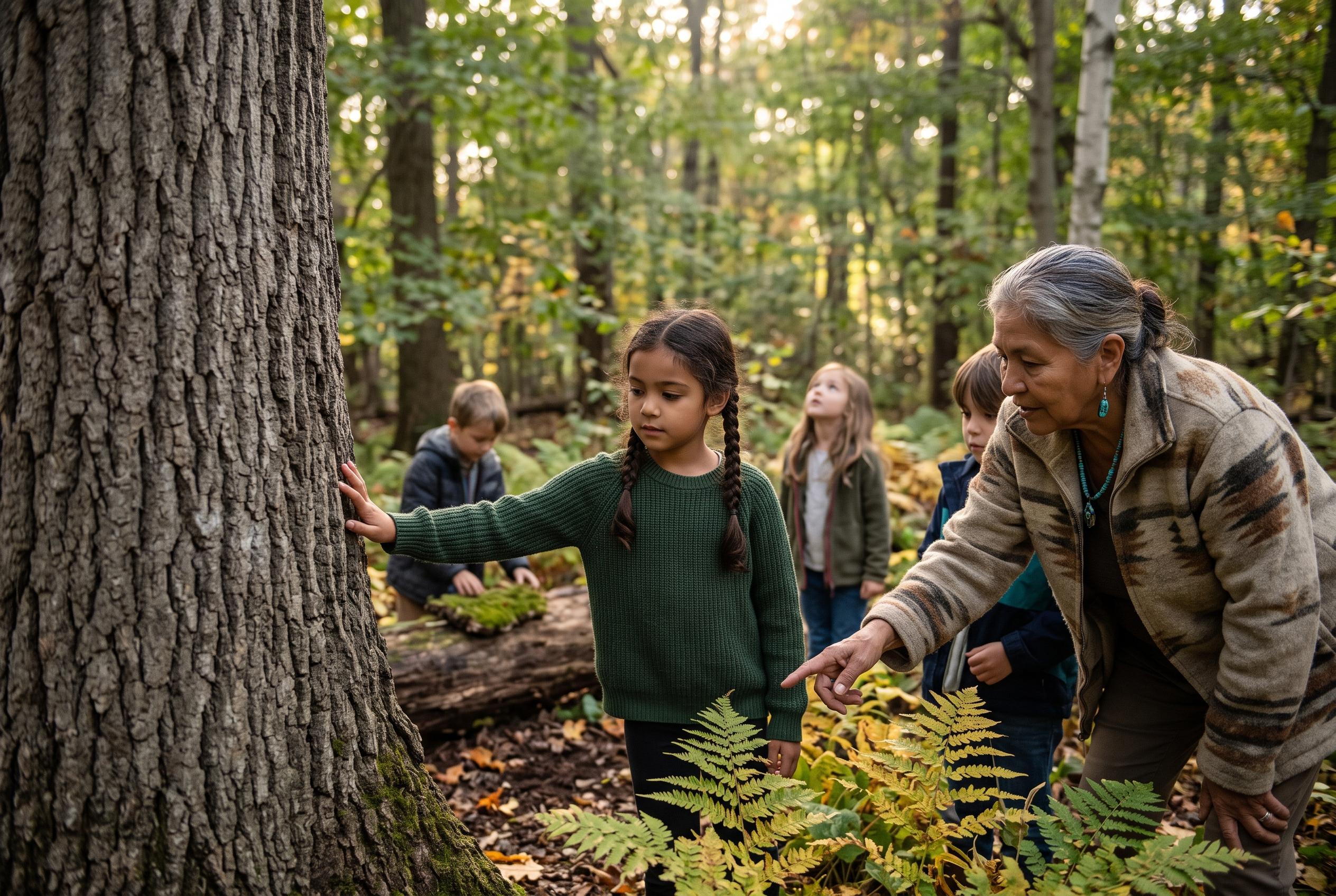

A Toronto arboretum programme shows that outdoor encounters with nature teach children care, restraint and reciprocity, combining indigenous wisdom with everyday activities to foster a deeper connection with the natural world.
Outdoor play can do more than burn energy. In a children’s forest programme at Toronto’s Humber Arboretum, early years educator Louise Zimanyi argues it can also help children learn how to live in relationship with the natural world, not just use it. Her account, originally published by The Conversation and republished by Good Good Good, centres on daily encounters with dandelions, bees, frogs and birds as lessons in care, restraint and reciprocity.
The Humber Arboretum, a 250-acre natural area in north-west Toronto, is used as a living classroom through guided walks and children’s education programmes. Zimanyi describes walking there with young children, Anishinaabe storytellers and other educators on the traditional and treaty lands of the Mississaugas of the Credit, where attention to what is growing, moving and returning becomes part of the lesson. A dandelion, she writes, is not just a flower to pick, but an early food source for native bees.
That small example shapes a larger point. When children are encouraged to notice sticks, acorns or snail shells, they also begin to ask who else might need them. Zimanyi says these objects are often treated in early childhood settings as “loose parts” for play, but outdoors they are already part of living systems. A fallen stick may shelter insects, while a shell can serve another creature later on. In that setting, taking something is not automatically wrong, but it should be weighed against the relationships surrounding it.
The article also draws on Indigenous knowledge, particularly Etuaptmumk, or Two-Eyed Seeing, a concept shared by Mi’kmaw Elder Albert Marshall. Zimanyi uses it to describe the value of bringing together Indigenous and other ways of knowing, especially as biodiversity declines and pollinators face pressure. She points to teachings about gratitude and honourable harvesting from Robin Kimmerer, the Potawatomi environmental biologist, as a reminder that children can learn to ask, give thanks and leave most of what they find behind.
Her conclusion is practical as well as philosophical. Families and educators do not need a special forest or expert training to begin. Watching snails, planting pollinator gardens, learning bird stories in Indigenous language, walking in the rain and following children’s literature outdoors can all build the same habits of curiosity and care. The larger lesson is that acknowledging land is not only something adults say. It is something they practise in the way they relate to blossoms, insects, children and the world around them.
Disclaimer: This content is for informational purposes only and is not intended to be a substitute for professional medical judgment, advice, diagnosis, or treatment.