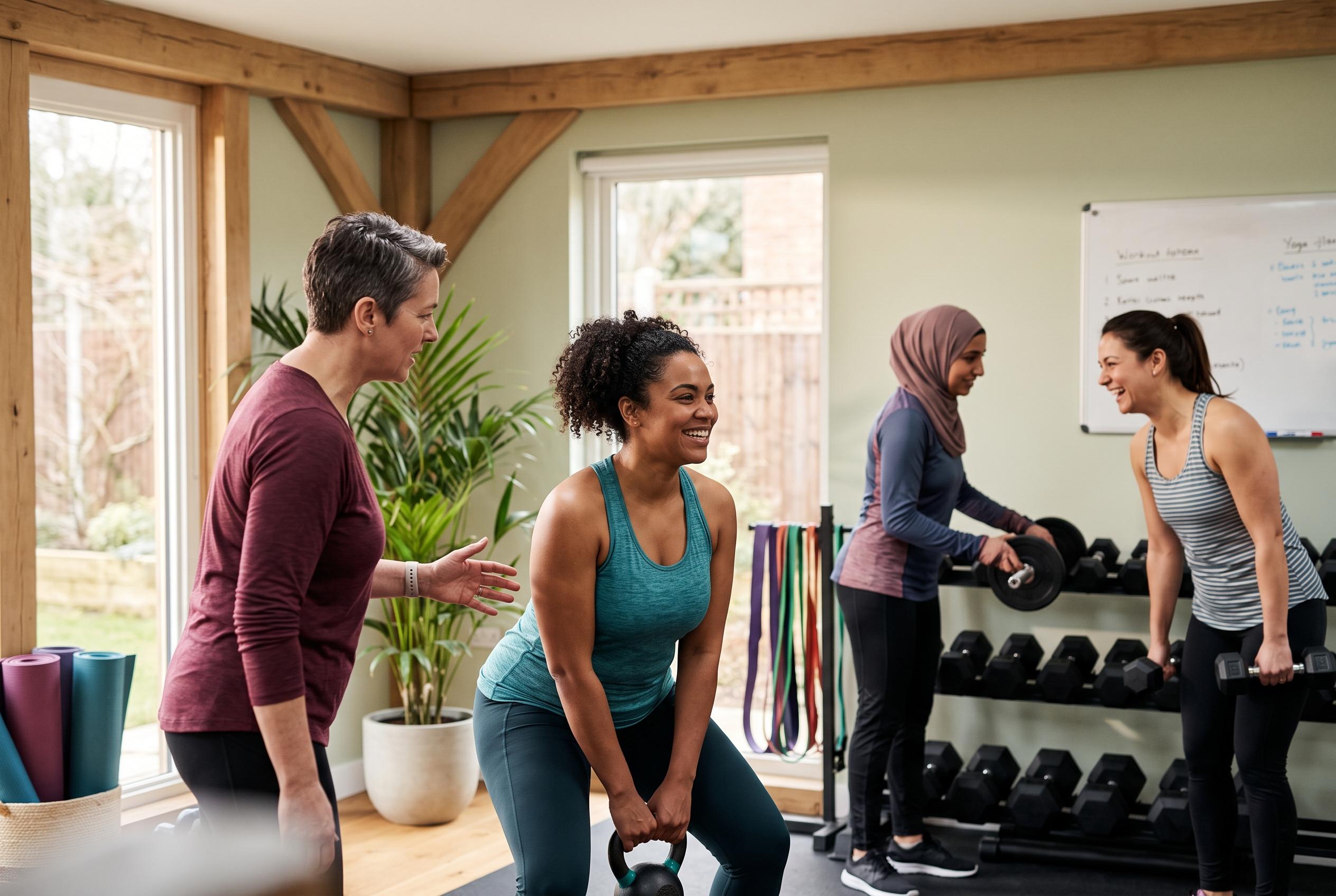

A University of Leeds study reveals that women’s perceptions of strength training are deeply intertwined with identity, femininity, and social context, challenging traditional public health narratives and emphasising the need for more inclusive exercise environments.
Strength training is increasingly promoted as a public health habit, but the University of Leeds project argues that the real question is not whether women know exercise is good for them. It is whether strength training feels compatible with their bodies, identities, routines and social worlds. UK government guidance says adults should do muscle-strengthening work at least twice a week, alongside regular moderate or vigorous activity, and should treat movement as part of daily life rather than as a separate gym-only task.
That wider context framed research into how inactive young women make sense of strength, femininity and body image. Working under supervision at Leeds, the project used semi-structured interviews to explore how participants described exercise, social judgement, fitness spaces and the pressures of appearing feminine. The central finding was not simple resistance to exercise, but a continual negotiation between wanting to feel stronger and wanting to avoid discomfort, exposure and the fear of not fitting in.
The research suggests that barriers to exercise are rarely isolated. A lack of confidence can grow into avoidance when a woman expects to be watched; a disrupted routine can erode certainty; and a break from activity can turn into guilt that makes restarting feel even harder. Rather than a list of separate obstacles, the study presents strength training as part of a cycle involving the body and self, identity, environment and everyday life.
Participants described strength in strikingly different ways. For some, it highlighted what their bodies could not yet do and brought discomfort into sharper focus. For others, it created a sense of capability, independence and pride. That split matters, because it shows strength training is not inherently empowering or alienating: its meaning depends on how it is experienced and what it seems to say about the self.
The study also found that femininity remained a powerful lens. Several women described growing up with images of female bodies that were thin, small and conventionally attractive, while strength was associated with masculinity or with bodies that were too visibly muscular. That tension echoes earlier academic work showing that women can feel a kind of ceiling around muscular strength, where cultural expectations limit how far they feel able to go.
Gym culture itself mattered too. The women interviewed often saw gyms as exposing, intimidating and highly visible, with mirrors, windows and other users intensifying self-consciousness. School physical education also loomed large in their memories, with several participants describing it as unpleasant or humiliating. Recent research into women’s gym experiences has reached similar conclusions, finding that many feel judged about appearance and performance, while others thrive in supportive settings that reduce pressure and normalise learning.
Everyday life was another decisive factor. Time, cost, work, study, caring responsibilities, transport and even practical details such as clothing shaped whether exercise felt realistic. One participant returned to the gym only after yoga became too expensive and a new pet changed her routine; another found that a smaller workout kit and a better sports bra made activity more manageable. The point, the research argues, is that motivation cannot be separated from the shape of a person’s day.
The project concludes that strength training becomes more accessible when it is reframed away from appearance and performance and towards health, function, confidence, enjoyment and belonging. Participants repeatedly favoured women-only spaces, beginner-friendly sessions, clearer instruction and less appearance-led messaging. They also pointed back to school, suggesting that earlier, more varied and less gendered physical education could help reshape how girls understand movement long before adulthood.
Disclaimer: This content is for informational purposes only and is not intended to be a substitute for professional medical judgment, advice, diagnosis, or treatment.