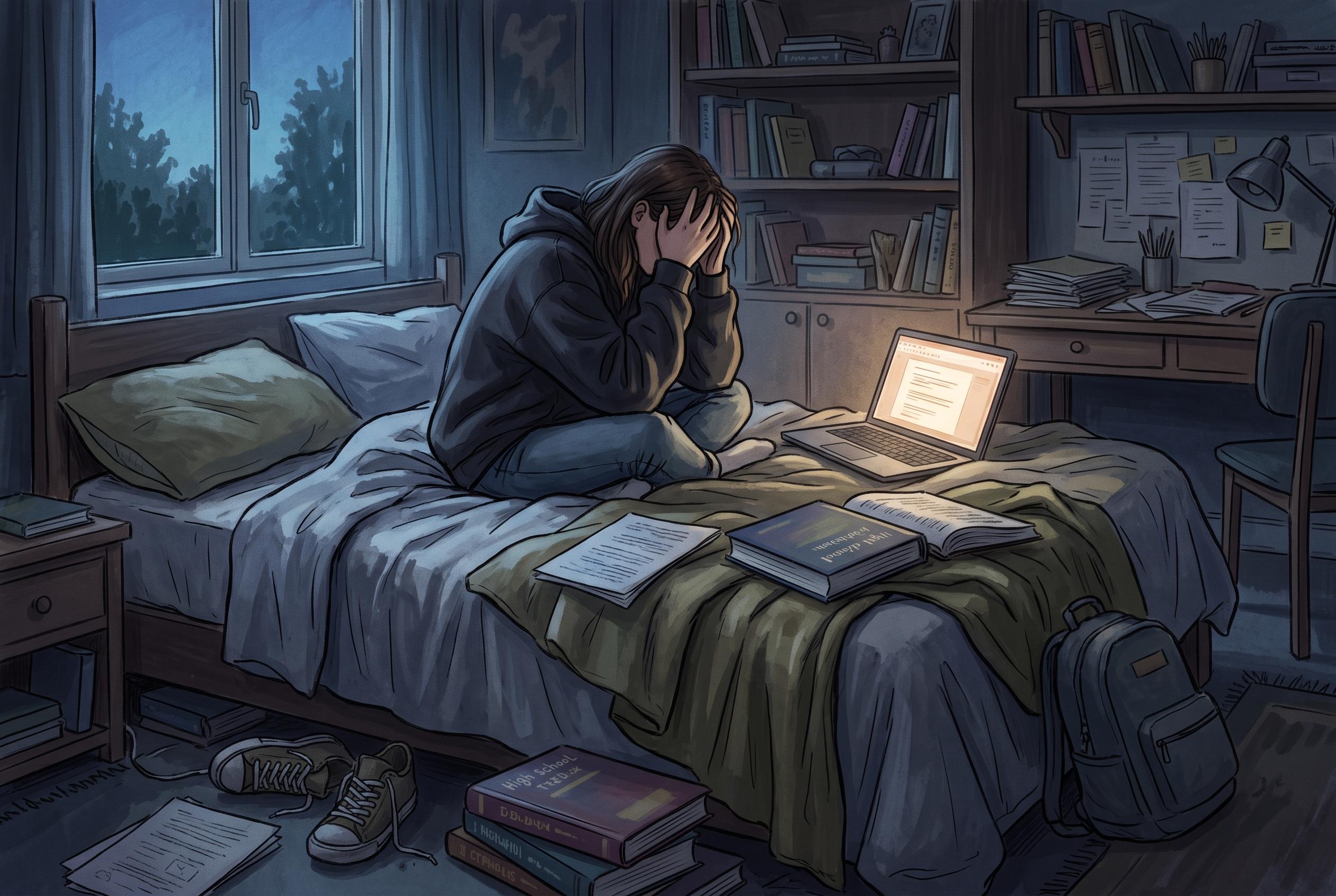

A recent study suggests that high academic stress during teenage years may be associated with increased depressive symptoms and self-harm into early adulthood, prompting calls for targeted interventions in schools and policy adjustments.
Academic pressure in adolescence may do more than raise stress levels in the short term: new research suggests it is linked to depressive symptoms and self-harm well into early adulthood. The findings add weight to a long-running concern that school performance demands can affect mental health at a stage when many difficulties first emerge. NHS England said in 2023 that one in five children and young people had a probable mental disorder, underscoring the scale of the problem.
The study, published in The Lancet Child & Adolescent Health, followed young people in the Avon Longitudinal Study of Parents and Children and examined pressure reported at age 15, then tracked depressive symptoms and self-harm across later teenage years and into adulthood. The researchers used a measure shaped with input from young people and looked at concerns such as worry about schoolwork, pressure from home and the importance attached to GCSE results.
Their analysis found that higher academic pressure was associated with higher depressive symptom scores across follow-up points, and with slightly higher odds of self-harm. The link with depression was strongest at age 16 but was still detectable at age 22. The self-harm association was weaker, though it remained present across the study period.
The findings fit with the Educational Stressors Hypothesis, a framework first set out by West and Sweeting in 2003, which argues that rising educational demands may help explain increases in adolescent distress. A 2023 systematic review also concluded that academic pressure is consistently associated with mental health problems, although it could not prove cause and effect.
Still, the researchers cautioned that the study was observational, so it cannot show that pressure itself caused the mental health outcomes. The sample was largely White and drawn from one part of England, and the pressure measure has not been validated elsewhere. That leaves open the possibility that family factors, personality, perfectionism or existing emotional difficulties helped shape both how pressure was felt and how mental health changed over time. NHS services are already trying to respond to rising need: Mental Health Support Teams now cover 35% of pupils and further education learners, while NHS mental health services treated a record 3.8 million people in 2023-24.
The practical lesson for schools and policymakers is not to assume that every form of pressure is harmful, but to look more closely at which pressures matter most and which might be reduced. The study’s authors argue that future research should separate pressure from home, school and internal expectations more clearly, and test whether changes such as less reliance on high-stakes assessment, more emphasis on learning and greater support for social and emotional wellbeing can improve outcomes.
Disclaimer: This content is for informational purposes only and is not intended to be a substitute for professional medical judgment, advice, diagnosis, or treatment.