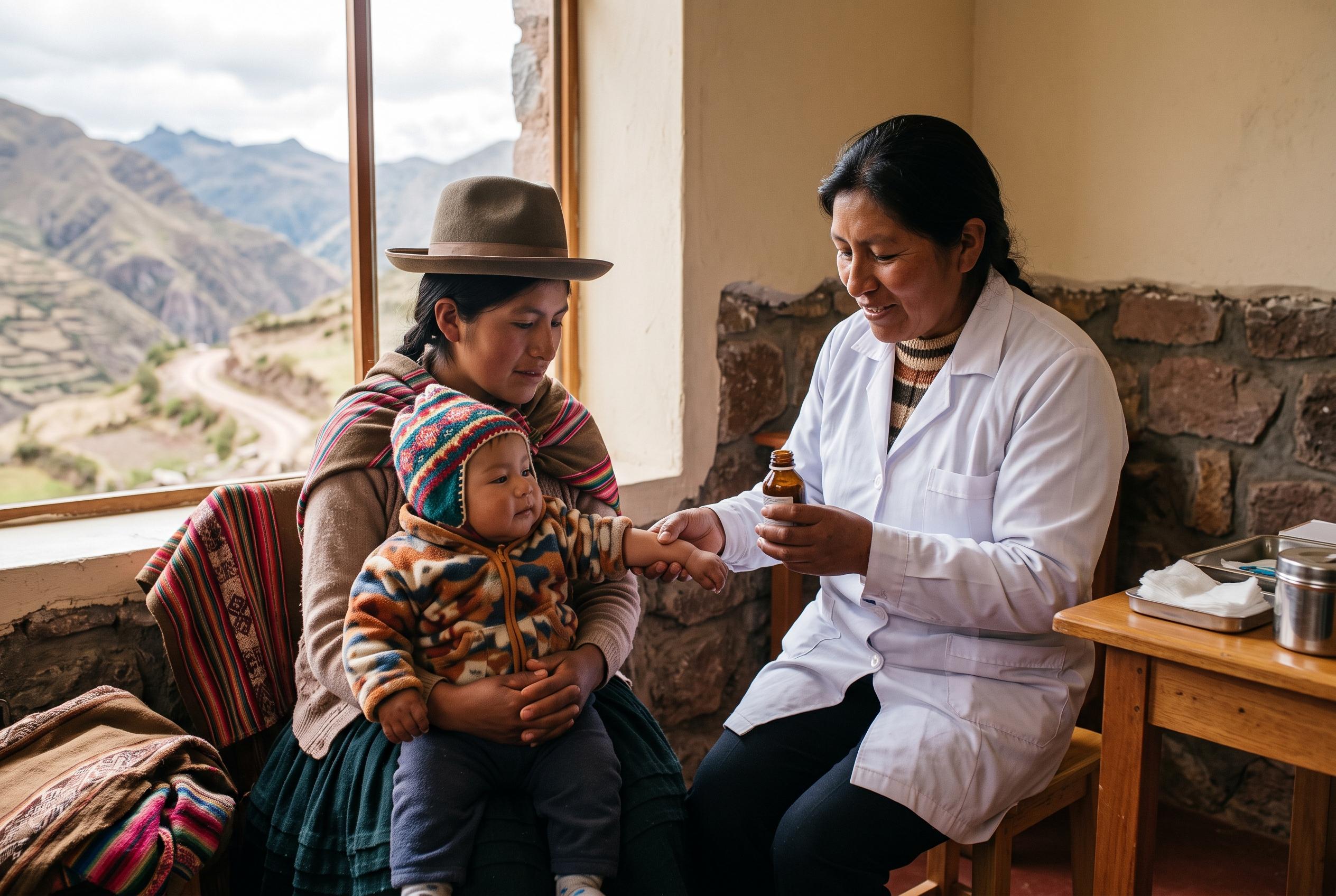

A study in Peru reveals that stricter monitoring and follow-up of iron supplementation in infants living at high altitudes can lead to improved haemoglobin levels, though persistent anaemia remains a challenge, indicating a need for more comprehensive approaches.
A new PLOS One study suggests that tighter follow-up of iron supplementation can improve haemoglobin outcomes in infants living at high altitude in Peru, although many children still remained anaemic after six months. The research focused on infants aged six to 12 months in Puno, at 3,832 metres above sea level, where national policy requires iron treatment for babies diagnosed with anaemia and preventive multiple micronutrient powder for those without it. According to the authors, the stricter supervision period was linked with larger gains in haemoglobin and a lower rate of altitude-adjusted anaemia at follow-up.
The findings come from a policy-driven natural experiment rather than a randomised trial, which was not possible because Peru mandates iron supplementation for young children. Researchers compared two successive groups of infants seen before and after a stricter monitoring system was introduced in 2017 and fully rolled out in 2018. Under the enhanced programme, families received monthly clinic visits, reminder calls, home visits, nutrition counselling and active adherence support. The study found that 14.8% of infants achieved an increase of at least 1 g/dL in haemoglobin overall, with a higher share in the strict follow-up group than in the earlier, less closely supervised group.
The study adds to a growing body of evidence that anaemia in high-altitude children is not explained by iron deficiency alone. Earlier Peruvian research has shown that haemoglobin levels rise with age and altitude, and that altitude-adjusted cut-offs may overstate anaemia in some highland populations. Other studies have also suggested that anaemia at young ages in Peru cannot be fully attributed to iron deficiency, supporting the idea that inflammation, infection, developmental changes and other nutritional or biological factors may all play a part. In this study, baseline anaemia and older age were both associated with larger haemoglobin gains, while many infants still had anaemia after treatment.
The authors said the results support stronger programme follow-up as a practical way to improve blood counts under routine public health conditions, but they also warned that supplementation alone is unlikely to solve the problem in high-altitude settings. They noted that the bundled supervision package could not be broken down into the effect of any single element, and that the study lacked blood markers for iron status, inflammation and other possible causes of persistent anaemia. Even so, the work suggests that better monitoring, not just wider supplement distribution, may be part of the answer for infants in Peru’s highlands.
Disclaimer: This content is for informational purposes only and is not intended to be a substitute for professional medical judgment, advice, diagnosis, or treatment.