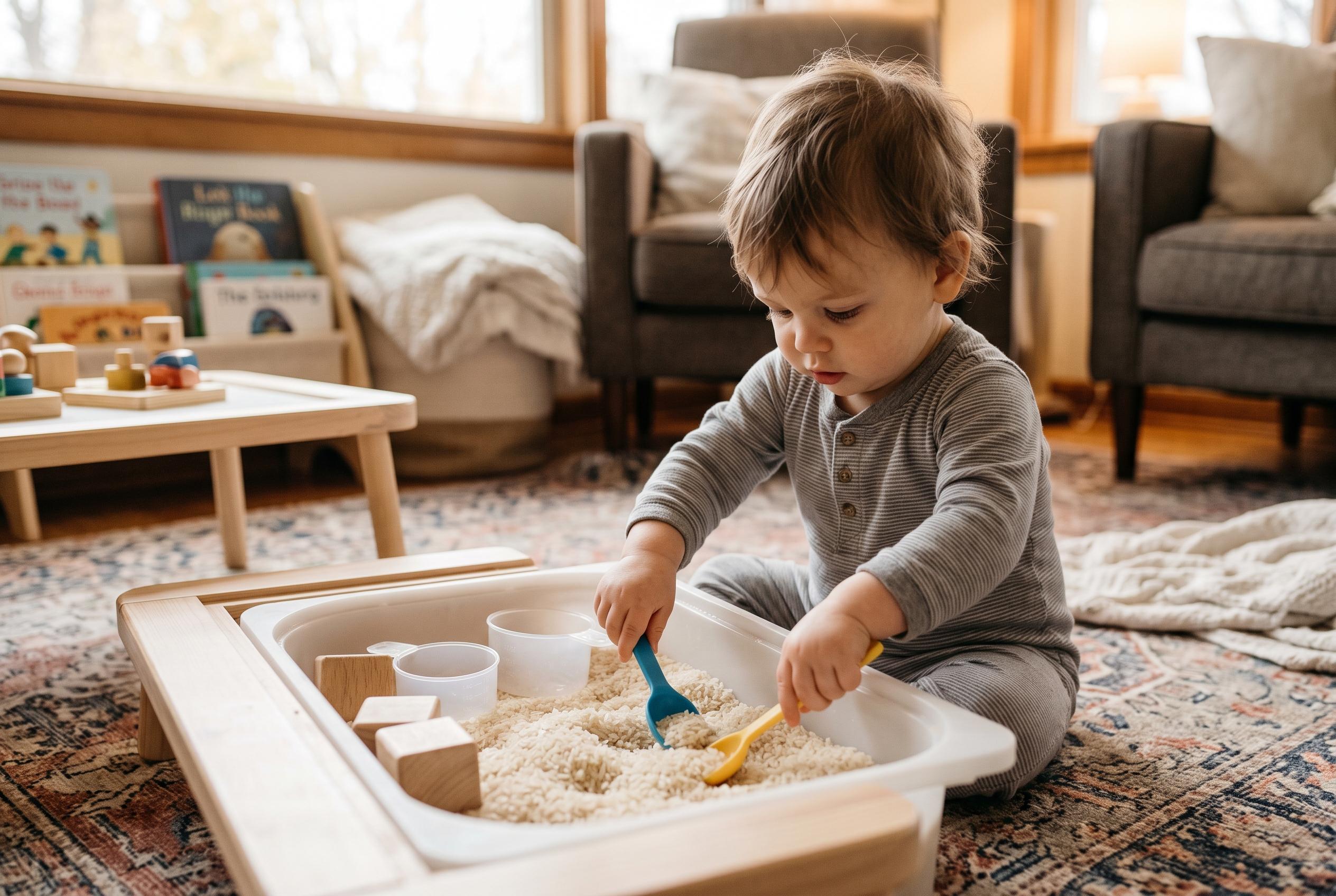

Simple, inexpensive sensory activities such as sensory bins, water play, and homemade slime can stimulate toddlers’ cognitive, motor, and emotional growth, making learning fun and Messy.
A one-year-old is rarely still for long. Everything is a new texture to press, shake or mouth, and that instinct can be put to good use through sensory play. According to Healthline and Babylist, these hands-on activities help toddlers build early cognitive skills, strengthen fine and gross motor development and support language and curiosity.
The appeal is that it does not need to be elaborate or expensive. Babylist says sensory play can begin with everyday household items, while Happyday Play notes that simple setups with rice, beans, sand or water can give children plenty to explore. In practice, that means a plastic tub, a few safe objects and close supervision are often enough.
A sensory bin is one of the easiest places to start. Healthline suggests filling a container with materials such as rice or pasta and adding larger toys, while other guides recommend mixing in soft fabrics, sponges or textured items to encourage grasping and sorting. Water play offers a similar payoff: pouring, scooping and transferring between cups helps toddlers practise coordination and understand cause and effect.
For children who still explore with their mouths, taste-safe slime made from cornstarch and water can provide a safer way to squish and stretch. Musical shakers, finger painting with non-toxic paint and simple homemade play dough also give little hands work to do. Happyday Play and Tinyplay both point to these low-cost activities as easy ways to combine fun with fine motor practice.
The broader value of sensory play is that it turns ordinary mess into learning. As Babylist explains, these experiences can help with body awareness, balance, emotional regulation and creativity, while Healthline adds that they also encourage problem-solving and early language development. The lesson for parents is simple: keep the materials safe, stay nearby and do not worry too much about the clean-up.
Disclaimer: This content is for informational purposes only and is not intended to be a substitute for professional medical judgment, advice, diagnosis, or treatment.