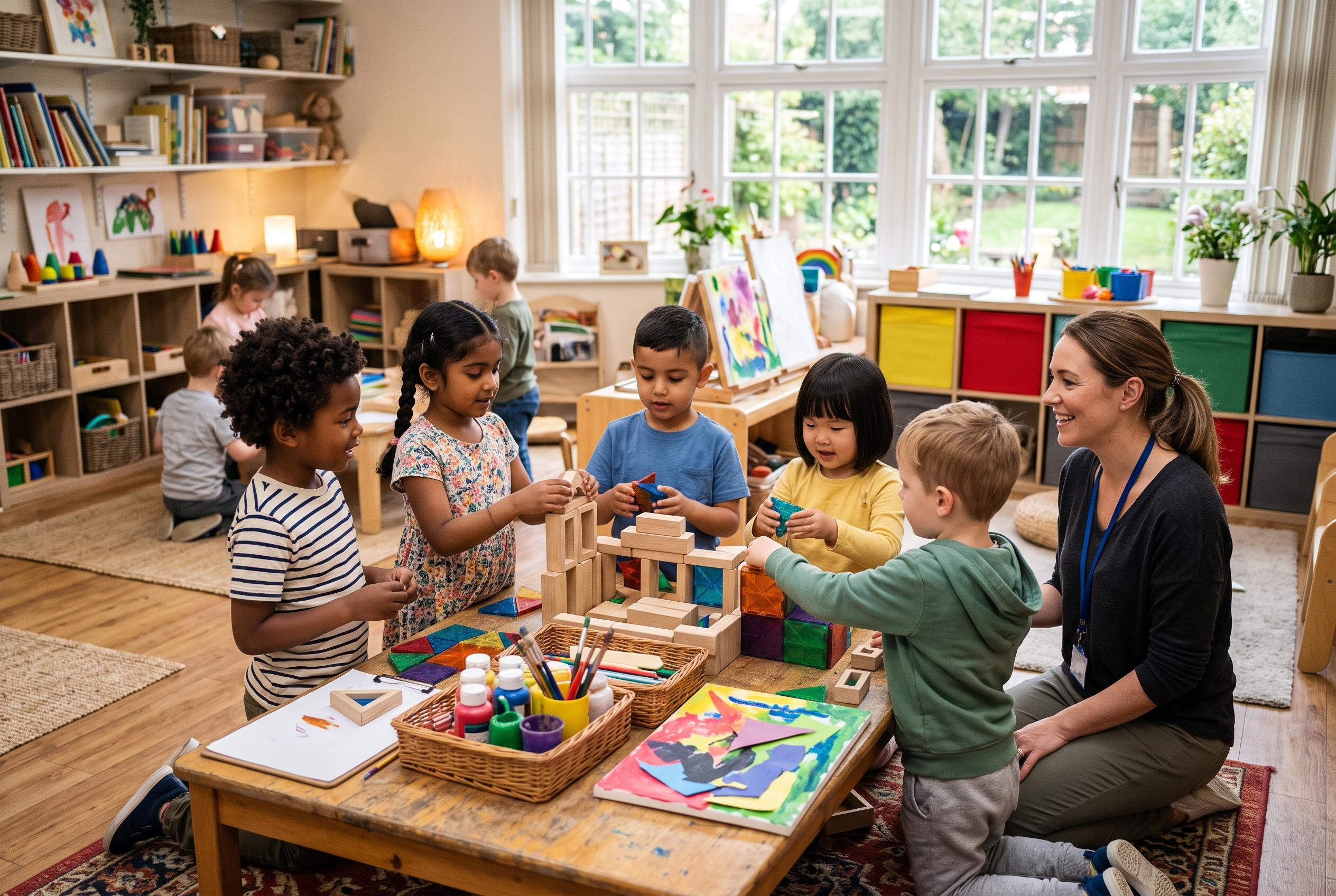

California’s widespread expansion of transitional kindergarten aims to give four-year-olds a strong start before traditional school, improving readiness and closing access gaps amid rising enrolment and sector pressures.
California’s transitional kindergarten push is beginning to look like one of the state’s more consequential early education bets. In the Los Angeles Times, educator and parents described a programme that is helping four-year-olds arrive at kindergarten better prepared, while state figures show enrolment climbed to 213,313 last fall, up 20.1% from the year before. The basic idea is simple: give every child who turns 4 by Sept. 1 a free year of public school before kindergarten, and use that time to build the habits and skills that make later learning possible.
What makes the programme notable is not just its scale, but the kind of learning it is supposed to support. Kathleen Leary, Newport-Mesa Unified’s director of early childhood education, said her district focuses on early literacy, communication, self-regulation, attention and problem-solving through play, describing them as “learning to learn” skills. She said children moving through TK are coming into kindergarten more ready, and that families have been eager to sign up as the programme has become better known.
That enthusiasm is backed by broader research. The Public Policy Institute of California says TK expansion has brought major growth, but also a need for more classrooms, better facilities and clearer curriculum support as districts serve younger four-year-olds. Its separate assessment found that TK can help identify English learners and special education needs earlier, and can improve social-emotional learning for English-only students, though it did not show stronger grade 3 and 4 test scores than other pre-kindergarten options. An AIR study, meanwhile, reported that TK students enter kindergarten with stronger literacy and maths skills and are more engaged in learning.
The expansion has also created pressure points. The Los Angeles Times noted that roughly 1,100 California preschools closed between 2019 and 2025, according to a University of California, Berkeley study, with Covid-19, falling birth rates and now the pull of publicly funded TK all weighing on the sector. That shift may leave fewer options, and potentially higher prices, for families with children under 4. At the same time, the California Budget & Policy Center says TK enrolment has doubled since 2021-22, with growth across student groups and in high-poverty schools, even as access gaps persist for children of colour and lower-income families.
For public schools, the programme offers a partial cushion at a time of demographic decline. California has nearly 500,000 fewer public school students than it did a decade ago, and the state Department of Finance expects another drop over the next 10 years. Districts have already responded with closures and consolidation. TK is not a cure-all, and challenges remain around staffing, extended-day care and age-appropriate bathrooms and routines. But if schools resist turning it into a scaled-down version of later grades, the programme could help restore something lost during the pandemic years: a strong, developmentally sound start.
Disclaimer: This content is for informational purposes only and is not intended to be a substitute for professional medical judgment, advice, diagnosis, or treatment.