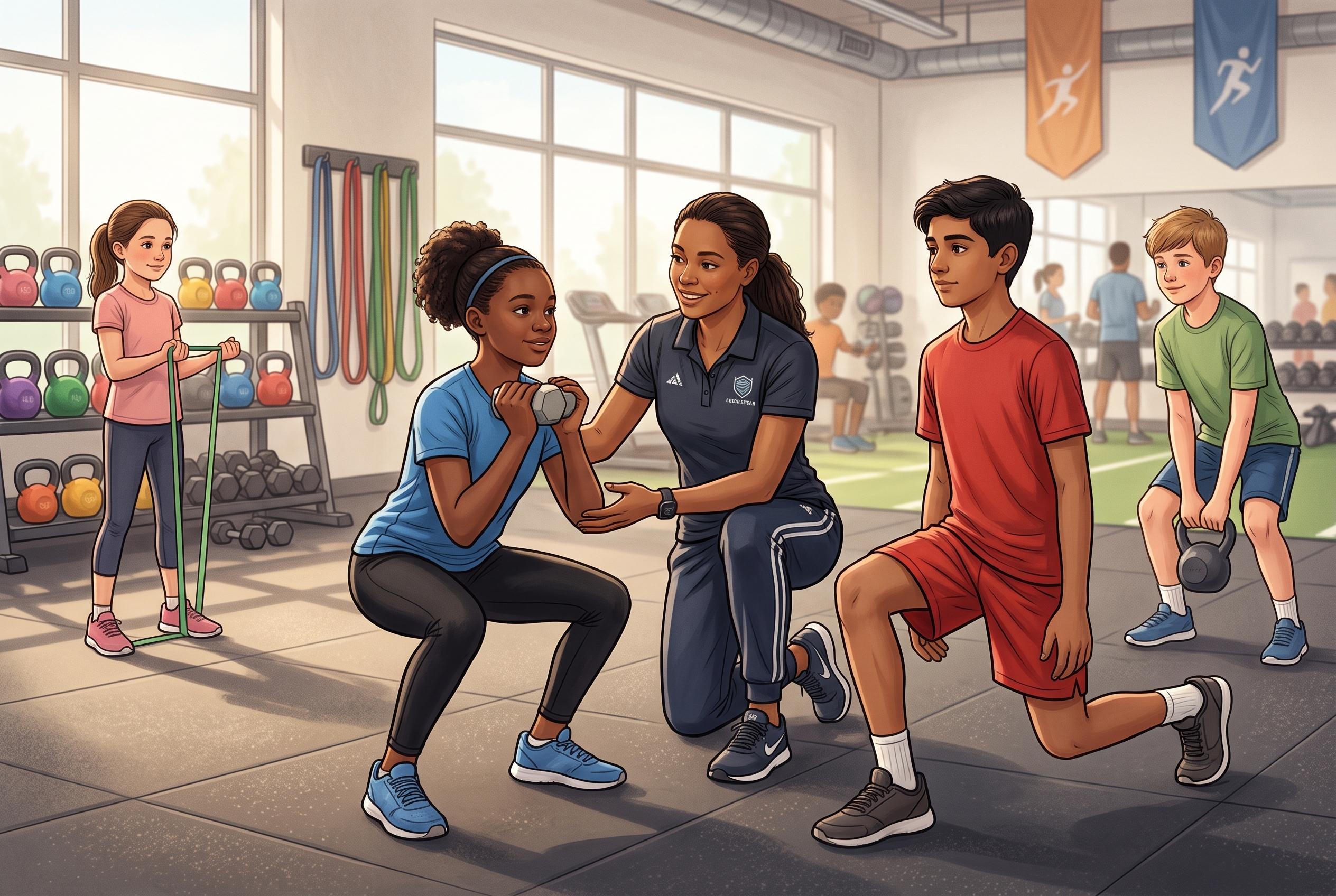

Experts advocate for a tailored approach to youth weightlifting, emphasising technique and athletic fundamentals over maximal load, with new frameworks proposing age-specific strategies to foster safe and effective development in young athletes.
Youth weightlifting should be treated as a discipline with its own rules, not as a reduced version of adult training. A post on Cissik.com, drawing on an older Sportivny Press text by L.S. Dvorkin, argues that lifters aged roughly 12 to 14 need a very different balance of loading, volume and physical development from mature athletes. The central idea is simple: in early training, technique, coordination and general athletic development matter more than chasing heavy weights.
That approach is broadly consistent with wider youth training guidance. Sports medicine and strength and conditioning sources say supervised resistance training can be safe and effective for children and adolescents when coaching is sound, technique is correct and the environment is properly controlled. Several guidance documents also stress that readiness depends more on movement quality and training age than on chronological age alone, while recommending a gradual progression built around competent instruction, warm-ups and sensible recovery.
Dvorkin’s framework is notably specific. The article described by Cissik divides loading into small, medium and large, roughly translating to 50-60%, 70-80% and 80-90% of capacity. For junior lifters in the first two years of training, it recommends longer sessions of 120 or 150 minutes, but with carefully limited numbers of lifts. In the first six months, the suggested work is moderate in intensity and relatively low in total lifts; by 18 to 24 months, the emphasis shifts towards somewhat heavier work, but still within a controlled range. A recent review indexed on PubMed Central makes a similar point, saying that for children around 11 or 12, general physical preparation should dominate and specialised weightlifting work should remain a minority of the programme in the first year.
The physical qualities being developed also reflect that age group’s needs. Speed is built first through teaching the lifts well, then reinforced with jumping and other dynamic drills. Speed-strength comes from classic lifts and variations performed from the hang or blocks, where athletes can move fast without the full technical and positional demands of a complete lift. Absolute strength, meanwhile, is developed through basic exercises such as squats, pulls, presses and hinges, but not by pushing maximal loads. Taken together, the message is that youth weightlifting is not about testing limits too early; it is about laying down the movement, strength and power base that makes later progress possible.
Disclaimer: This content is for informational purposes only and is not intended to be a substitute for professional medical judgment, advice, diagnosis, or treatment.