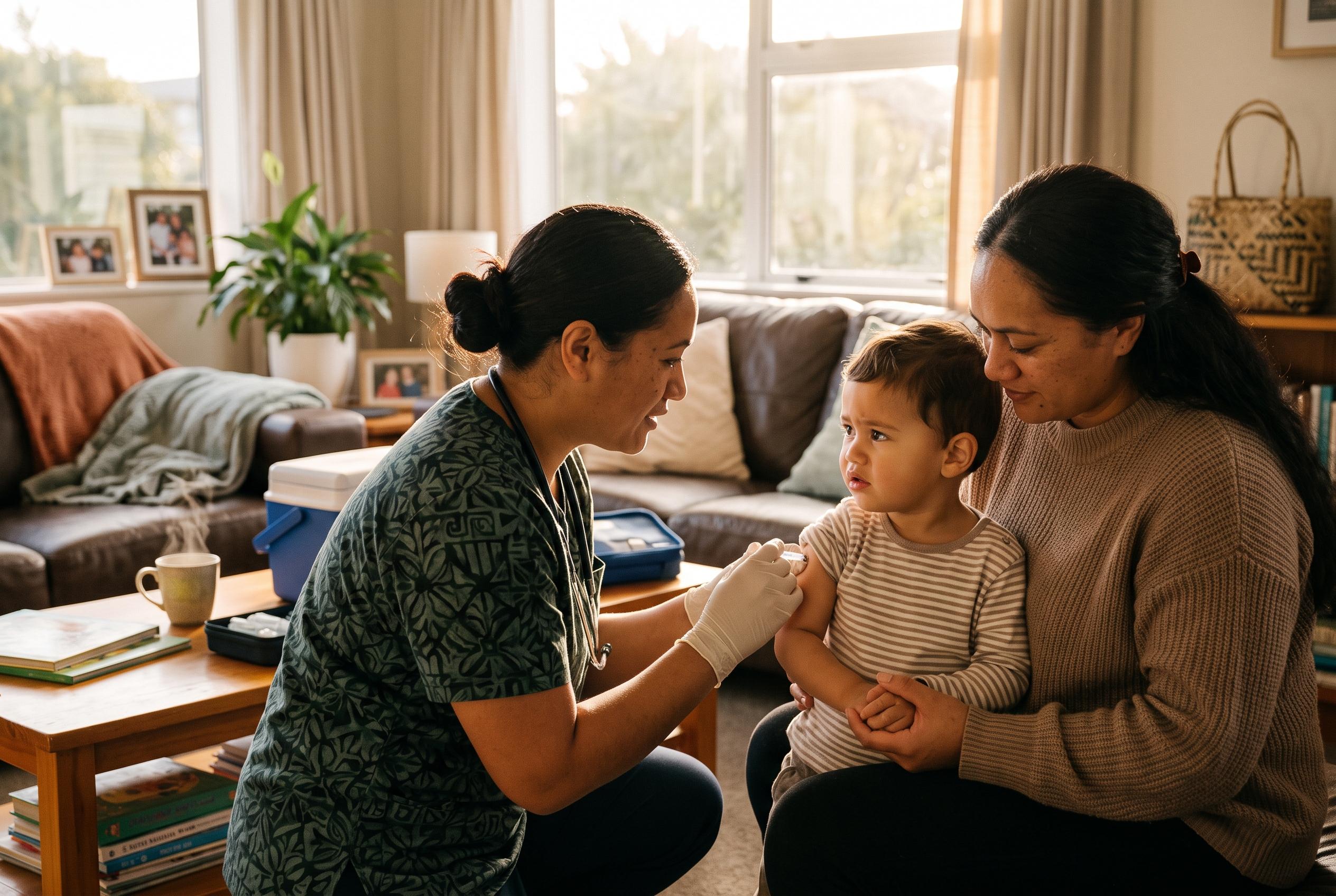

Hospital admissions for flu-like illnesses among under-fives in New Zealand have surged, particularly among Māori and Pasifika families, prompting calls for free vaccination for all young children to prevent severe illness.
Hospital admission rates for flu-like illness among children under five have risen sharply in New Zealand, with Māori and Pasifika families carrying much of the burden, according to health leaders and new public health data. The surge has renewed pressure on the Government to make the flu vaccine free for all young children, not just those already considered medically vulnerable.
Mamaeroa David, chair of the National Immunisation Technical Advisory Group, said the situation felt deeply alarming, with some young children ending up in intensive care. Speaking on Morning Report, she said the pattern was especially distressing because there was already a vaccine that could help prevent severe illness.
Public Health Agency science data for the week to 16 August showed a steep rise in under-fives in hospital with severe respiratory illness, at about 75 per 100,000. The figures also showed Pasifika people were more likely than any other group to be admitted with severe respiratory illness, while flu hospitalisation rates across the board had climbed in early August to their highest level in Auckland in a decade.
At present, funded flu jabs are available to people aged 65 and over, to pregnant people, and to younger people at higher risk of serious illness. For children under five, funding is limited to those who have already been hospitalised for a respiratory illness or have another significant health condition, such as asthma, diabetes or heart disease, according to Health New Zealand’s flu vaccine guidance.
Pharmac said it had completed consultation on a proposal to extend funded flu vaccines to all children from six months to five years old. Its chief pharmaceutical adviser, Adrienne Martin, said the agency had also consulted on switching to two newer vaccine brands offering greater protection for eligible people. If approved, she said, the changes would begin with the 2027 influenza season, which starts on 1 April 2027.
Associate Health Minister David Seymour said Pharmac would announce a decision on Wednesday afternoon, adding that any change should help make flu season more manageable for families. David, meanwhile, said the case for widening free access was urgent, especially for Māori and Pasifika children, and argued that cost should not stop parents from protecting their babies against a disease that can turn serious very quickly.
Disclaimer: This content is for informational purposes only and is not intended to be a substitute for professional medical judgment, advice, diagnosis, or treatment.