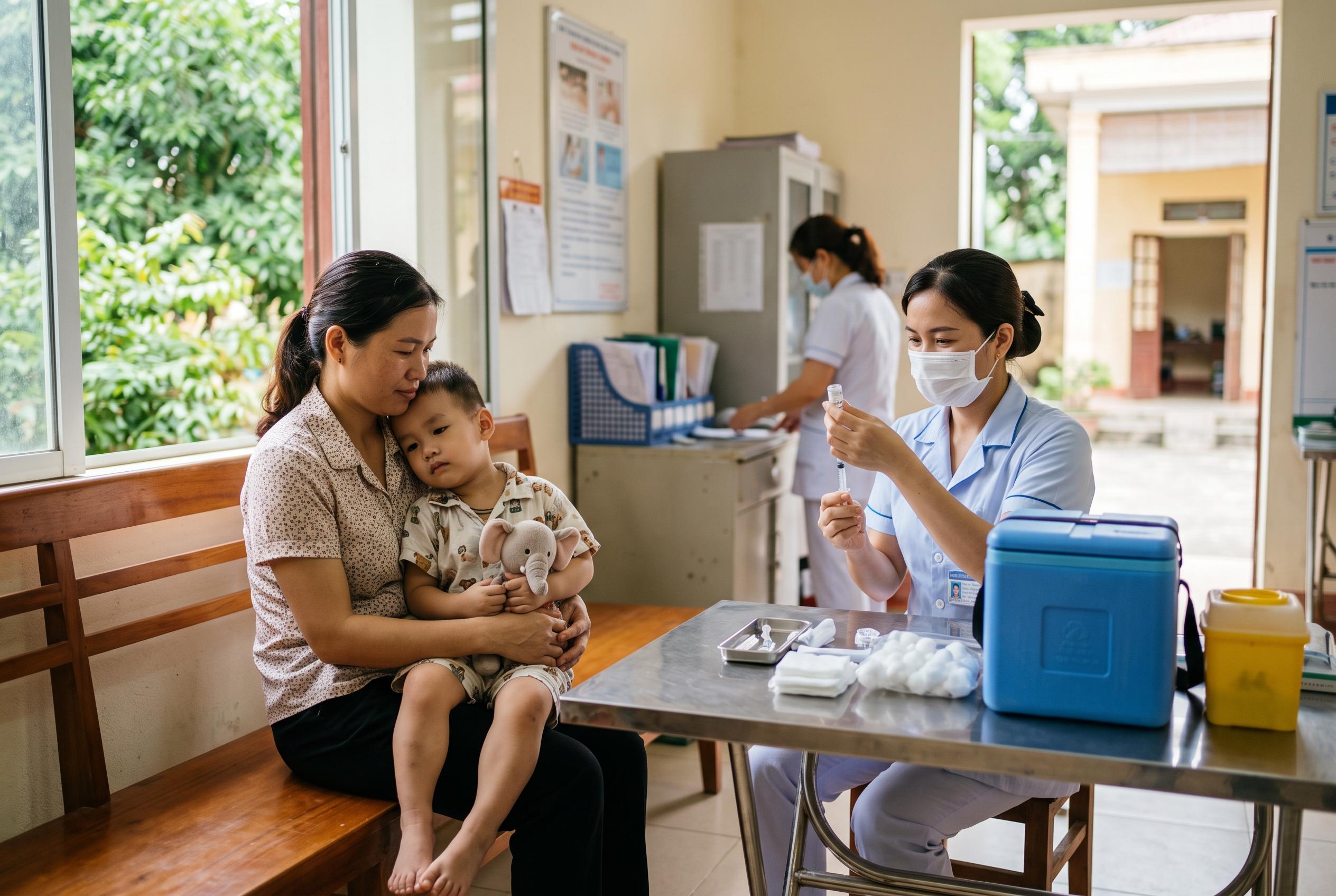

Vietnam’s Ministry of Health has urged provinces to intensify vaccination campaigns amid concerns that many regions are at risk of missing their immunisation targets for childhood vaccines, jeopardising national health objectives.
The Ministry of Health has told provinces and centrally run cities to intensify vaccination campaigns after fresh data showed many areas are in danger of missing this year’s targets under Vietnam’s Expanded Programme on Immunisation. Officials say the push is needed to protect children and keep the country on track with wider public health goals set out by the Politburo.
According to reports from the National Institutes of Hygiene and Epidemiology and the Pasteur Institutes, the shortfall is already visible across several routine childhood vaccines. By the end of June, 30 of 34 provinces and cities were at risk of missing their target for tuberculosis vaccination in children under one year old, while only Hà Nội, Quảng Ninh, Đồng Tháp and Điện Biên were expected to meet it.
The picture was even weaker for hepatitis B vaccination at birth, with only Quảng Ninh, Hưng Yên and Hà Nội likely to reach their six-month targets. Coverage also lagged for the third dose of the five-in-one vaccine, oral polio vaccine, inactivated polio vaccine and rotavirus immunisation, while measles and measles-rubella vaccination were also behind schedule in many localities. The ministry said stronger coverage was essential for disease prevention and for meeting annual programme goals.
Health departments have been told to review children’s vaccination records, arrange catch-up doses for children entering nursery schools and primary schools, and propose enough funding and staff to keep the programme moving. In a separate statement reported by Vietnamese media, the ministry has set a goal of reaching at least 95% expanded immunisation coverage by 2026, while also preparing to widen the programme with additional vaccines in the years ahead.
Disclaimer: This content is for informational purposes only and is not intended to be a substitute for professional medical judgment, advice, diagnosis, or treatment.