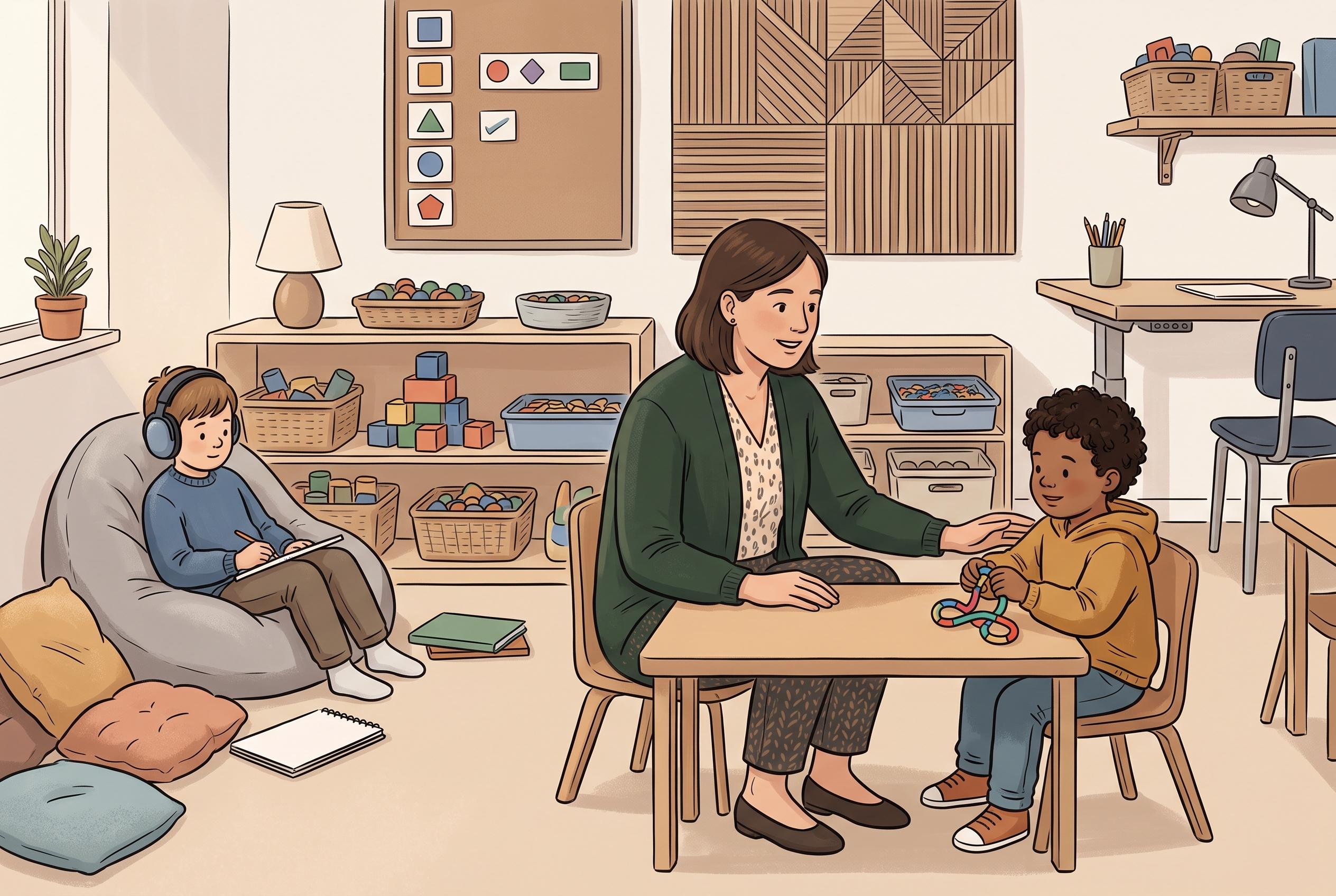

Claire O’Neill, an autistic researcher and teacher from Cork, urges educators to prioritise listening and understanding pupils’ sensory and emotional needs, embracing relational inclusion and universal design to transform classroom experiences for autistic students.
Claire O’Neill knows the strain of an unsupportive classroom from both sides of the desk. An autistic teacher, researcher and neurodiversity consultant from Cork, she has spent more than 20 years teaching autistic pupils and now studies autistic experience at University College Cork. In a recent conversation with Vicki Davis of the 10-Minute Teacher podcast, O’Neill described school as a place of discomfort, confusion and constant correction, and argued that the first step towards better teaching is to listen when pupils explain what school feels like to them.
She recalled the physical load of school life: scratchy uniforms, classrooms that were too hot or too cold, noise, smells and a steady sense of dread on the walk to the gate. She also described getting into trouble for behaviours such as looking out of the window, doodling or fidgeting – actions that, in hindsight, she believes were part of how she coped and concentrated. The University College Cork researcher said she often did not know why she had been reprimanded, which only deepened the anxiety. Her account echoes the wider idea behind the “double empathy problem”, the notion advanced by Damian Milton that misunderstandings between autistic and non-autistic people are mutual rather than rooted in a deficit in autistic people alone. According to the National Autistic Society and other explainers of Milton’s work, that shift in perspective matters because it moves the focus from fixing the child to improving the interaction.
O’Neill said her secondary school years brought a different kind of pressure: masking, social effort and a system that rewarded a narrow style of learning. By contrast, university gave her more control, more room to regulate and a stronger sense of agency. That experience shaped her view of inclusion now. She argued that teachers need to see the person first, not the student they wish they had, and that belonging depends on more than academic support alone. The relationship, she said, matters as much as the room itself.
That thinking aligns closely with Universal Design for Learning, or UDL, an approach that aims to make lessons accessible to more pupils from the outset rather than by retrofitting adjustments later. O’Neill pointed teachers towards CAST, the organisation widely seen as a leading source on UDL, as a practical place to begin. The principle, as she described it, is simple: if one pupil needs a quieter space, clearer options or a different route into a task, those changes often help many others as well. It is a view that has long been familiar to experienced classroom teachers, but it is one that education systems still struggle to apply consistently.
Her central message was not technical but relational. Teachers, she said, should trust pupils when they describe their environment, take those concerns seriously and change what they can. In busy classrooms, that can start with small but meaningful steps: reducing sensory overload, offering more choice, and building enough trust that children feel safe enough to say what they need. For O’Neill, that is where real inclusion begins.
Disclaimer: This content is for informational purposes only and is not intended to be a substitute for professional medical judgment, advice, diagnosis, or treatment.