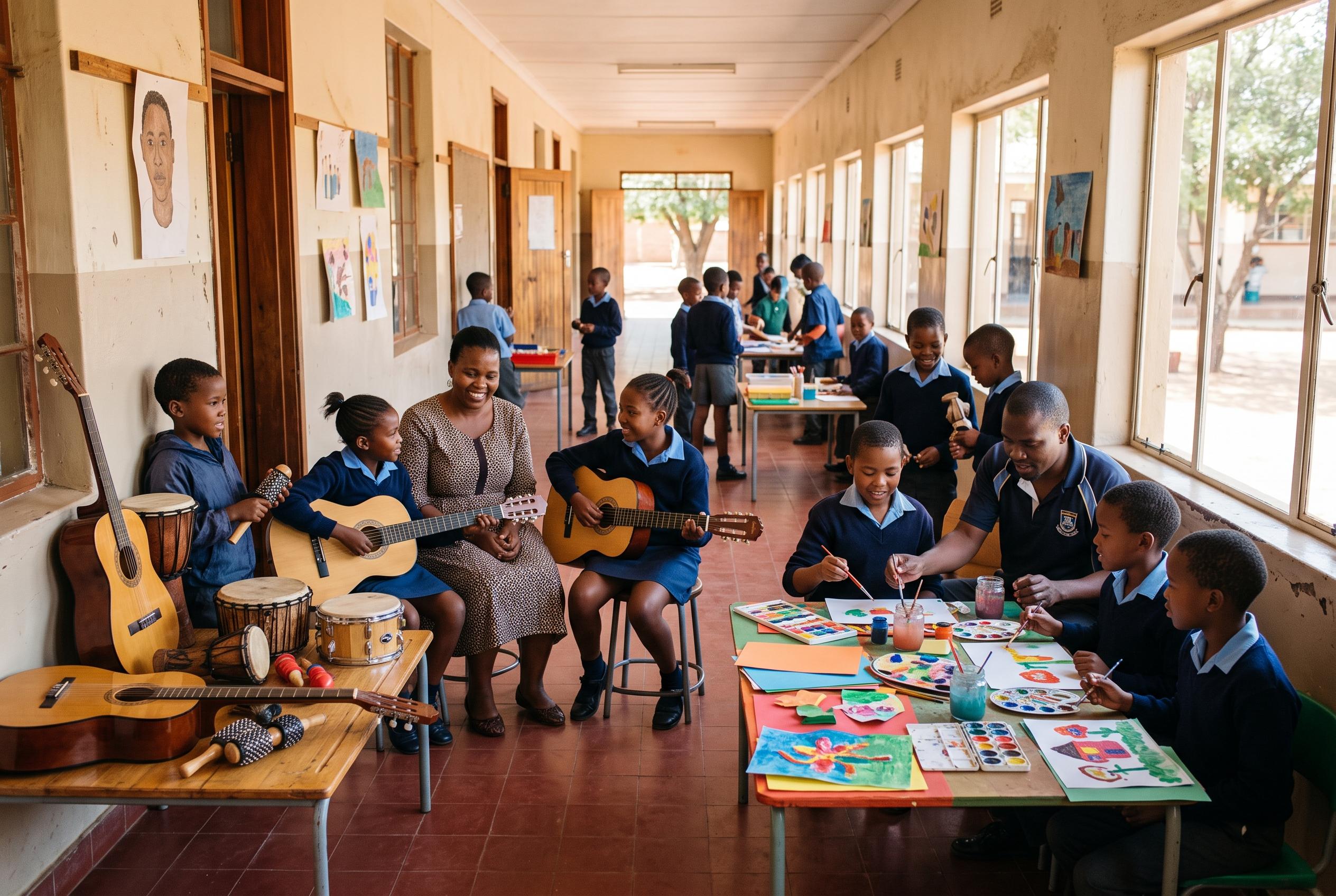

Botswana’s education ministry aims to integrate arts into everyday learning by promoting small music and arts clubs in schools and communities, leveraging the momentum from recent national competitions to foster creativity, discipline, and national identity.
Botswana’s education ministry is pushing to turn the momentum from the country’s national music competitions into a wider programme for schools and communities, with acting minister Justin Hunyepa urging educators and arts practitioners to expand small music and arts clubs. Speaking at a thanksgiving lunch for the team behind the recent competitions, Hunyepa said the events had done more than showcase talent: they had shown how creative learning can draw in children, families and schools across the country.
The message came against the backdrop of a broader government effort to give the arts a firmer place in education. According to the ministry’s own account of the event, the new STEAM approach places Arts alongside Science, Technology, Engineering and Mathematics, with the aim of strengthening imagination, communication, collaboration and problem-solving as part of classroom learning. Hunyepa said the competitions demonstrated that well-run arts programmes can reach well beyond the stage and into everyday school life.
He also pressed for practical action at local level. Rather than waiting for large projects, Hunyepa encouraged schools and communities to start small clubs for singing, instrumental music, dance, drama or visual arts. The ministry said such groups need not require heavy spending or specialised buildings, and could still create a meaningful space for children to practise, perform and build confidence.
That approach fits a wider pattern in Botswana’s education policy. Separate reports this year said the government has revived choral music competitions in public and private schools as part of an effort to promote discipline, creativity and national identity. The reinstated programme includes regional and national competition stages, backed by a technical team that will help standardise guidelines, train teachers and support schools.
Botswana’s push also reflects a growing recognition that STEAM education is not limited to science laboratories. In February, Botswana International University of Science and Technology launched the BIUST STEAM Centre, described as the first of its kind in the country, with a focus on hands-on learning and innovation. BIUST officials said the inclusion of Arts in STEAM matters because it can support content creation, digital skills and creativity in an age shaped by artificial intelligence.
For Hunyepa, the immediate priority is to keep the energy from the music competitions alive. He said the ministry would support efforts to set up clubs and strengthen creative education, signalling that the government wants the arts to become a routine part of learning rather than an occasional event. The broader aim is to give more children regular opportunities to develop discipline, teamwork and self-expression while schools build a more balanced education system.
Disclaimer: This content is for informational purposes only and is not intended to be a substitute for professional medical judgment, advice, diagnosis, or treatment.