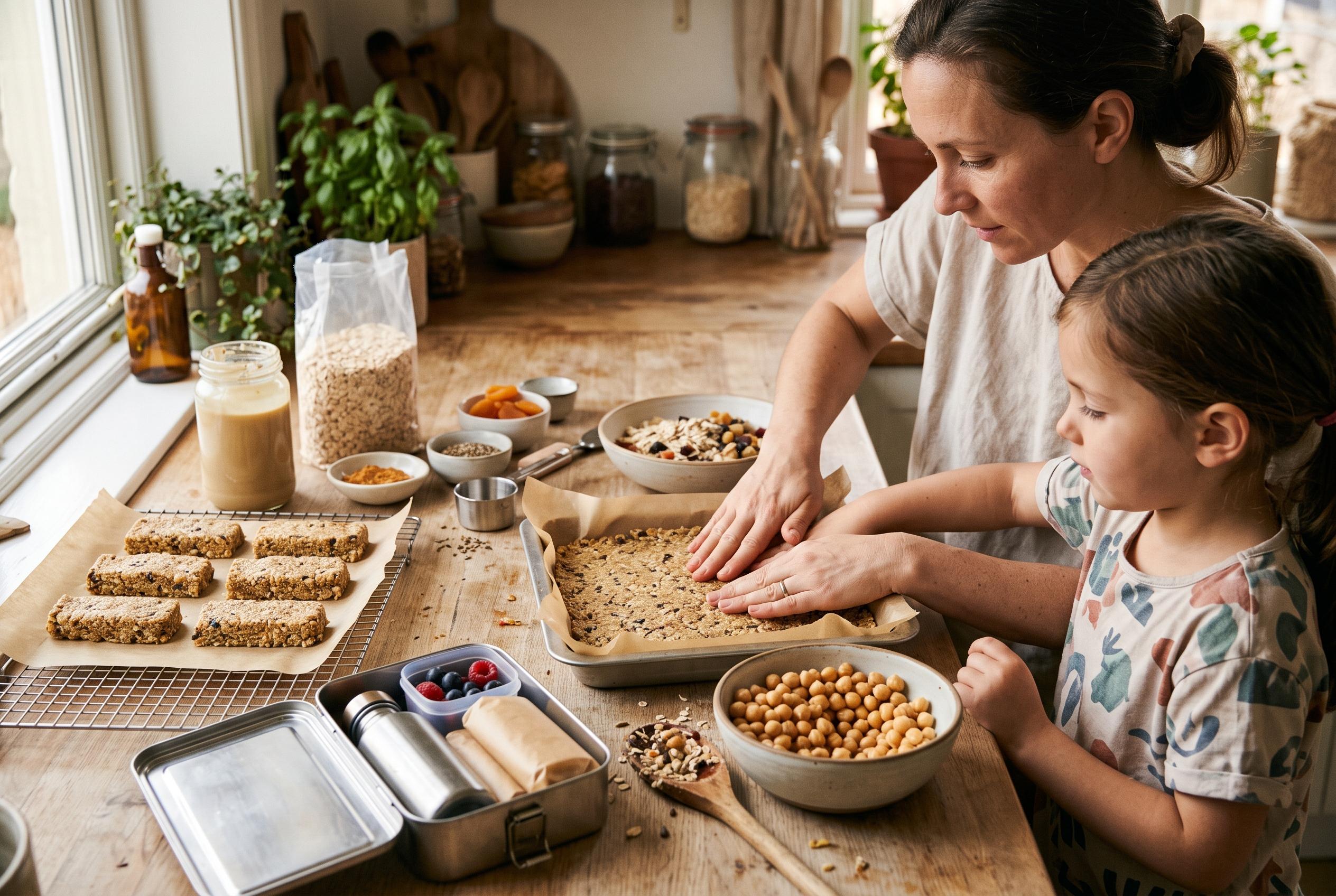

A new chickpea-infused recipe for homemade snack bars highlights a growing trend towards plant-based, customisable treats that are quick to prepare, nutritious, and versatile for kids’ lunchboxes and snacks.
These chickpea-based snack bars are designed as an easy homemade alternative to packaged kids’ bars, with a short ingredient list and a mild vanilla-chocolate flavour that should feel familiar to young eaters. The recipe relies on chickpeas and oat flour for structure, along with peanut butter, a little brown sugar, vanilla and chocolate chips. According to the recipe notes, the bars are intended to deliver protein, fibre and lower added sugar while still holding together well at room temperature.
The appeal is as much practical as nutritional. The bars can be made quickly, baked in under half an hour and stored in the fridge for up to two weeks, making them useful for lunchboxes, after-school snacks or a simple breakfast alongside a smoothie. Similar recipes from other food sites show the same wider trend: cooks are increasingly using oats, nut butter, maple syrup or honey, and chocolate to make snack bars that are easier to prepare at home than to buy.
What sets this version apart is the use of chickpeas as the base. That gives the bars a softer, cookie-dough-like texture while adding plant-based protein and fibre, something echoed in other chickpea bar recipes that pair beans with oats and chocolate chips. The method is straightforward: blend everything except the chocolate chips, press the mixture into a pan, bake until lightly golden at the edges, then cool fully before slicing.
The recipe is also flexible. Peanut butter can be swapped for sunflower seed butter to make it school-friendly, and the sugar can be reduced or replaced with honey, depending on preference. Other versions of similar bars use no-bake methods, chia seeds, ground flaxseed or protein powder, showing that this category of snack is easily adapted for different diets and levels of convenience.
Disclaimer: This content is for informational purposes only and is not intended to be a substitute for professional medical judgment, advice, diagnosis, or treatment.