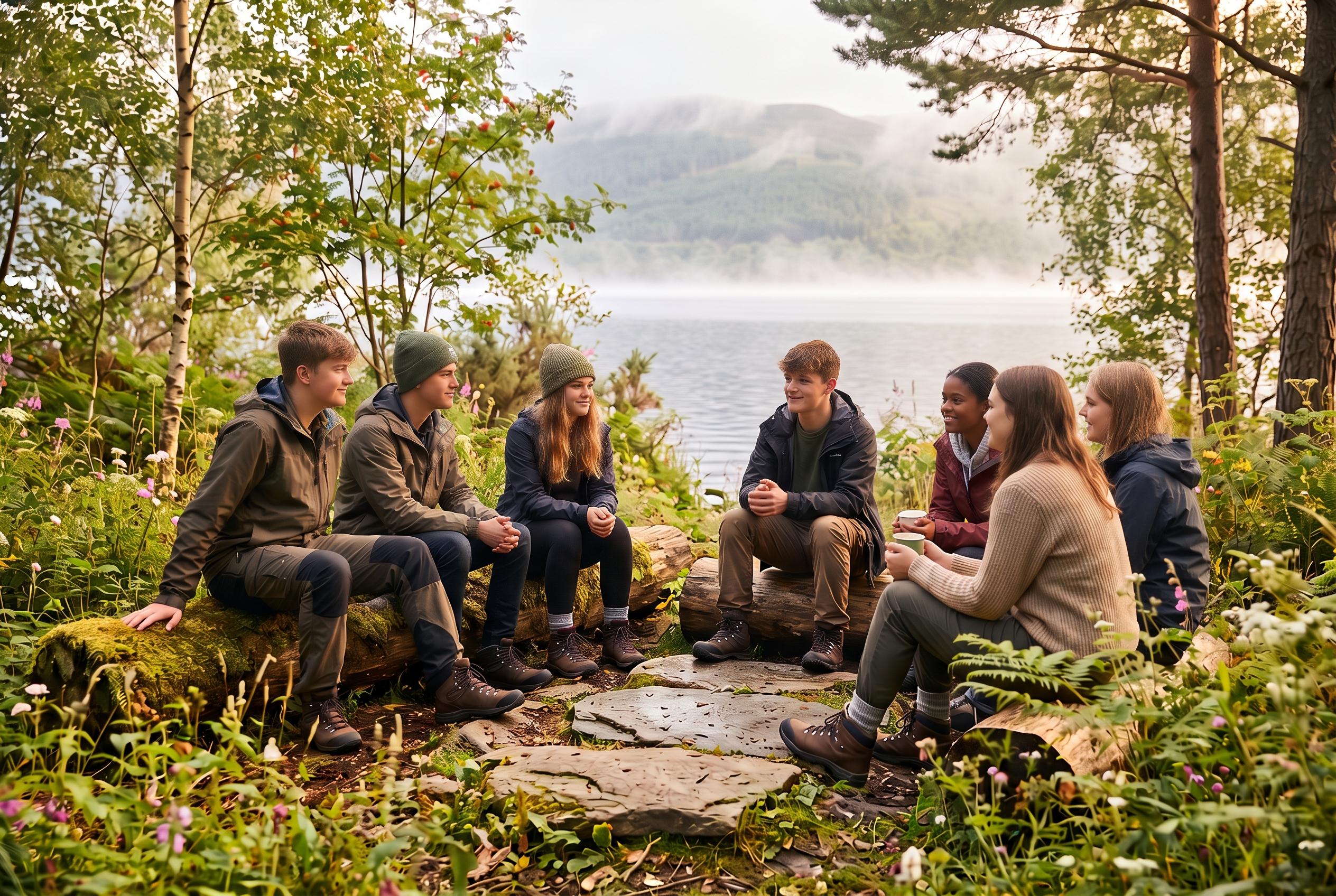

Students from Highland schools visit Loch Ness rewilding estate for nature-based programmes aimed at enhancing mental health, with findings promising to reshape rural youth support.
On the shores of Loch Ness, a rewilding estate is being used for something beyond conservation: helping teenagers talk about mental health. Pupils from Farr High School and Kinlochleven High School recently visited Trees for Life’s Dundreggan centre in Glenmoriston as part of Healthy Young Minds, a nature-based early intervention programme for 11- to 14-year-olds. The initiative is being run by researchers from the University of South Wales, the University of the Highlands and Islands and Dundee University, with the aim of testing whether time outdoors can support wellbeing in rural communities.
Dundreggan, a 10,000-acre estate that Trees for Life has been rewilding since 2008, is designed to restore the Caledonian forest and now supports more than 4,000 species of plants and animals, including rare and protected wildlife. The rewilding centre, which opened in 2023, has become a venue where conservation, Gaelic heritage and education meet. For the students, the visit included a guided rewilding walk, pond dipping, tree identification, bannock making and traditional fire lighting, alongside workshops led by the Highland mental health charity Ewen’s Room.
The project is deliberately being shaped with young people rather than simply delivered to them. In the workshops, students suggested activities they felt could help wellbeing, including camping, hill walking, wild swimming, beachcombing, natural crafts, sport and family events. According to Dr Sara Bradley, a senior research fellow at the University of South Wales, the programme is giving young people the chance to come up with their own ideas about how nature can support their health and wellbeing. Researchers are also asking participants to reflect on the so-called five ways to wellbeing: connecting with others, learning new skills, giving to others, staying active and taking notice of the world around them.
That approach matters in rural areas, where access to green space can be abundant but support services may be limited. Early responses from the pupils have been encouraging, with students saying nature matters to their mental health, that they are spending more time outside and that the project has made them think more about other people. The Healthy Young Minds team is now preparing two academic papers and seeking further funding, with hopes that the model can be expanded if the findings continue to be positive.
Disclaimer: This content is for informational purposes only and is not intended to be a substitute for professional medical judgment, advice, diagnosis, or treatment.