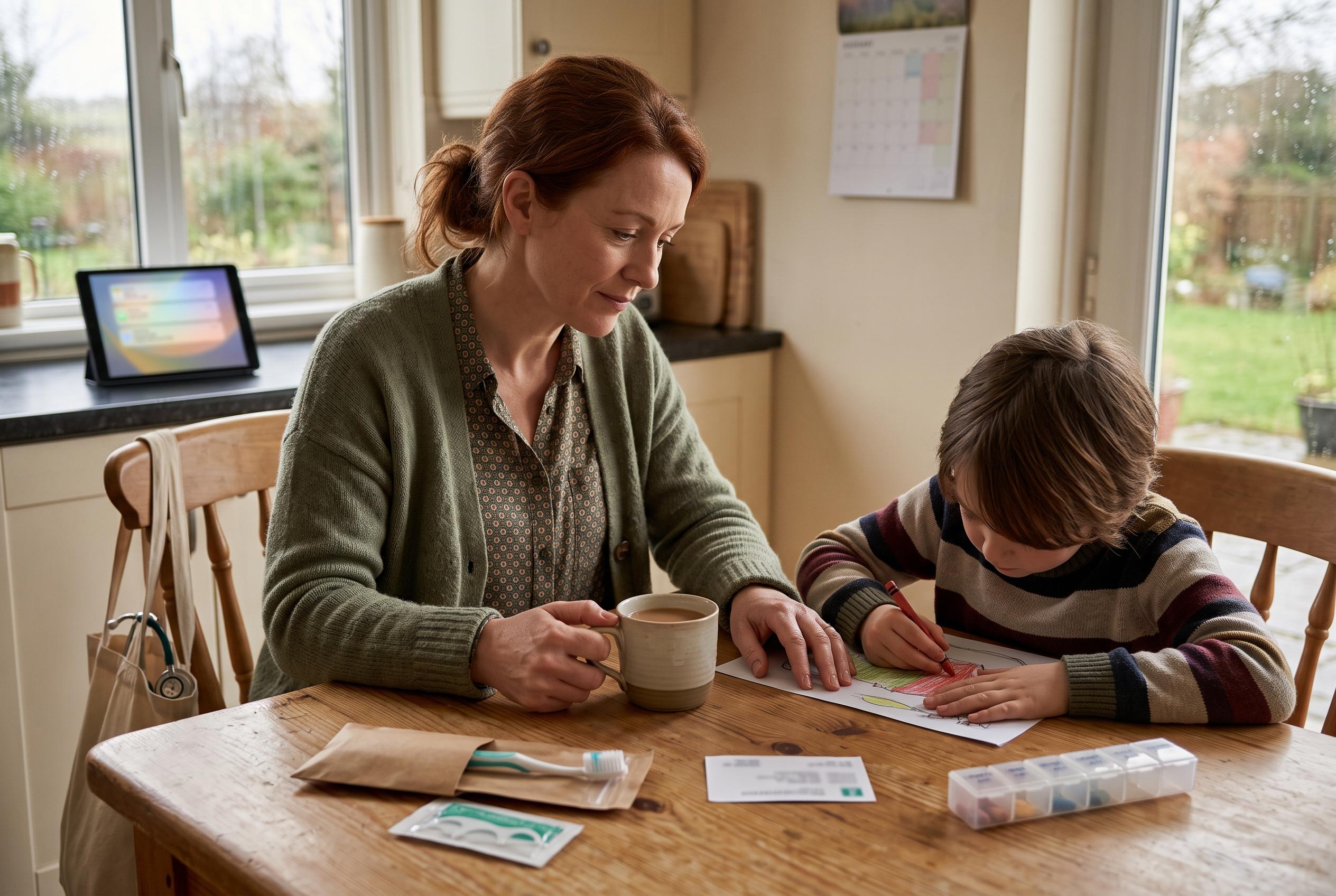

Ireland’s latest children’s health survey reveals a mixed picture: most children rate their health positively, yet significant gaps persist in diagnosis, dental care, and access to treatment. Rising neurodiversity diagnoses, particularly among boys, highlight emerging challenges.
Ireland’s latest children’s health survey points to a mixed picture: most children are reported to be in good or very good health, yet the findings also show clear gaps in diagnosis, dental care and access to treatment. According to the Central Statistics Office, 94.5% of parents or guardians rated their child’s general health positively, but 18% said dental health was fair, bad or very bad. The share of children living with a long-standing illness or health problem was also higher among boys than girls, continuing a pattern seen in earlier CSO work.
The most striking difference in the survey concerns autism. Among children aged three to 14, 9.3% of boys had received an autism diagnosis, compared with 3.2% of girls. ADHD was also more common among boys, though the gap was smaller. The CSO’s broader 2025 health survey among 15- to 24-year-olds found the same direction of travel, with diagnosis rates again higher for young men than young women, suggesting that reported neurodiversity remains more common in males across age groups.
Access to care remains another concern. The survey found that 6% of children needed a medical examination or treatment at least once in the previous year but did not receive it, while 5% needed dental care that never took place. Families cited cost, waiting times, travel distance and difficulty finding time as reasons. The findings echo the previous year’s children’s health survey, which also showed strong self-rated health overall but weaker results for dental wellbeing and long-term conditions.
The data also offer a snapshot of daily habits. Most children ate fruit and vegetables at least once a day, and more than 95% had a daily meal containing meat, chicken, fish or a vegetarian equivalent. Older teenagers were more likely to spend long periods on screens at weekends, with 16% of 13- and 14-year-olds logging at least four hours a day on screen-based activities, excluding video watching and games. The CSO’s figures also show that regular leisure activities were most common among nine- to 12-year-olds, suggesting that participation drops at both ends of childhood.
Disclaimer: This content is for informational purposes only and is not intended to be a substitute for professional medical judgment, advice, diagnosis, or treatment.