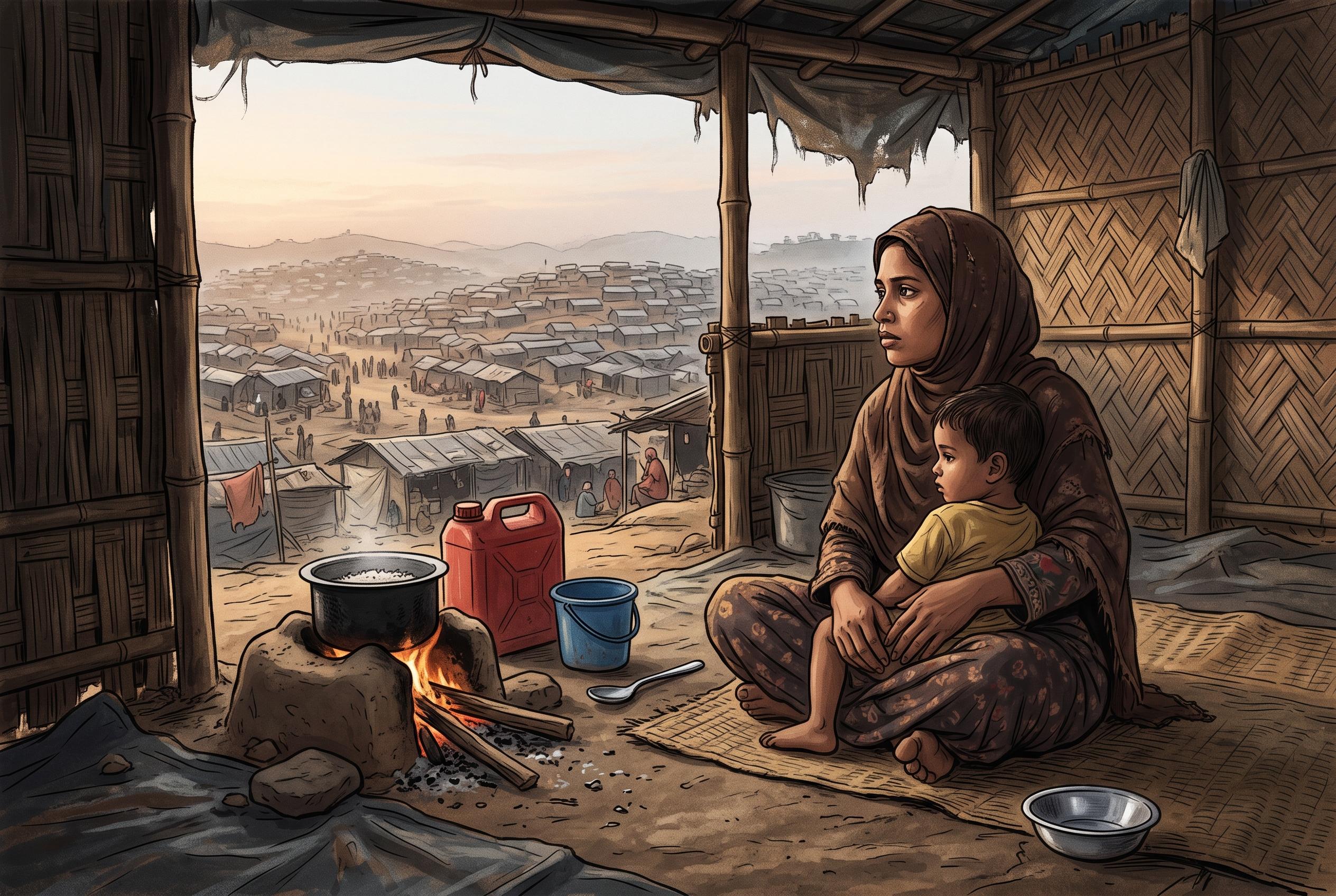

As conditions in Bangladesh’s Cox’s Bazar camps worsen with increasing hunger and insecurity, aid groups warn that funding shortages and policy shifts are pushing Rohingya families towards a broader humanitarian disaster in their ninth year of displacement.
Conditions in Bangladesh’s Cox’s Bazar camps are deteriorating sharply as the Rohingya refugee crisis enters its ninth year, with Save the Children warning that about 35% of refugees are expected to face crisis or emergency levels of hunger this year. The aid group says more than 1 million people living in around 30 camps are facing worsening food insecurity as funding shortages, thinner rations and shrinking opportunities leave families under increasing strain.
For many families, the hardship is now being passed from one generation to the next. In the camps, where many children have known no life beyond displacement, poor diets and limited access to healthcare are deepening the risk of malnutrition. Save the Children said mothers who are undernourished are more likely to give birth to babies with low birthweight, raising the chances of illness, stunting and longer-term health problems.
The World Food Programme has already shifted to a needs-based system for monthly food aid across the camps, saying all Rohingya refugees remain food insecure but that needs differ from household to household. Yet humanitarian groups say the broader picture is getting worse, not better. The reduction in support comes after major food assistance cuts this year, which have alarmed refugees and aid workers alike.
The risks are not confined to hunger. Reuters has reported that overcrowding, climate pressures and insecurity continue to make daily life precarious, while monsoon-triggered landslides in July killed 10 people, including children and a teacher. Save the Children also pointed to dangerous sea journeys taken by some refugees in search of safety and work, despite the threat of trafficking, abuse and drowning. The organisation is urging donors and governments to close the funding gap and to find a durable solution for families who have now spent nearly a decade in limbo.
Disclaimer: This content is for informational purposes only and is not intended to be a substitute for professional medical judgment, advice, diagnosis, or treatment.