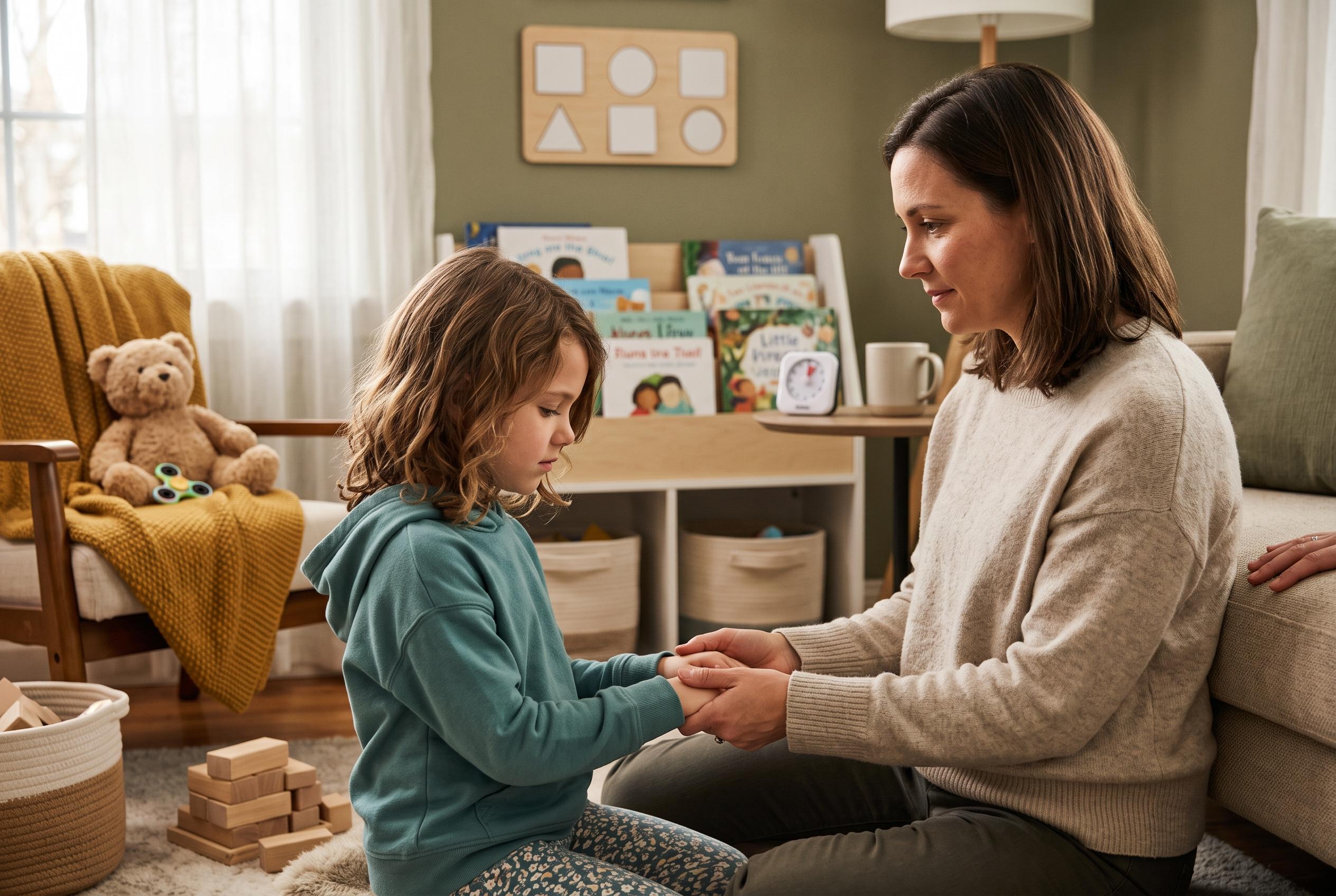

Expert advice highlights the importance of stability, co-regulation, and positive routines in helping volatile children manage their anger and develop resilience, rather than harsh punishment.
In a contributed essay for Parenting Teens and Tweens, Barbara Pinke argues that children with a quick temper are often not damaged so much as poorly matched with the environments around them. Rather than treating anger as proof that a child needs harsher punishment, she suggests that many volatile children need steadiness, not escalation: adults who remain calm, classmates who do not isolate them, and routines that make it safe to recover after a blow-up.
That idea aligns with guidance from the Kids Mental Health Foundation, which says children learn to manage strong emotions gradually, through repeated practice. Its advice centres on helping children notice what they feel, calm their bodies, watch their thoughts, shift to a different activity and then check whether it helped. The point is not to extinguish anger, which is a normal emotion, but to build the skills needed to respond without being overwhelmed by it.
Harvard Health has also highlighted the role of co-regulation, the process by which a calm adult helps a distressed child settle down by staying connected and working out what the child needs in that moment. In practice, that means parents regulating themselves first, then offering presence rather than a lecture. For many children, especially those who are easily triggered, the lesson lands only when an adult stays close enough to show that their feelings are manageable and their relationship is still intact.
Pinke also stresses the power of peer groups and everyday settings. A child who is not frozen out after a mistake is more likely to learn that a lapse does not define them. That approach echoes guidance from PBS, which encourages adults to help children think through what set off the anger, what happened in the body, and how to express the feeling without aggression. HealthyChildren.org, the American Academy of Pediatrics’ parent site, likewise advises children to step away from fights, treat others with respect and ask a trusted adult for help before conflict turns physical.
The practical message for parents is that boundaries still matter, but they work best when paired with trust, second chances and a clear role for the child to play. Pinke suggests that some children need a job more than a lecture: a sport, an instrument, a chore or another task that gives their energy somewhere to go. Over time, these small shifts can help a child who is quick to anger become a child who feels held, not hunted, and therefore more able to change.
Disclaimer: This content is for informational purposes only and is not intended to be a substitute for professional medical judgment, advice, diagnosis, or treatment.