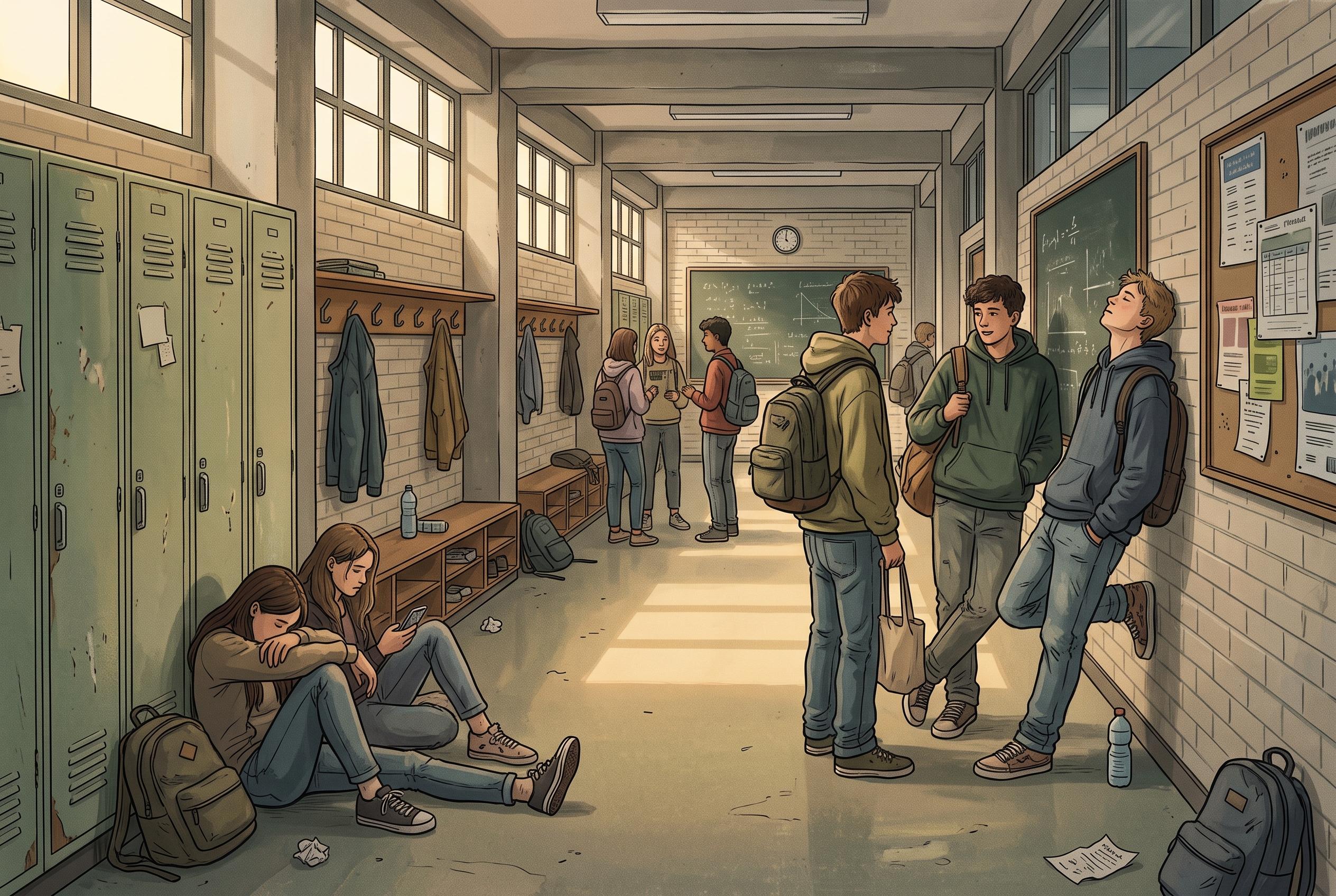

A new study reveals the extent of school-related stress among German adolescents, highlighting a significant gender gap and raising concerns about their mental wellbeing amid societal pressures.
A new study commissioned by the German health insurer Barmer suggests that school pressure is taking a heavy toll on teenagers, with girls reporting markedly higher strain than boys. According to the Sinus Youth Study 2025/2026, one in three adolescents said school stress was severely affecting them, while 42% of girls described themselves as strongly burdened, compared with 25% of boys. The research was based on a representative online survey of 2,000 people aged 14 to 17, carried out by the Sinus Institute in October and November 2025.
The findings point to a wider pattern of pressure in young people’s daily lives. Family stress was the second most common burden, affecting 16% of respondents overall, followed by loneliness at 12%. The gender gap remained visible here too: 20% of girls said family stress weighed heavily on them, compared with 12% of boys, while loneliness troubled 15% of girls and 9% of boys.
Other major stressors included mental illness and pressure among friends, each cited by 11% of those surveyed. Addictions were named by 9%, bullying by 8% and chronic physical illness by 7%. Relationship stress was less prominent for this age group, with only 6% saying it significantly affected their everyday lives.
Barmer chief executive Christoph Straub said the results show that school stress is not a marginal issue and warned that the burden on young women was especially concerning. He called for greater focus on the mental health of young people. The latest findings continue a line of Barmer-backed Sinus studies that have tracked adolescents’ worries in recent years, including concern over the pandemic, climate change, cyberbullying and the role of digital life in young people’s wellbeing.
The broader research series has also shown a shifting mood among German teenagers. Earlier surveys found growing concern and less confidence about the future, particularly in less-educated groups, although later results suggested that many young people still felt optimistic about their own prospects even as they grew more sceptical about Germany’s direction. Against that backdrop, the latest school-stress figures add to evidence that adolescents are navigating a mix of academic, social and wider societal pressures.
Disclaimer: This content is for informational purposes only and is not intended to be a substitute for professional medical judgment, advice, diagnosis, or treatment.