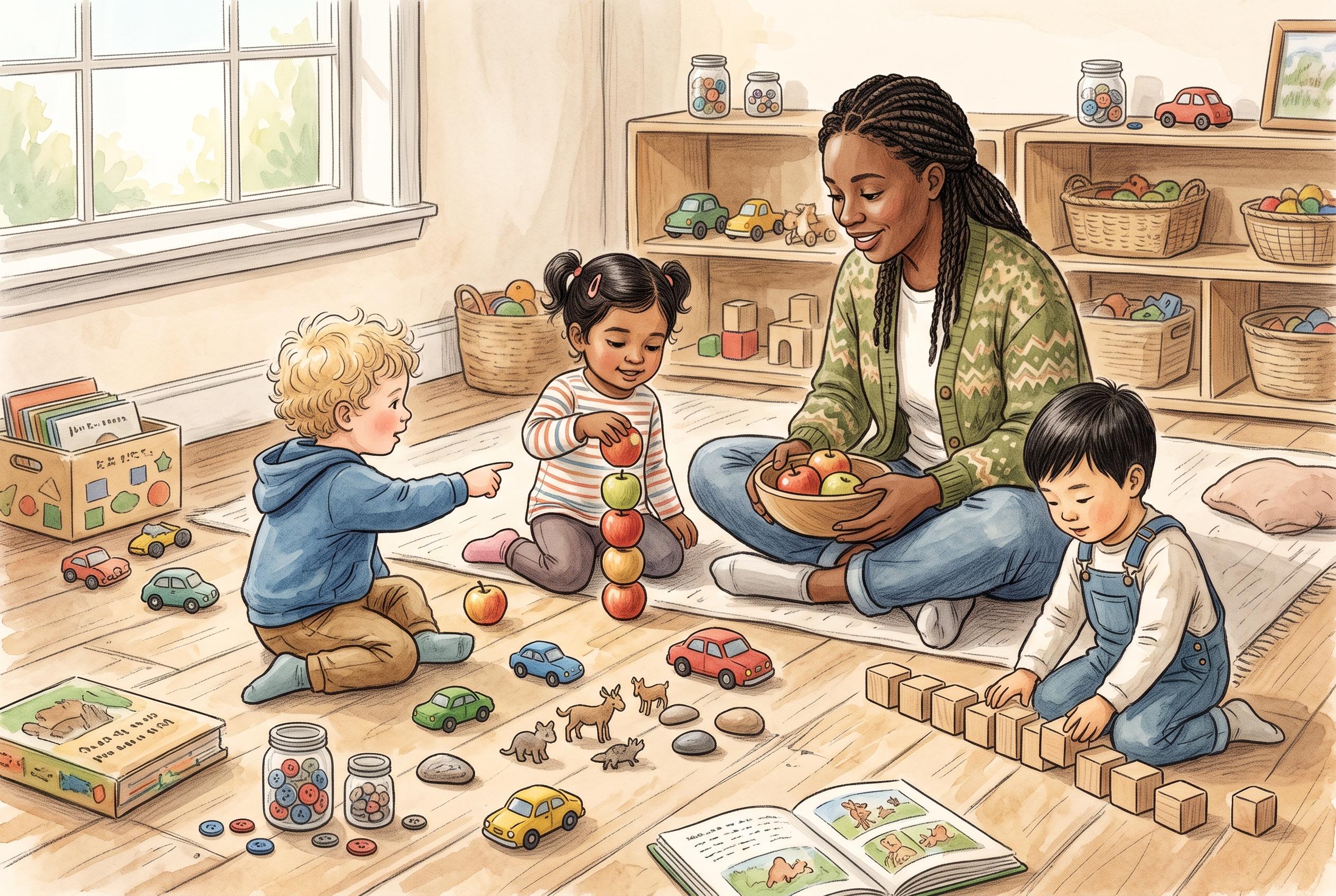

A new approach to building maths skills in preschoolers emphasises integrating numeracy into daily routines, activities, and conversation rather than formal lessons, making learning both fun and effective.
Helping preschoolers build early maths skills does not require worksheets or formal lessons. Small, everyday moments can do the job just as well. Stephanie Ashton, director of education and the Edible Schoolyard at Greensboro Children’s Museum, argues that children learn best when number work is folded into ordinary routines, play and conversation. Her approach is built around four simple habits: using chores, adapting card games, looking for patterns and turning story time into number time.
One of the easiest places to start is at home. Counting out pet food, laying the table, sorting laundry into shapes or sizes, and measuring cleaning spray can all introduce children to numbers, quantity and comparison. Early-years specialists say this kind of practical repetition helps children grasp core ideas such as counting, grouping, shapes and spatial language long before they enter kindergarten. It also gives parents a chance to model one-to-one counting, the habit of touching or pointing to each object as it is counted.
Games can do even more. Ashton recommends family card play, starting with simple games such as Go Fish, Uno or Crazy 8s and adjusting the level of support to the child’s age and confidence. Educational guides for parents say this sort of play helps children recognise numbers, take turns and begin to understand rules and strategy. The key, Ashton says, is to keep the mood light and treat mistakes as part of learning, not as a problem to fix.
Patterns are another useful building block. Children can copy a sequence made with blocks, dots or colours, or join in clap-and-move games that follow a repeated rhythm. That kind of activity supports both early maths and reading, since pattern recognition is linked to noticing order and sequence. If a child struggles, experts suggest stepping back and making the task more playful rather than more difficult.
Books can also become maths lessons without losing their appeal. Ashton says parents can ask children to count animals on a page, compare lengths, spot which group has more or talk about what comes first, second, third and last in a story. Other early-learning resources make the same point: counting, comparing and describing everyday pictures are all ways to strengthen numeracy. The larger message is simple. For preschoolers, maths works best when it feels like part of life, not a separate subject.
Disclaimer: This content is for informational purposes only and is not intended to be a substitute for professional medical judgment, advice, diagnosis, or treatment.